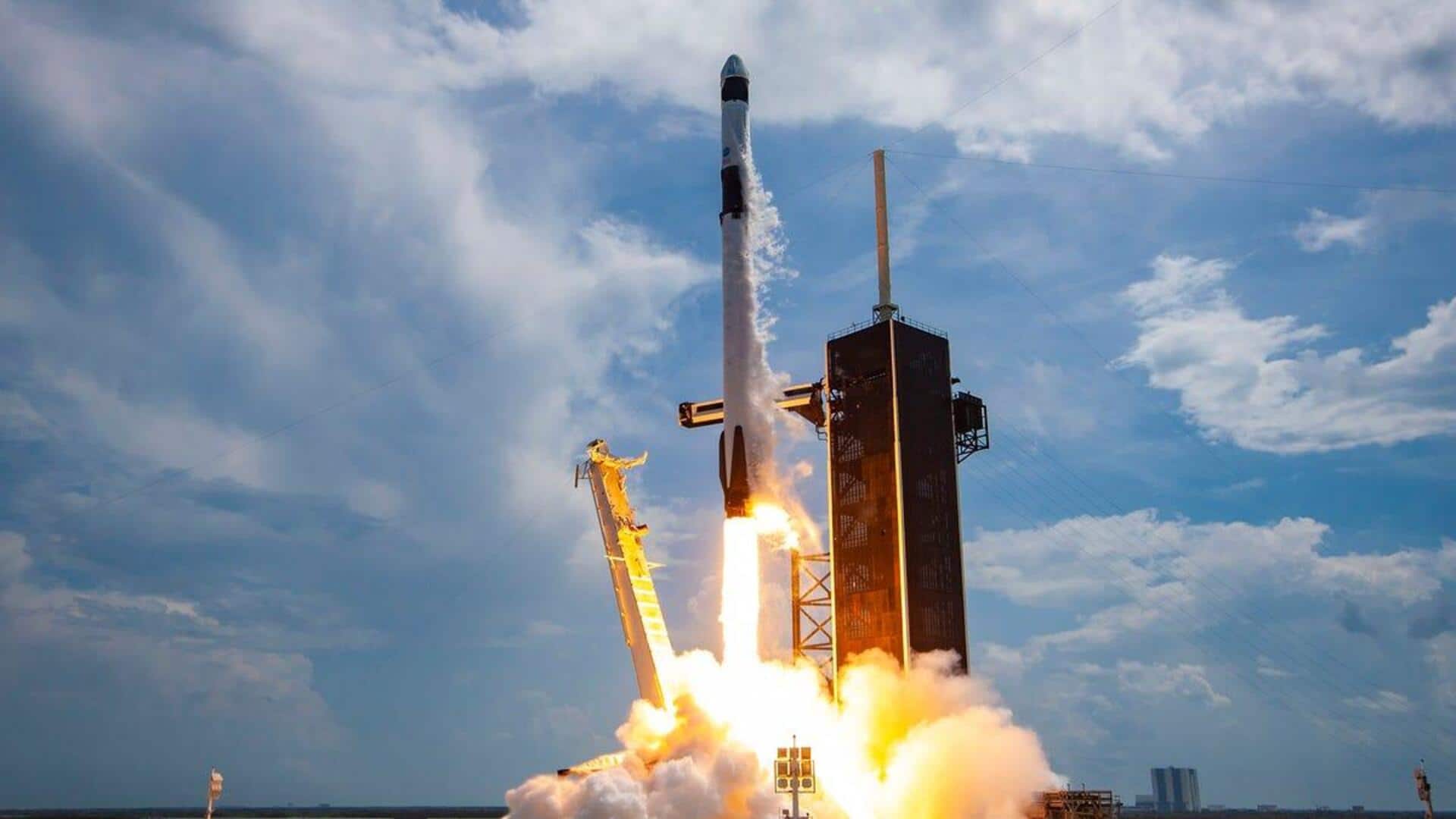
SpaceX's Falcon 9 rocket has now flown for 35th time
What's the story
SpaceX's Falcon 9 first stage has just made history by completing its 35th successful flight. The mission, which took place from California's Vandenberg Space Force Base, saw the launch of 29 Starlink broadband satellites into low Earth orbit (LEO). This is a new milestone for the first stage of this particular rocket, designated B1071.
Booster performance
Reliability of SpaceX's rocket technology
The first stage of the Falcon 9 rocket, known as a booster, has now flown 35 times.
This is just one short of the SpaceX record of 36 missions, which was set by another booster B1067 on a different Starlink mission just a few days ago.
The achievement highlights the reliability and durability of SpaceX's rocket technology in carrying out multiple successful missions.
Landing success
Booster lands on SpaceX's droneship in Pacific Ocean
After the successful launch, the Falcon 9's first stage booster made a successful return to Earth.
It touched down on SpaceX's droneship "Of Course I Still Love You" in the Pacific Ocean some 8.5 minutes after liftoff.
This successful landing further demonstrates SpaceX's ability to reuse its rockets, cutting down costs and increasing efficiency in space missions.
Satellite deployment
Upper stage deployed Starlink satellites into LEO
While the first stage of the Falcon 9 rocket returned to Earth, its upper stage continued with the mission.
It carried the 29 Starlink satellites into LEO, where they were deployed about 62 minutes after launch.
This successful deployment will further expand SpaceX's Starlink megaconstellation, which already has over 10,700 active satellites in orbit.
Network expansion
Another successful mission for SpaceX
The launch yesterday was the 81st Falcon 9 mission of 2026, with nearly 80% of these being Starlink flights.
The continued success of these missions highlights SpaceX's commitment to expanding its broadband internet service.
The company has even applied for permission to operate as many as 100,000 Starlink satellites in LEO in the future.