SpaceX to launch NASA's exoplanet-hunting satellite today: Where to watch
What's the story
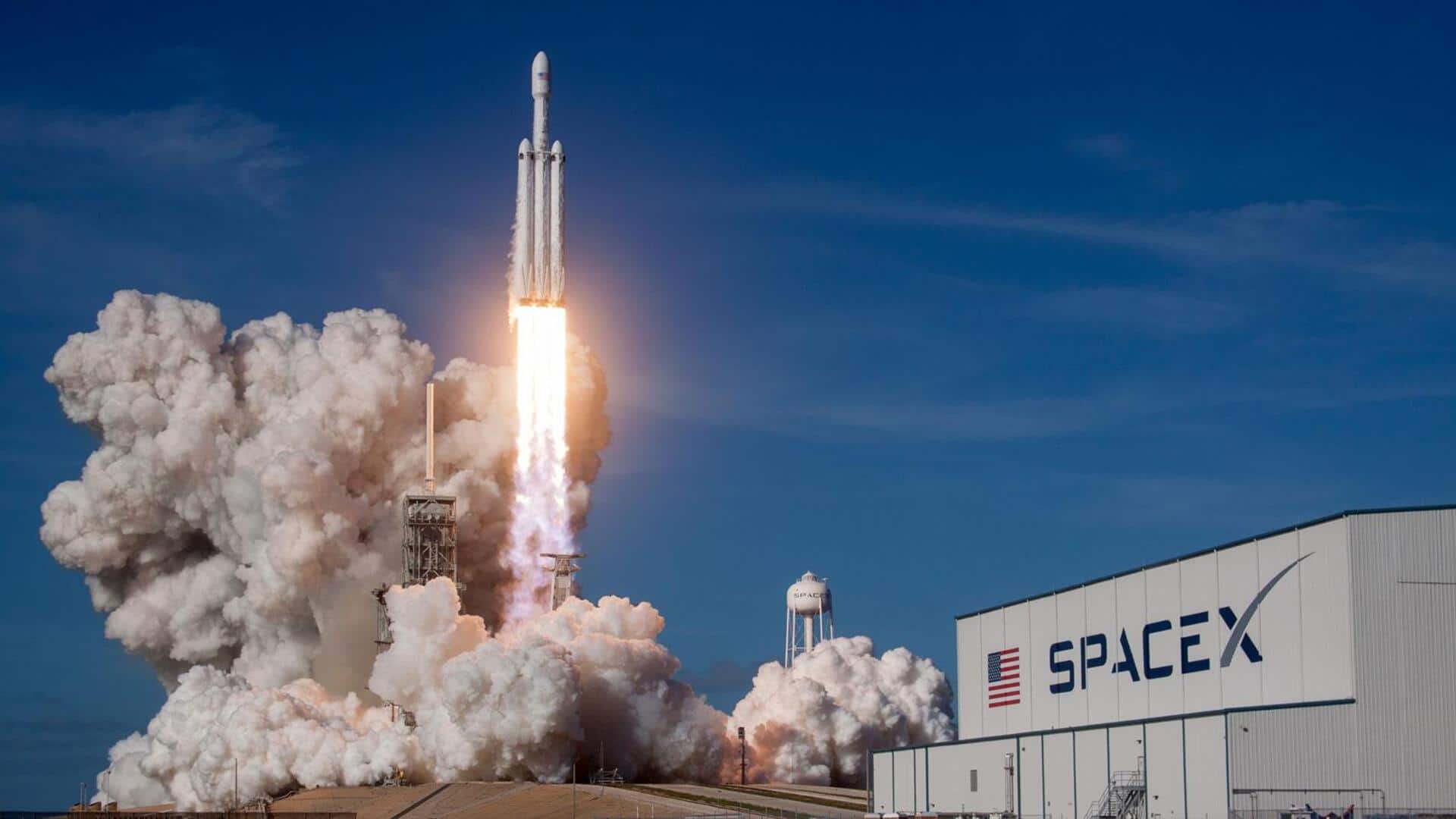
SpaceX is all set to launch NASA's next exoplanet mission today. The Falcon 9 rocket, carrying around 40 payloads including NASA's Pandora exoplanet satellite, will lift off from California's Vandenberg Space Force Base. The launch is scheduled for a 57-minute window starting at 8:19am EST (6:49pm IST), and you can catch the action live on SpaceX's website or X account with coverage starting about 15 minutes before liftoff.
Mission details
Pandora's mission to study exoplanets
The Pandora satellite, weighing 325kg, will spend a year in orbit studying at least 20 known exoplanets.
It will use a telescope with a diameter of 17-inch (45cm) to observe these worlds as they "transit" or cross their host stars from the satellite's perspective.
This method, which causes a slight dip in the brightness of the host star, has been instrumental in discovering over 6,000 alien planets so far.
Atmospheric analysis
Role in characterizing exoplanet atmospheres
Pandora will also help astronomers characterize known exoplanets, particularly their atmospheres.
Different elements and molecules absorb light at specific wavelengths, so studying the spectrum of starlight that has passed through an atmosphere can reveal a lot about its composition.
However, this work is complicated by stellar complexity as star surfaces are not uniform and often feature patches of varying brightness like sunspots on our own star.
Spectral separation
Strategy to overcome stellar complexity
To tackle the problem of stellar complexity, Pandora will use a two-pronged approach.
It will monitor the brightness of an exoplanet's host star in visible light while simultaneously collecting infrared data.
This way, multiwavelength observations can provide constraints on the star's spot coverage, helping separate its spectrum from that of the planet.
The satellite will focus on planets with water or hydrogen-dominated atmospheres.
Payload diversity
A diverse payload for SpaceX's Twilight mission
The Twilight mission, which will carry Pandora, has a diverse set of payloads.
It includes 10 of Kepler Communications's Aether spacecraft and two advanced Acadia Earth-imaging radar satellites from Capella Space.
This launch will be the fifth for this particular Falcon 9's first stage.
If everything goes according to plan, the booster will land back at Vandenberg about 8.5 minutes after liftoff.