Dogs can differentiate between fearful and sad human faces: Study
What's the story
A recent study has found that dogs can tell apart different types of unhappy human faces. The research, in which Dr. Laura Cuaya from the University of Vienna was a co-author, shows that dog brains not only differentiate happy faces from other expressions but also distinguish between different negative ones. This is the first time such a capability has been demonstrated in dogs, according to Cuaya.
Research methodology
How the study was conducted
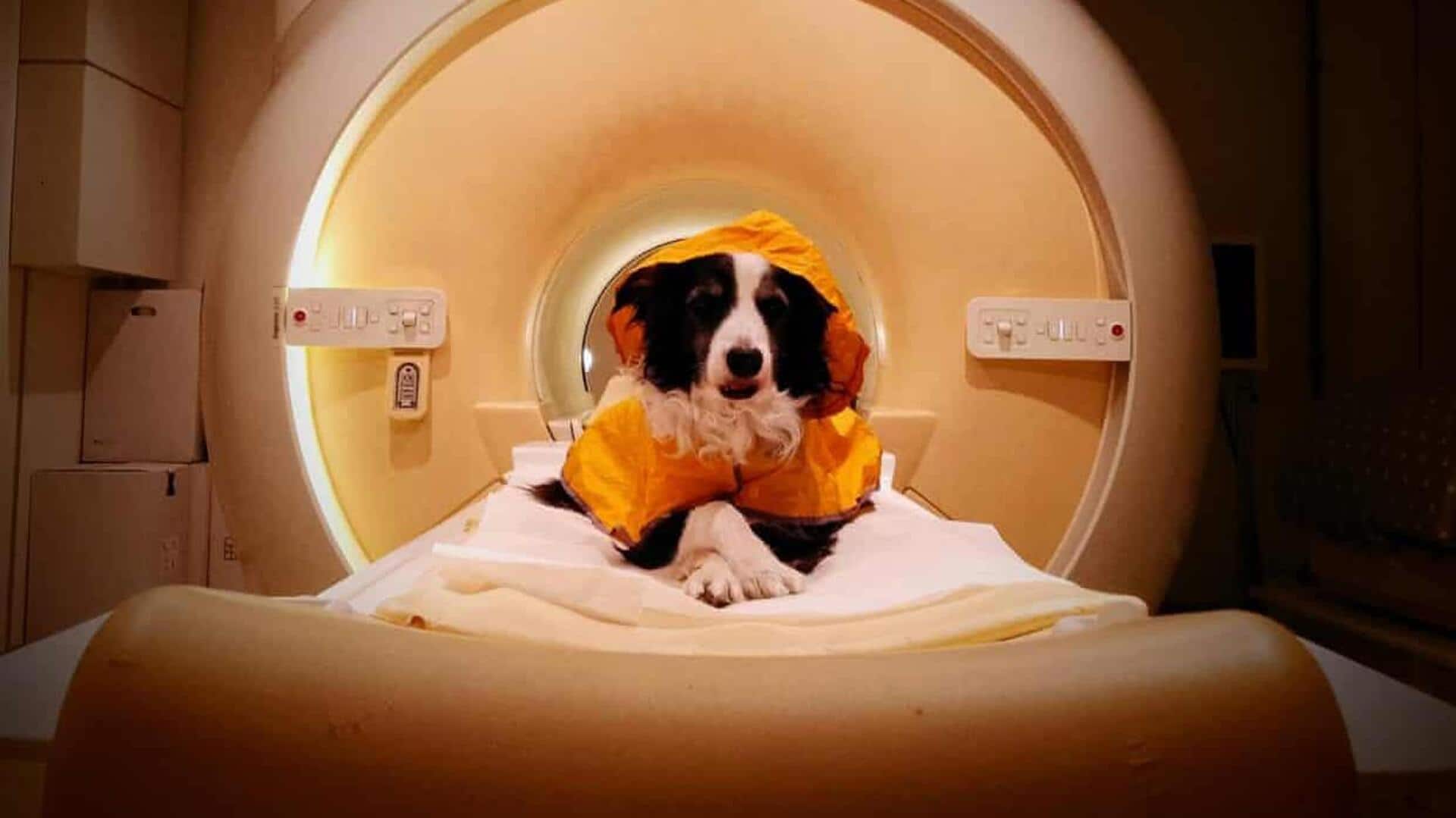
The study involved pet dogs trained to lie still, awake, and unrestrained in an MRI scanner.
In the first experiment, eight dogs were shown five sets of happy faces and five sets of neutral faces.
The results showed increased activity in certain brain regions when happy faces were presented as opposed to neutral ones.
These areas are linked with higher visual processing, social processing, and reward processing, indicating that the dog was interpreting something positive.
Emotional differentiation
Dogs could differentiate happy faces from sad and angry ones
In a second experiment, 12 dogs were shown new sets of unfamiliar human faces with four different expressions: happiness, sadness, fear, and anger.
Machine learning was used to analyze activity in the same brain regions identified in the first experiment.
The analysis revealed that this activity could differentiate happy faces from each negative expression but not between different types of unhappy faces.
Distinct responses
Couldn't tell apart sad and angry faces
When the researchers examined activity across the entire dog brain, they found it could differentiate between sad and fearful faces as well as angry and fearful ones.
This was indicated by differences in activity across different brain regions.
However, no distinction was observed between angry and sad faces.
The authors suggest that different negative expressions might trigger varying responses as they represent different types of threats.
Limitations
Cuaya pointed out limitations of the research
Cuaya said the study could have practical implications, such as showing happiness while training a dog could help in learning.
However, it should be noted that the research has certain limitations like a small sample size and most of the dogs being border collies, and all were healthy and without behavioral problems.