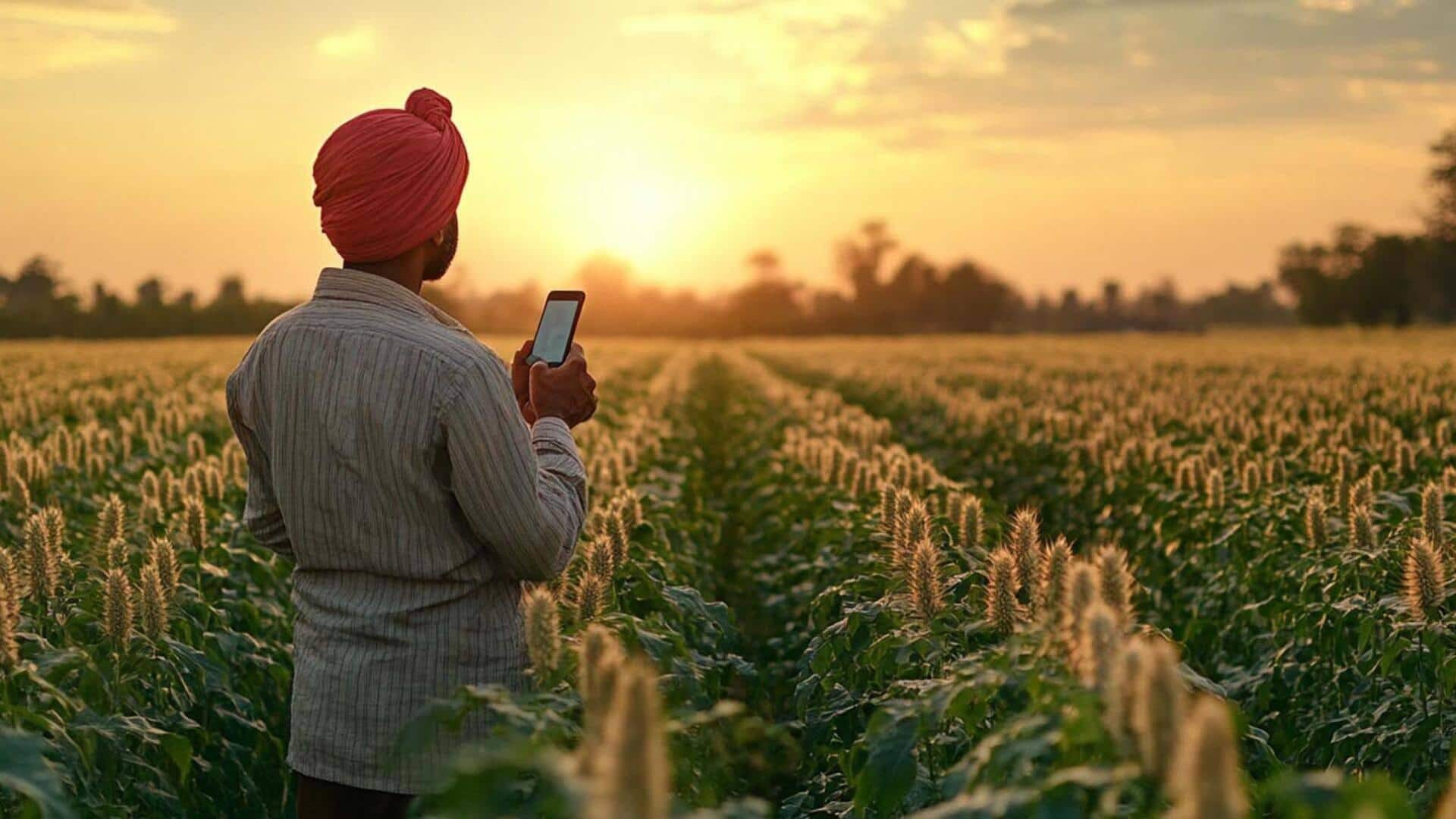
These AI farming tools help boost yields and cut costs
What's the story
By offering data-driven insights to improve yields, cut down waste, and increase sustainability, AI-driven precision farming is revolutionizing crop management. By combining different sources of data such as soil tests, weather conditions, and predictive models, AI tools can provide site-specific recommendations for fertilizer application, irrigation, pest control, and even planting. This way, farmers can make informed decisions and maximize their operations.
Tip #1
Real-time decision making with AI
AI platforms are paving the way for real-time decision-making in agriculture. For example, John Deere's digital ecosystem connects machinery with analytics and variable-rate technology. This way, farmers can make decisions right from the tractor cab. By streamlining nutrient and input strategies through real-time data analysis, they can improve efficiency and productivity on their farms.
Tip #2
Advanced crop protection strategies
Bayer's AI-based platforms delve into massive datasets to deliver real-world advice on how to protect crops. These platforms go beyond trials to wider field applications by providing insights on nutrients and planting strategies. The capability to sift through a lot of data allows to develop sophisticated crop protection strategies that are customized for specific conditions.
Tip #3
Scalable systems for global impact
Syngenta's Cropwise system is the perfect example of a scalable AI-powered solution managing digital farms spanning 70 million hectares across more than 30 countries. By leveraging GPS technology with machine learning and satellite imagery, it allows for precise applications of fertilizers and pest control measures down to the meter or even a single plant level. Such scalability tackles global agricultural challenges in an effective manner.
Tip #4
Generative AI as agronomy assistant
Emerging generative AI technologies serve as conversational agronomy assistants to farmers. They explain recommendations clearly while comparing various scenarios for yield prediction or disease modeling. They integrate across systems for tasks like irrigation scheduling, making them invaluable resources for modern farming practices that focus on maximizing output efficiently.