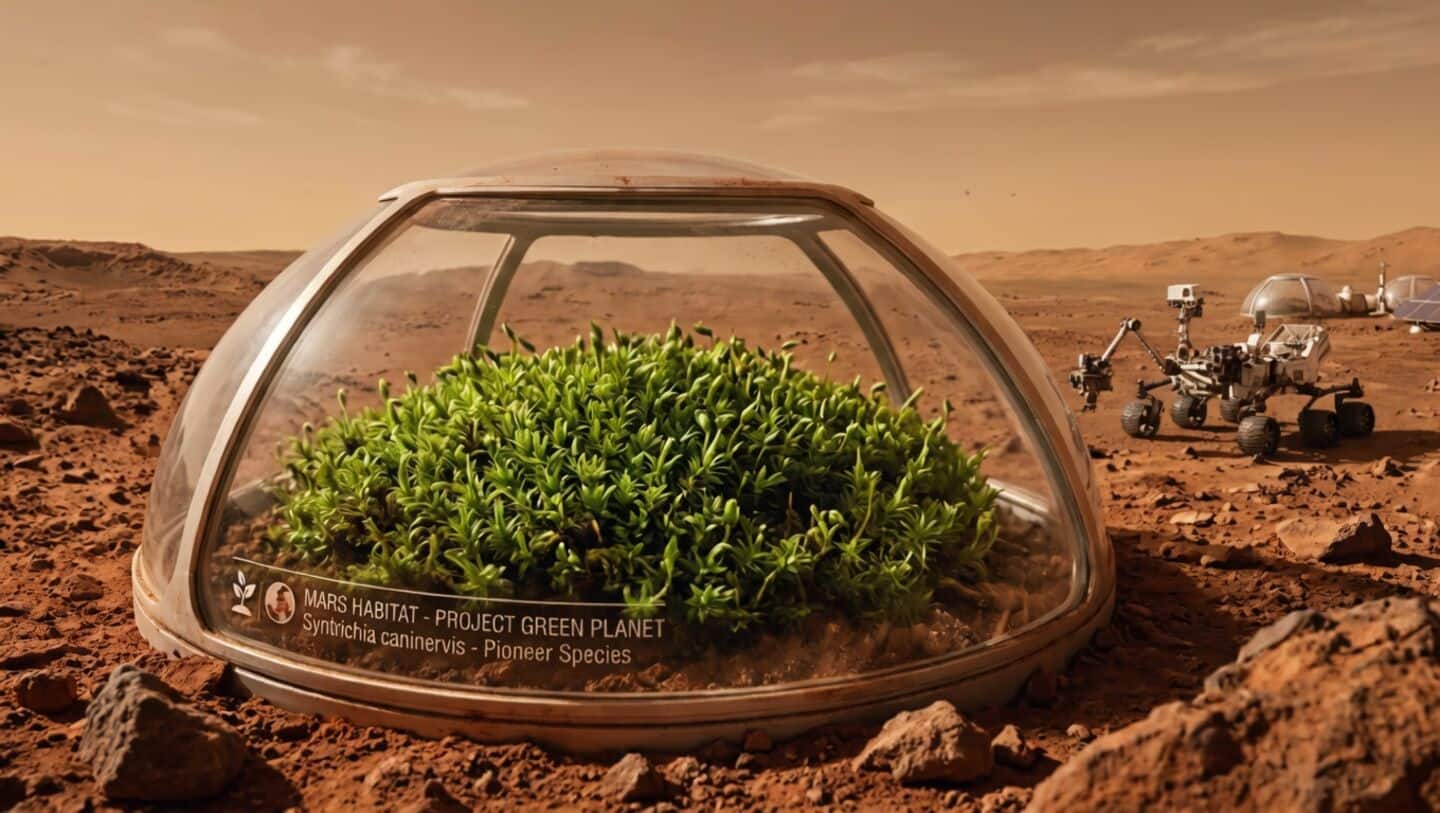
This tough desert moss could survive on Mars
Scientists found that a tough desert moss called Syntrichia caninervis survived conditions similar to those on Mars.
It bounced back after losing almost all its water, being frozen at minus 196 degrees Celsius for a month, and taking gamma radiation doses way beyond what humans or even tardigrades can handle.
Moss outperformed tardigrades
This moss withstood very high gamma radiation doses in the low thousands of grays (reported values include ~4,000 Gy ; lethal effects reported near ~5,000 Gy), more than tardigrades (the tiny "indestructible" animals) and roughly 100 times the typical human lethal dose (if using ~50 Gy as the human lethal-dose reference).
It's the first time researchers have tested whole plants for surviving space-like extremes.
Could help in creating life-supporting soil on Mars
The secret? The moss keeps its cells intact and stores sugars that help it revive fast after stress.
After a week in simulated Martian conditions (CO2-rich, low-oxygen atmosphere, bone-dry air, freezing temperatures, harsh ultraviolet radiation) it later regenerated once returned to recovery conditions (regrowth observed over the following days-weeks).
Scientists think this super-moss could help kickstart life-supporting soil on Mars someday, making real-life space habitats more possible.