
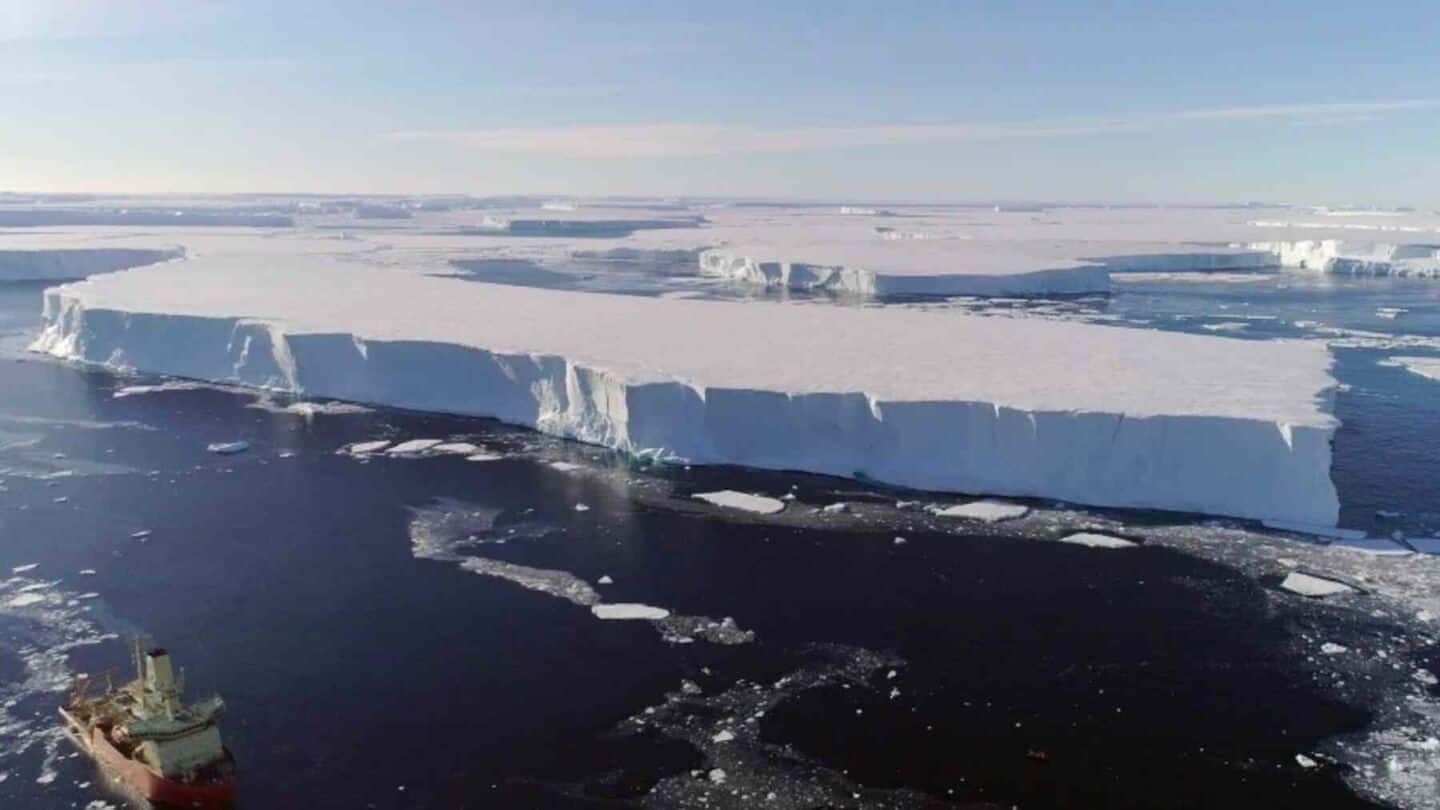
Thwaites Glacier cracks have doubled, raising fears of sea-level rise
What's the story
The Thwaites Glacier, popularly known as the Doomsday Glacier, is showing more signs of damage and is inching closer to its end. A new study has found that the cracks on the glacier have spread over a larger area in the last two decades. The research team from the University of Manitoba observed progressive fracturing around a prominent shear zone upstream of its pinning point, gradually compromising its structural integrity.
Damage assessment
Cracks on Thwaites Glacier have doubled in length
The study revealed that the "total area length of fractures" on the Thwaites Glacier has increased from around 161km to over 322km in two decades. This observation was confirmed by another study published by the International Thwaites Glacier Collaboration (ITGC), which confirmed the weakening of the glacier's structural integrity due to large cracks. The research also suggested that major new stresses are acting on the glacier, as its average length didn't actually increase during this period.
Impact on sea levels
Thwaites Glacier's potential collapse could raise sea levels
The Thwaites Glacier, dubbed the "weak underbelly" of the West Antarctic Ice Sheet, is facing irreversible damage. It is projected to collapse even under minimal stress. The eastern portion of this glacier, called the Thwaites Ice Shelf, is expected to break apart by 2032. Once it collapses, the outflow from the glacier will speed up and lead to a complete breakdown. This could result in a significant rise in global sea levels by as much as 11 feet.
Additional threats
Warming ocean waters and circular currents threaten glaciers
The threat to glaciers isn't limited to Thwaites alone. A recent study revealed that warming ocean waters are melting ice shelves at an alarming rate. The changes are so rapid they can be observed in mere hours and days. Meanwhile, circular currents of water nearly 10km wide are digging underneath the glaciers, creating a positive feedback loop that accelerates ice melt even further.