Why UN seeks 18% global emissions cut by 2030
What's the story
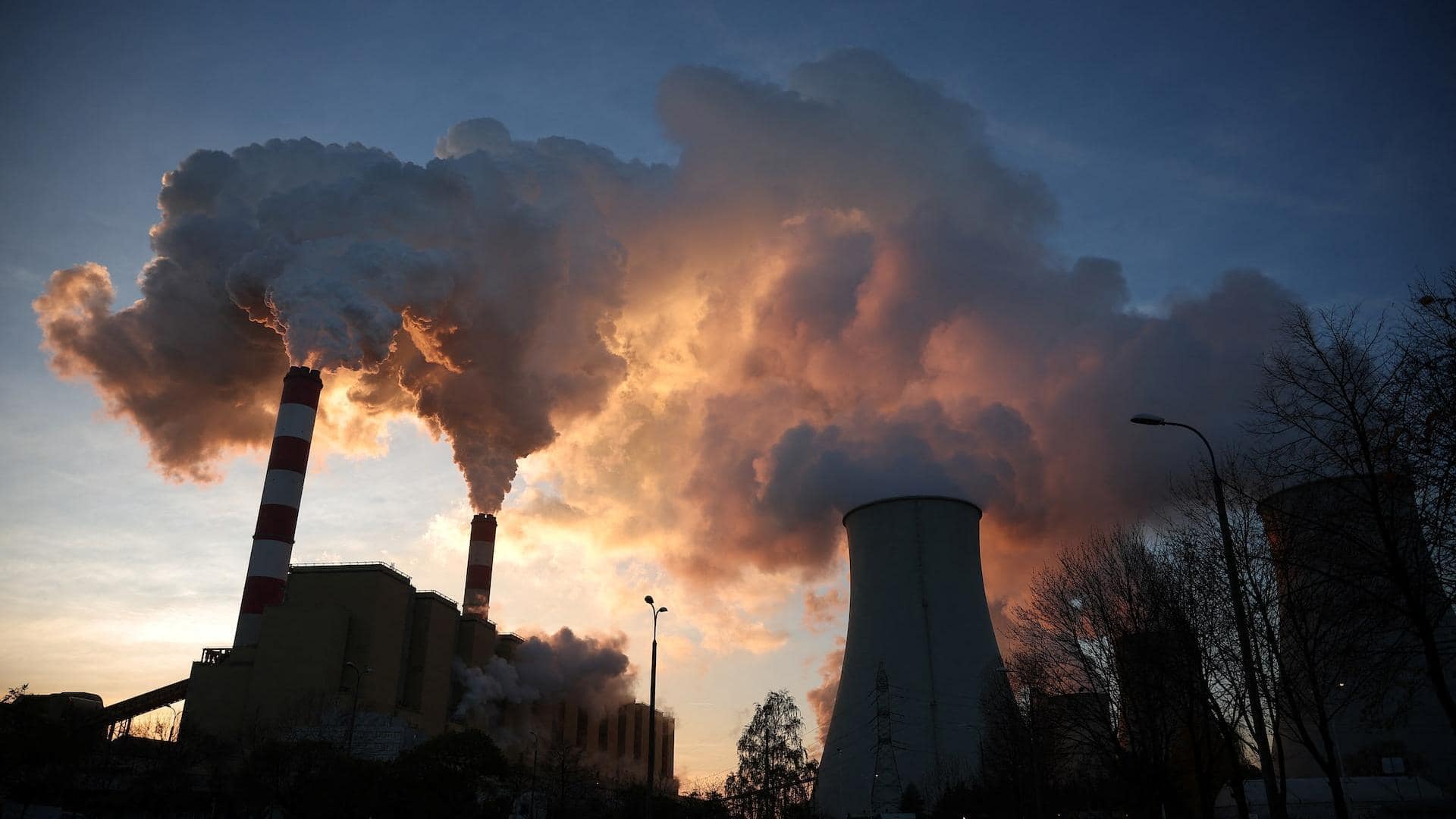
The United Nations Environment Programme (UNEP) has warned that the world needs to cut carbon emissions by nearly a fifth in the next four years. This is necessary to avoid overshooting climate targets by a disastrous margin. The report also states that while the "window has closed" on keeping temperature rises within 1.5 degree Celsius, limiting the "overshoot" of that target is still possible.
Action gap
Gap between climate goals and policies
The UNEP's report highlights a significant gap between climate goals and policies, with countries failing to convert their long-term targets into short-term actions.
Global carbon output seems to have plateaued in 2025, but analysts are hesitant to call it a peak or plateau due to geopolitical uncertainties and increased reliance on fossil fuels despite strong renewable energy growth.
Temperature control
Cuts needed to limit temperature rises
The UNEP report stresses the need to cut greenhouse gases by 18% by 2030 and by 45% by 2045.
These cuts would give a good chance of limiting temperature rises to 1.7 degree Celsius above preindustrial levels.
However, even this would make extreme weather events like recent record heatwaves more common, though not drastically worse.
Continued commitment
UNEP executive director's statement
UNEP Executive Director Inger Andersen has urged countries to stick with the 1.5 degree Celsius goal, a key part of the Paris climate agreement.
She acknowledged that while the opportunity to stay within this limit has been missed, efforts can still be made to limit how long the overshoot lasts.
"This is about finding our way back as quickly as possible," she stressed.
Policy impact
US withdrawal from Paris climate agreement
Under Donald Trump's administration, the US, world's second-largest emitter after China, had withdrawn from the Paris climate agreement.
This move threatens to reverse its long-term trend of reducing greenhouse gas emissions.
Bill Hare, CEO of Climate Analytics thinktank, emphasized that major fossil fuel producers like the US and Saudi Arabia need to stop politicizing this issue and confront scientific reality.