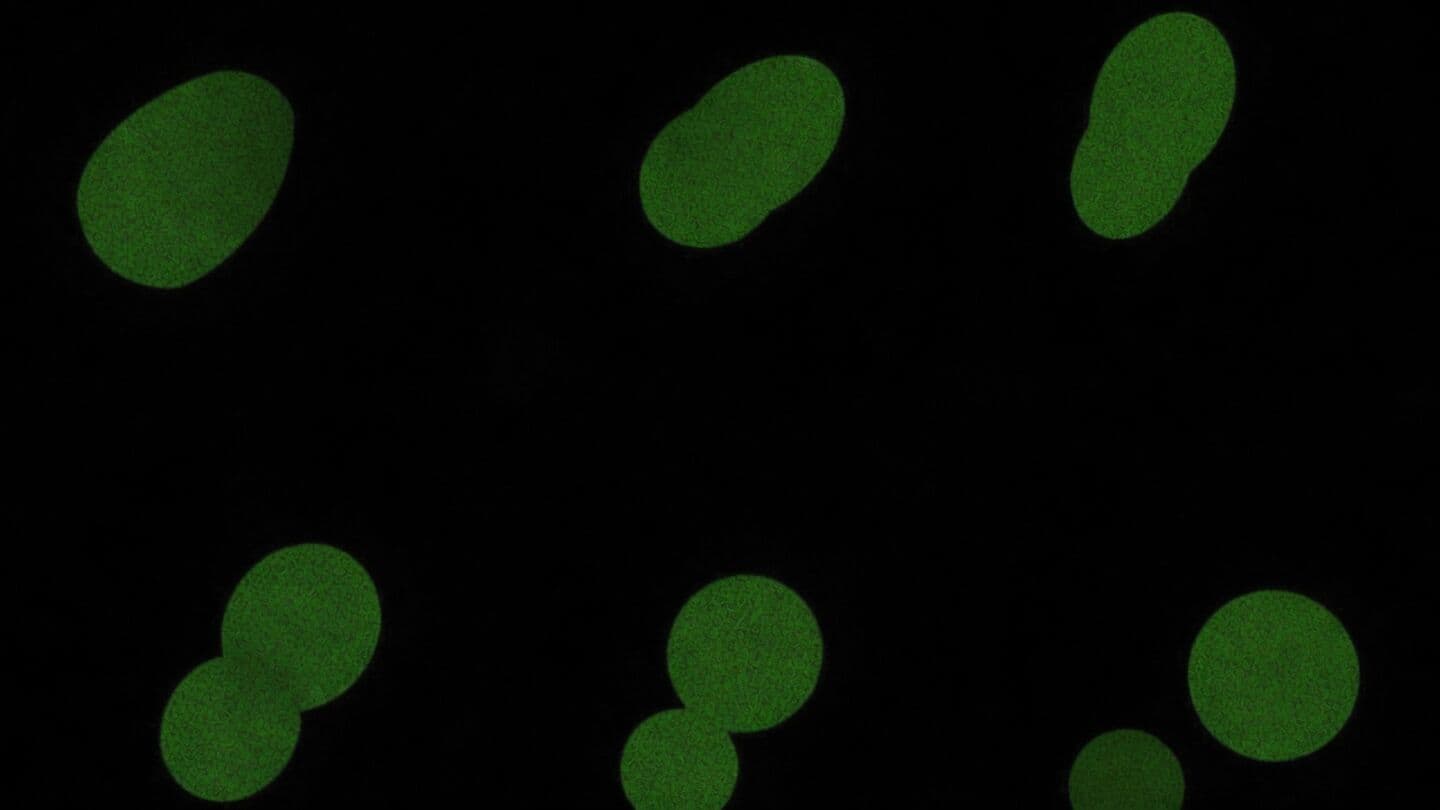
University of Minnesota creates synthetic cells that eat and split
Scientists at the University of Minnesota have built synthetic cells that act a lot like real ones: they can eat, grow, and even split themselves.
These cells started as tiny fat bubbles (liposomes) with a special system inside that makes proteins from DNA.
To feed, they merge with smaller bubbles packed with nutrients, using a protein hook to pull them in.
Synthetic cells divide via protein crowding
At first, the cells were split apart mechanically, but researchers found a way to make them divide on their own by crowding proteins on their surface until the membrane pinched into two new cells.
The team also tweaked the DNA so some cells got better at feeding and reproducing faster, kind of like evolution in action.
Professor John Dupre noted that the work shakes up how we think about life itself, showing it might just be clever chemistry after all.