US Air Force's hypersonic missile test hits supersonic speeds
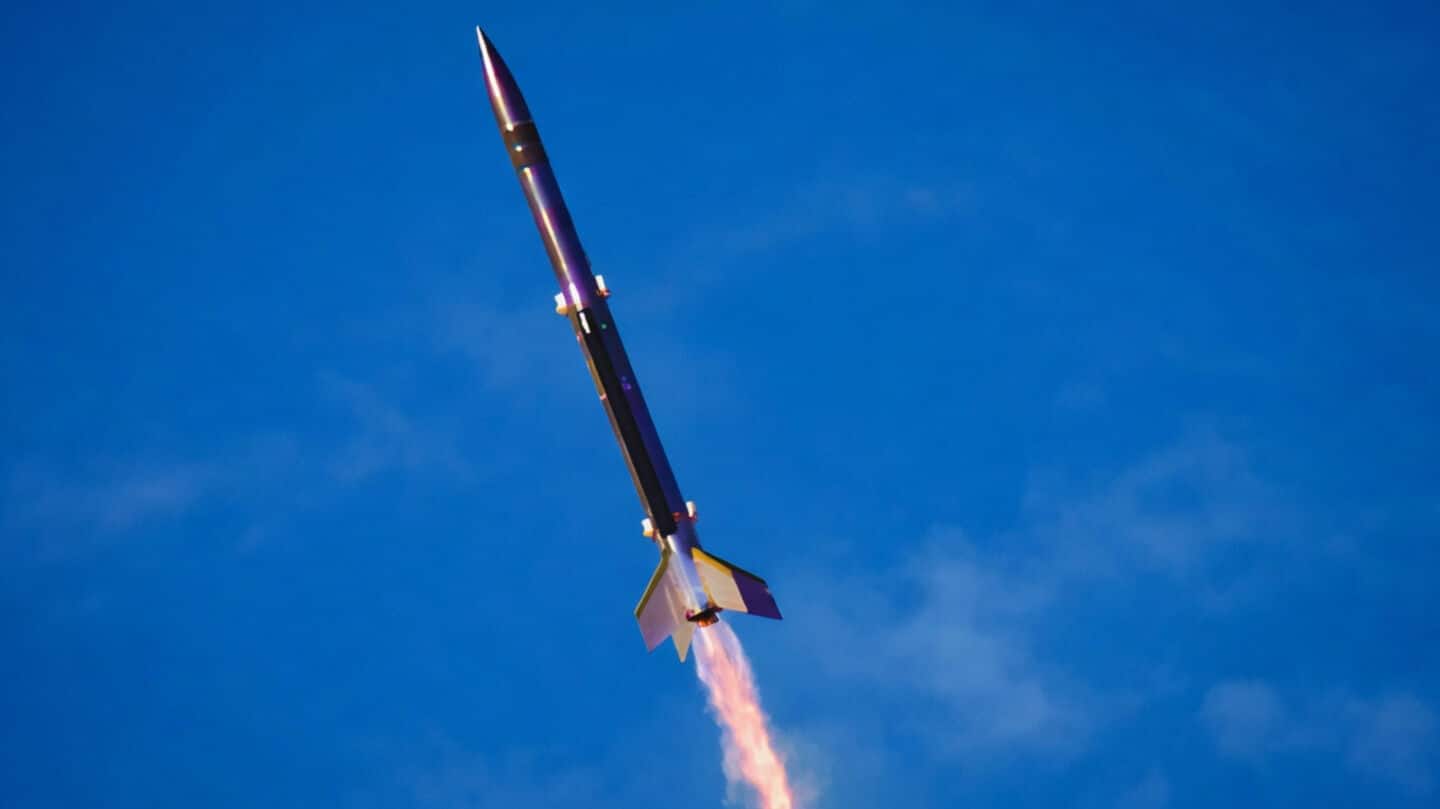
Air Force Research Laboratory (AFRL) and Ursa Major just pulled off a successful test flight that reached supersonic speeds using the Affordable Rapid Missile Demonstrator (ARMD) powered by the Draper liquid rocket engine.
The January 2026 test hit supersonic speeds and proved the engine can be throttled, marking a big leap for affordable, reliable hypersonic technology.
Engine packs 1814kg of thrust
Draper's engine packs 1814kg of thrust and runs on hydrogen peroxide and kerosene that store at room temperature; no fancy cooling needed.
It's restartable, uses a closed-cycle design based on proven technology, and is made with in-house 3-D printing for fast, cost-effective production.
Flight proves you can get vehicle with safe, storable liquid engine
Ursa Major delivered the ready-to-fly system in just eight months.
CEO Chris Spagnoletti summed it up: This flight proves that you can get a vehicle with a safe, storable and throttleable liquid engine in the air quickly and affordably.
Air Force Research Laboratory's Javier Urzay called it a milestone for scalable hypersonic technology.
Test could lead to advanced defense technology
Unlike Russia's Zircon or China's DF-17, Draper's throttleable design lets it handle tricky maneuvers inside or outside the atmosphere, which could be useful for interceptor concepts.
This successful test could open doors to even more advanced defense technology down the line.