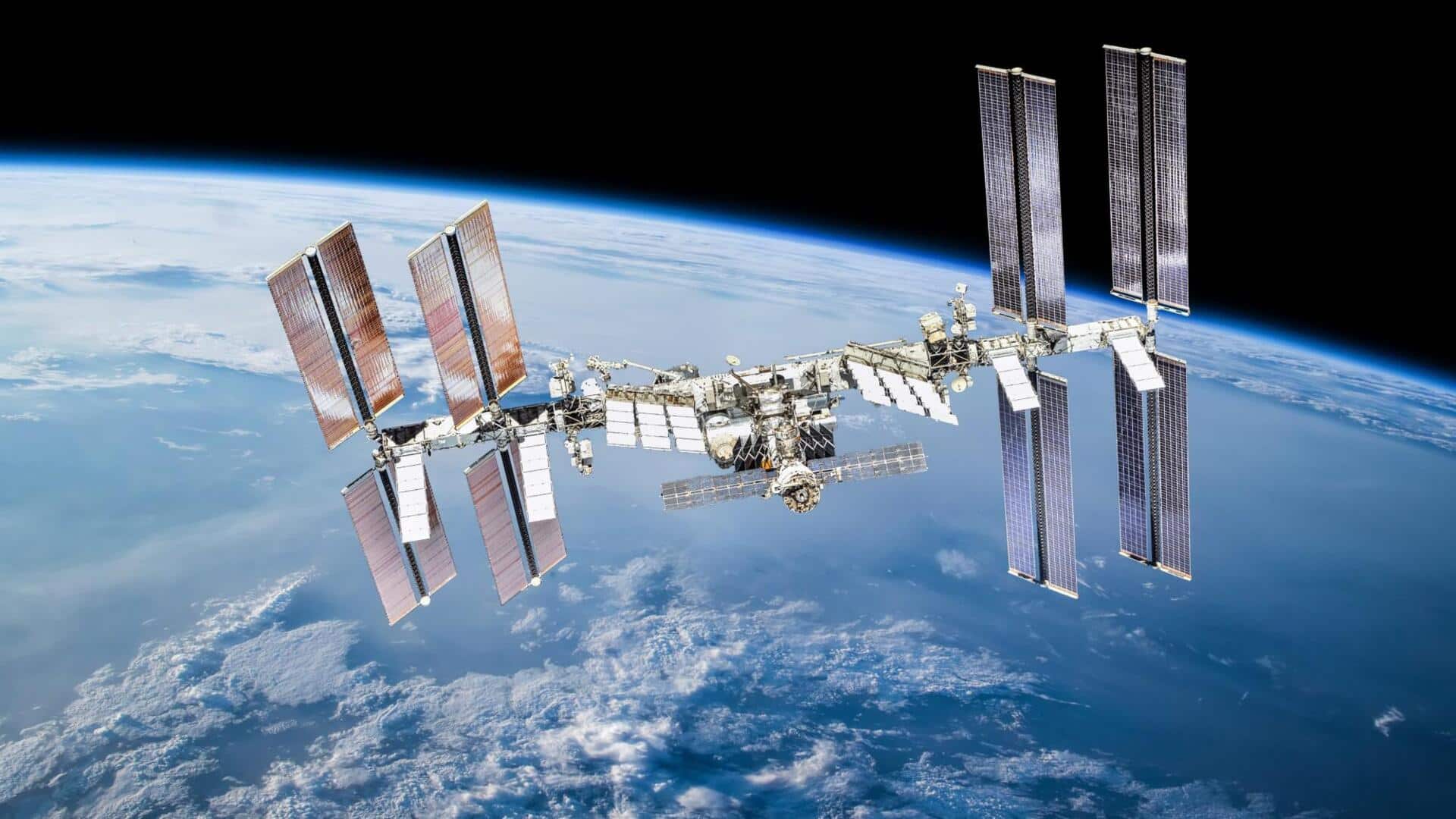
Why end of International Space Station is risky for US
What's the story
The International Space Station (ISS), a key player in low-Earth orbit (LEO) for over 25 years, is nearing its end. The US plans to replace it with commercial space stations for NASA and international astronauts. However, experts warn that without a working space station for essential research, the US could face serious gaps in its space capabilities and national security risks.
Global competition
Potential shift in space dominance
China's advanced Tiangong space station, operational since 2022, is hosting up to three astronauts at a time for complex research projects.
If the ISS is retired and Tiangong becomes the sole space station in LEO, many global space technologies will adapt to it.
Dylan Taylor, CEO of Voyager Technologies (one of the firms working on a commercial space station concept), warned that this could be similar to how Apple and Android became dominant players in smartphone development.
Legislative action
US lawmakers push for ISS extension funding until 2032
Despite plans to keep the ISS operational until at least 2030, US lawmakers are pushing for an extension of funding until 2032.
The move comes as a response to delays in NASA's request for proposals for sustained commercial low-Earth orbit services.
These delays have created uncertainty in development planning and financing decisions of commercial providers, according to the bill.
Agency response
NASA's commitment to commercial operations
NASA has said it is committed to transitioning the ISS to commercial operations in LEO.
The agency's press secretary Bethany Stevens said they are taking necessary time to ensure decisions align with President Donald Trump's space policy while moving forward as affordably as possible.
However, private firms developing next-generation space stations are still waiting for guidance from NASA and funding for their projects.
Funding influx
Companies secure funding for new space stations
Several companies have recently secured major funding to accelerate the development and launch of new space stations.
Houston-based Axiom Space raised $350 million last month, while its California-based rival Vast secured a $500 million raise in early March.
Vast is determined to launch a bare-bones station called Haven-1 into orbit next year, with or without federal input.