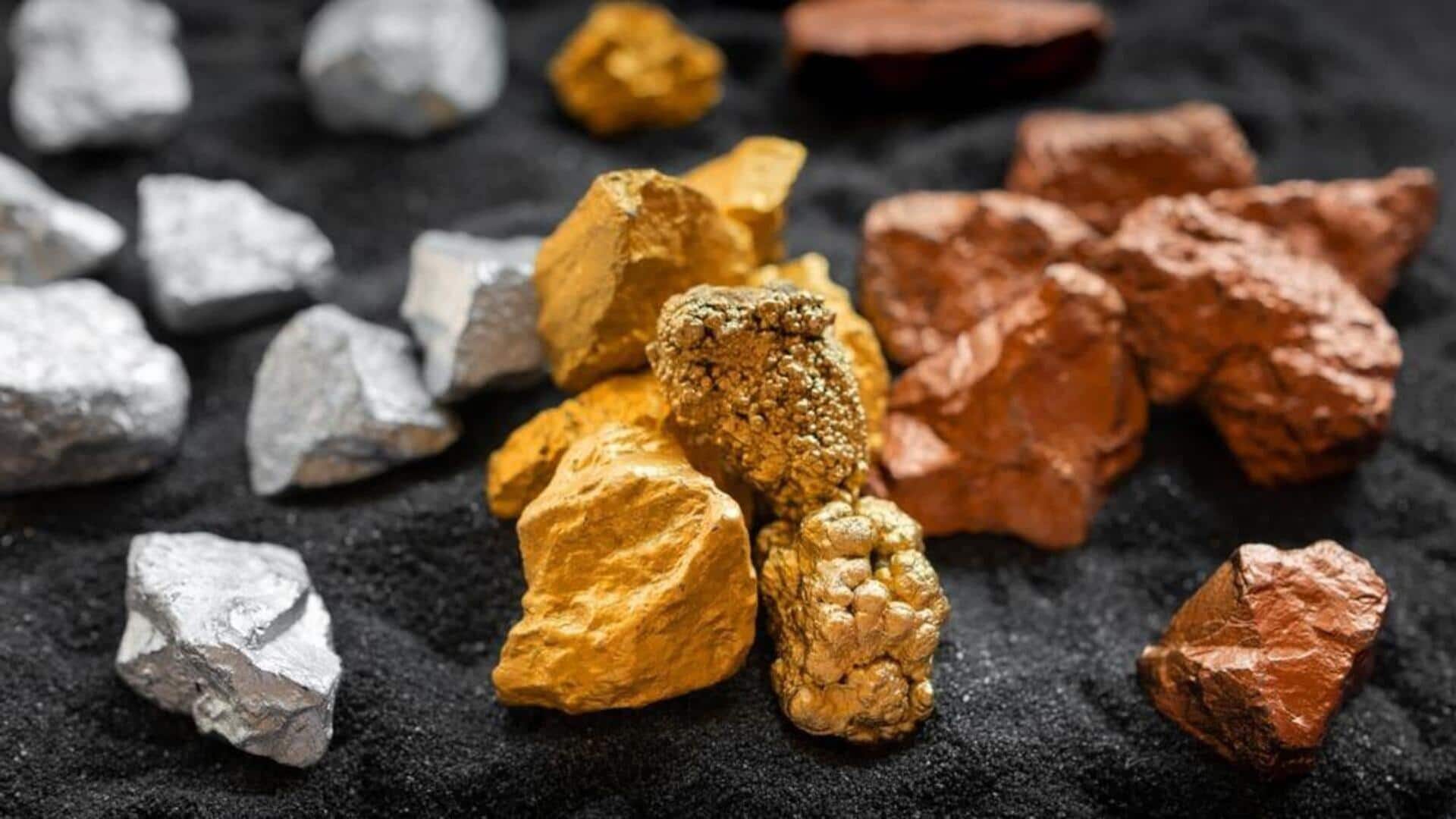
Rare earths are now being extracted from mine wastewater
What's the story
In a major breakthrough, West Virginia University (WVU) researchers have started extracting valuable rare earth elements from acidic mine drainage. The process not only helps in cleaning up environmental pollution but also recovers critical minerals needed for high-tech products and clean energy technologies. This initiative is part of the United States's effort to reduce its dependence on China for these vital resources.
Mineral significance
Importance of rare earth elements
Rare earth elements are essential for manufacturing powerful magnets used in electric vehicles, wind turbines, drones, and fighter jets.
However, the US currently has only one rare earths mine in Mountain Pass, California.
This mine mainly produces "light" elements while "heavy" rare earths, more difficult to mine and highly desirable, are mostly sourced from outside the country.
Innovative approach
Research into mine wastewater began a decade ago
Around a decade ago, researchers at WVU discovered that wastewater from shuttered mines contained rare earths.
With public financing, they launched a pilot program to collect runoff at a retired coal mine in Mount Storm.
The water emerging from the mine is trapped in a basin where ochre-colored deposits are visible, and then piped into a small hillside plant for treatment and extraction of concentrated rare earths.
Environmental impact
Twofold benefits of the process
The treatment process at WVU's facility cleans up the water and extracts rare earths in concentrated form.
Lance Lin, Director of the WVU Rare Earth Elements Initiative, said this operation serves two purposes: environmental cleanup and recovering rare earths as a valuable byproduct.
He added that acid mine drainage is rich in "heavy" rare earths already naturally dissolved, eliminating the need for another mine to recover them.
Production potential
Plans for expansion and increased production
Despite its innovative approach, the Mount Storm facility can only produce about four tons of rare earth oxides per year. Of this, around 45% are "heavy" rare earths.
To build a more significant supply source, the university is considering a wider rollout to more sites.
If they achieve a production rate of 300 metric tons per year, it could meet 7-8% of global demand for rare earths like terbium and dysprosium.
Processing challenges
Need for processing capabilities in the US
After extracting the rare earth concentrate from wastewater, individual elements need to be separated and processed. However, the US has limited processing capabilities.
The government has been investing in companies specializing in separation, refining, and magnet production.
This year, a start-up involved in the WVU project signed a preliminary agreement with one such company, REalloys, to treat rare earths extracted from acid water drainage.