US weather body warns of record-breaking El Nino
What's the story
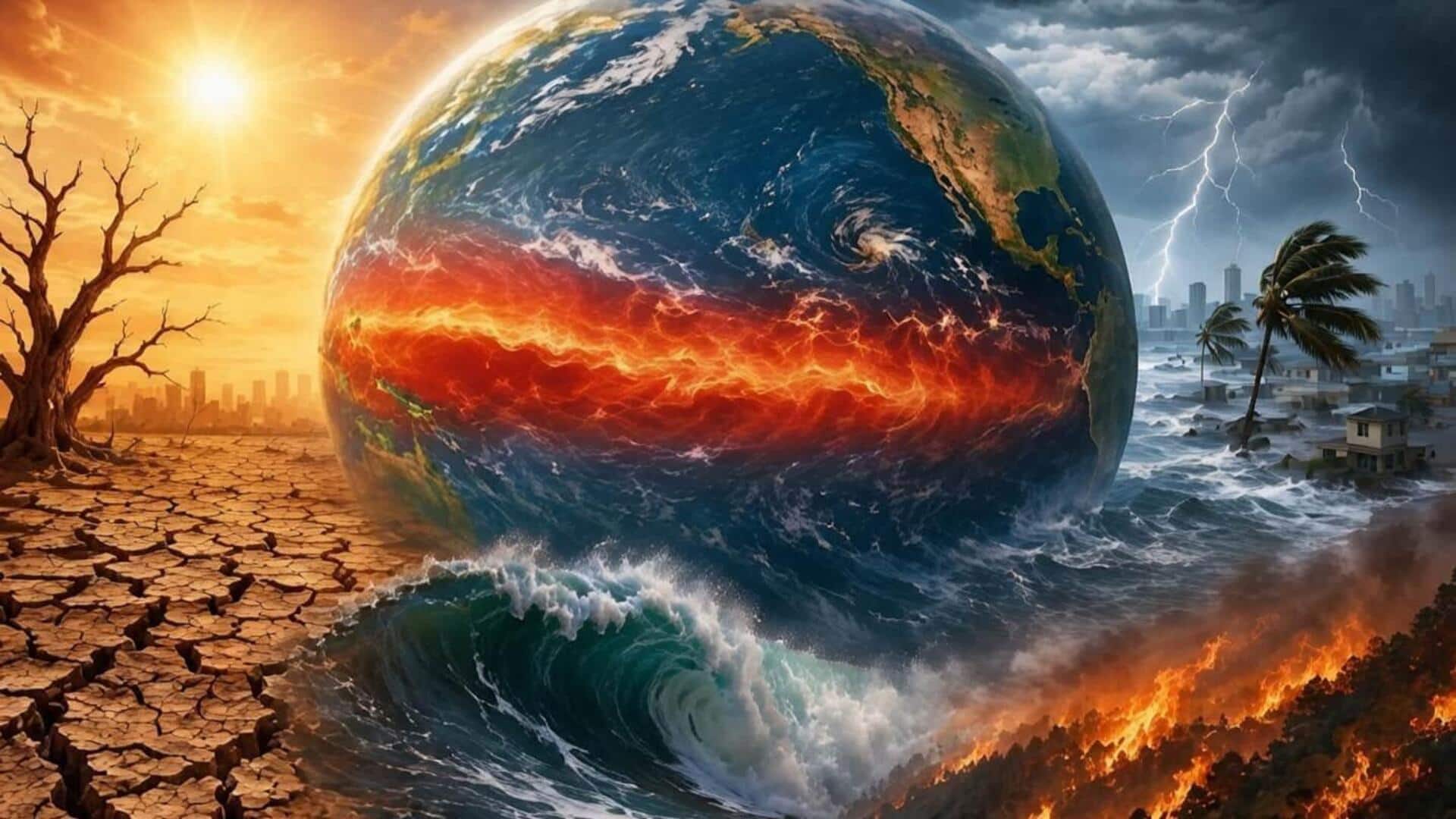
The US National Oceanic and Atmospheric Administration (NOAA) has confirmed the emergence of a powerful El Nino in the Pacific Ocean. The climate phenomenon is characterized by periodic warming of surface temperatures in the central and eastern equatorial Pacific Ocean, disrupting global weather patterns. NOAA has warned that this particular El Nino could become one of the strongest on record by year's end, with a 63% chance of being "very strong" between November and January.
Weather disruption
El Nino's impact on global temperatures
El Nino events, which occur every two to seven years and last nine to 12 months, can have a major impact on global weather patterns.
The current event is likely to exacerbate heat on an already warming planet due to fossil fuel emissions.
It usually peaks late in the year but releases ocean heat slowly into the atmosphere, pushing up global temperatures in the following year.
This could make 2027 one of the hottest years ever recorded.
Temperature rise
Intensification of El Nino events due to climate change
Marc Alessi from the Union of Concerned Scientists has warned that the combination of fossil fuel-caused climate change and a potential super El Nino event could easily push global temperatures to record levels.
He said, "While El Nino is a naturally occurring phenomenon, there is evidence that fossil fuel-caused climate change is making El Nino events more intense."
Regional impact
Regional effects of El Nino
The effects of El Nino vary by region.
It usually suppresses Atlantic hurricane activity but intensifies it in the Pacific, increasing risks for Hawaii and Pacific islands.
Western South America is likely to see heavy rain and floods, while Australia could face drought and heat.
In northeastern Africa, conditions could swing from severe drought to dangerously heavy rains due to this climate phenomenon.
Economic effects
Economic implications in the US
In the United States, El Nino usually brings heavier storms to the South and a warmer, drier winter for the Pacific Northwest.
However, it could slow down economic growth due to elevated temperatures.
"We have pretty clear evidence that the US economy grows more slowly when temps are above normal," said Stanford climate economist Marshall Burke.
Food crisis
East Africa at risk of extreme weather conditions
The forecast of an El Nino event is a major concern for millions around the world.
Mohamed Adow, director of Power Shift Africa, warned it could lead to "failed rains, dying crops, rising food prices, and families pushed to the edge yet again."
East African communities that have already been affected by droughts and floods in recent years are likely to face more extreme weather conditions due to this climate phenomenon.