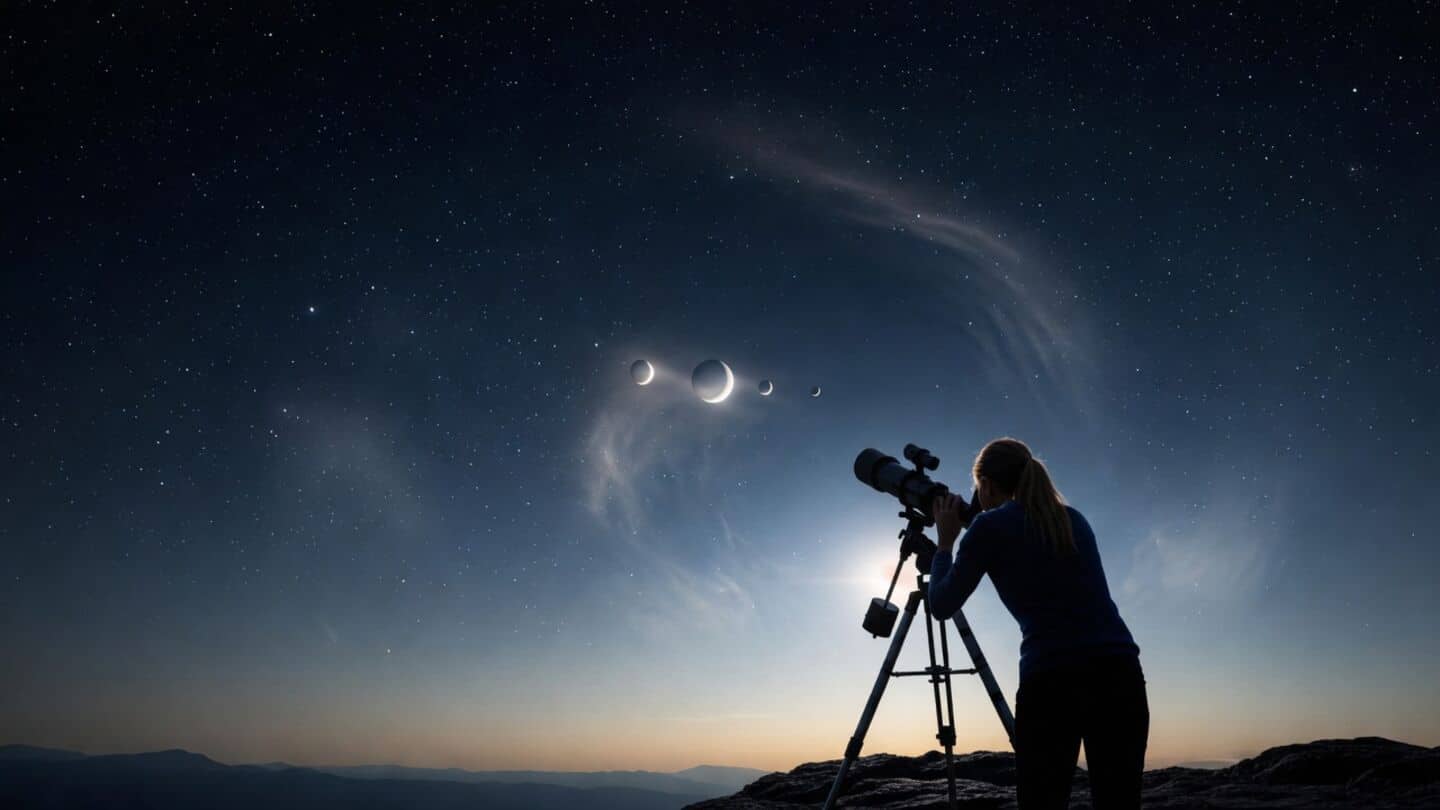
Venus, Jupiter, Mercury to align in 'planet parade' this week
What's the story
Skywatchers are in for a treat this June as three planets—Venus, Jupiter, and Mercury—come together in a stunning celestial display often referred to as a "planet parade." The highlight of the event will occur on June 9 when Venus and Jupiter appear exceptionally close to each other in the evening sky. According to NASA, the two planets will reach their closest apparent approach, creating a striking sight visible without any special equipment.
Astronomical event
Venus and Jupiter will be just 1.6 degrees apart
On June 9, Venus and Jupiter will be just 1.6 degrees apart, creating an illusion of them almost touching from Earth's perspective.
Even though the planets are actually separated by hundreds of millions of kilometers in space, their positions along a similar line of sight create this optical illusion.
The celestial pairing will be visible low in the western sky shortly after sunset and is expected to be one of the most eye-catching astronomical events of the month.
Planet parade
Mercury to join the lineup around June 11
Venus and Jupiter will stay within five degrees of each other from June 4 to June 14, giving skywatchers a wider viewing window.
The display becomes even more impressive between June 11 and June 15 when Mercury joins the lineup, creating a three-planet alignment that many astronomy enthusiasts call a planet parade.
To catch the event, head outdoors about 45 minutes after sunset and look toward the western horizon.
Viewing advice
Best viewing spots for the celestial spectacle
A location with a clear, unobstructed view of the western horizon will offer the best chance of seeing all three planets, especially Mercury, which remains close to the twilight glow.
The conjunction will take place within the constellation Gemini, near its well-known bright stars Castor and Pollux.
Although no special equipment is needed to witness this event under clear skies, binoculars can provide a closer look at the planetary grouping.