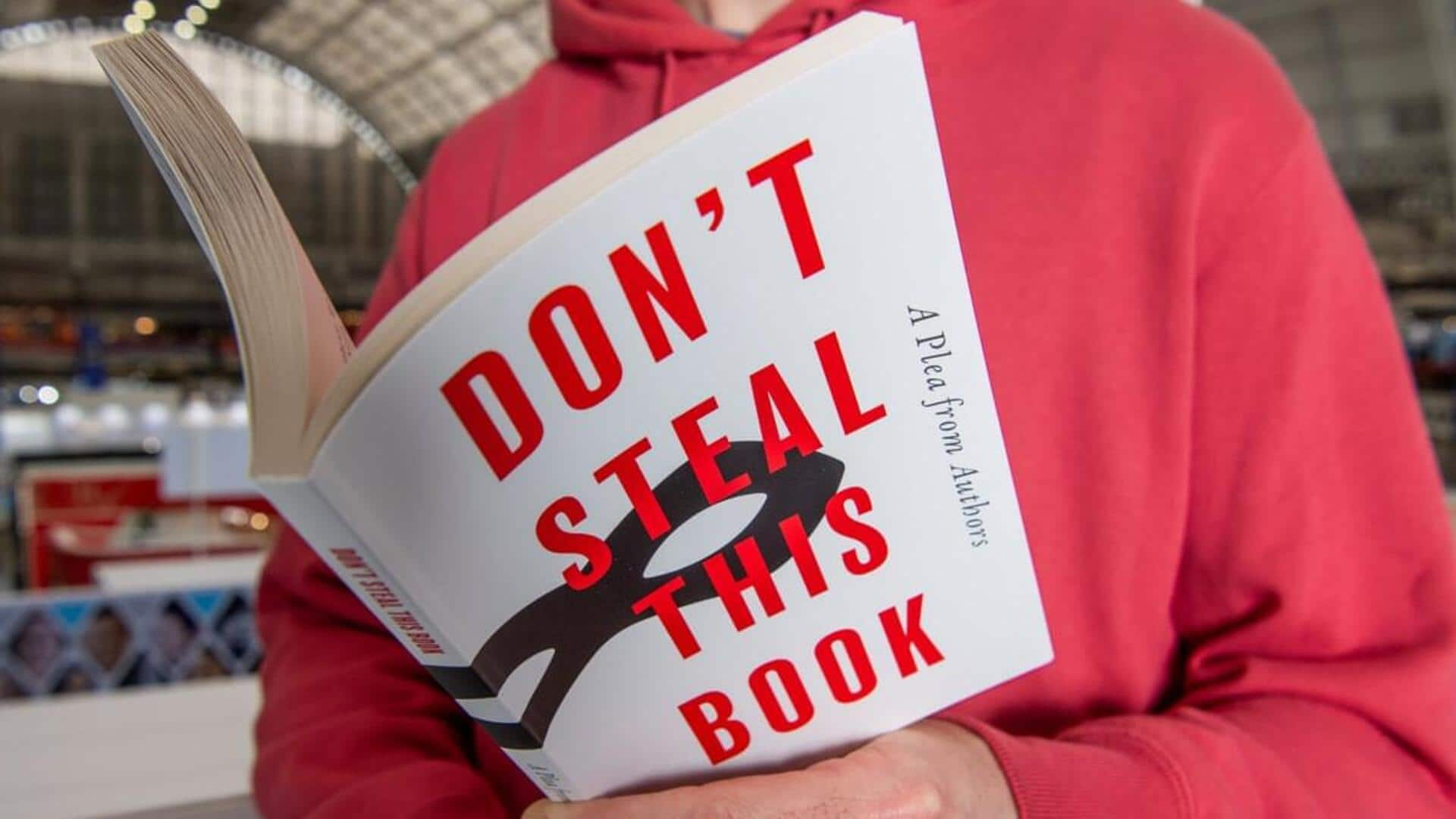
This book written by 10,000 authors is 'empty'
What's the story
In a unique act of defiance against the unauthorized use of their work by artificial intelligence (AI) companies, nearly 10,000 authors have come together to publish an "empty" book. The protest piece is titled Don't Steal This Book, and it only contains a list of the participating authors' names. Notable contributors include Kazuo Ishiguro, Philippa Gregory, Richard Osman, and Malorie Blackman.
Distribution strategy
AI's impact on original creators
The protest book is being distributed at the London Book Fair, ahead of a UK government assessment on the economic impact of proposed copyright law changes.
Ed Newton-Rex, the organizer of this unique protest and a composer, said that AI industry thrives on "stolen work ... taken without permission or payment."
He stressed that generative AI competes with original creators for their livelihoods.
Call for action
Collective demand for fair compensation
Blackman, another contributor to the protest book, echoed Newton-Rex's sentiments.
She said, "It is not in any way unreasonable to expect AI companies to pay for the use of authors' books."
The back cover of the book also states: "The UK government must not legalize book theft to benefit AI companies."
This shows a collective demand from authors for fair compensation and recognition of their work by AI firms.
Data usage
Legal battles over copyright infringement
AI companies need massive amounts of data, including copyright-protected work from the open web, to build tools like chatbots and image generators.
This has raised alarms among creative professionals and businesses globally.
Last year, Anthropic, the AI firm behind Claude chatbot, agreed to pay $1.5 billion in a class-action lawsuit by book authors who alleged that their works were illegally copied for training its flagship product.
Proposed changes
UK government's proposed options in consultation process
The UK government has proposed four options in its consultation process.
These include keeping the status quo, requiring AI companies to license copyrighted work, allowing the AI firms to use copyrighted work without an opt-out for creative companies/individuals, and a copyright waiver for "commercial research," which the government has refused to rule out.
The latter has particularly worried creative professionals who fear it could be abused by AI firms for unauthorized use of artists' work.