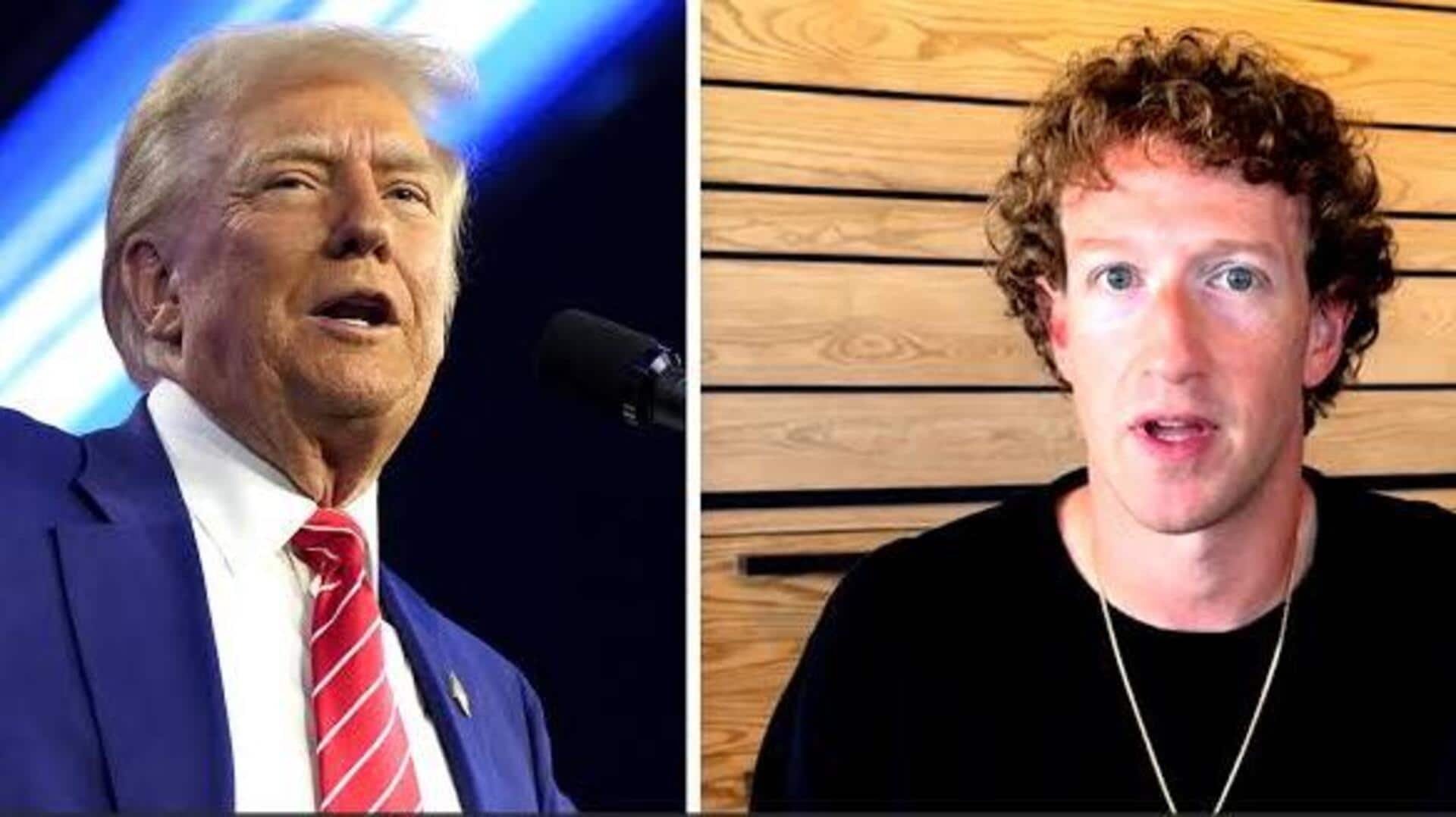
Zuckerberg called Trump to voice concerns over national AI regulator
What's the story
Meta CEO Mark Zuckerberg has expressed concerns over the proposal of a national artificial intelligence (AI) regulator. The information was revealed by Politico, which reported that Zuckerberg shared his reservations during a private phone call with US President Donald Trump. The proposal, backed by Nobel Prize-winning Google scientist Demis Hassabis and some senior administration officials, seeks to create an independent oversight body modeled after the Financial Industry Regulatory Authority (FINRA).
Oversight body
Proposed regulator to examine AI models
The proposed regulator would be tasked with examining advanced AI models and assessing operational risks before they are made publicly available.
This was confirmed by a senior White House official who was familiar with the exchange between Zuckerberg and Trump.
While Zuckerberg did not directly ask for a policy reversal from the president, he did suggest that any appointees to such a regulatory body should align with Trump's own light-touch regulatory stance toward technology.
Industry briefing
FINRA-style framework presented to Trump in mid-August
In mid-August, administrative briefings were held where the Financial Industry Regulatory Authority (FINRA)-style framework was presented to Trump and leading artificial intelligence firms such as Meta, OpenAI, and Anthropic.
The idea of an industry-backed standards organization to counter emerging cybersecurity dangers was proposed by Hassabis in July.
He later pitched these ideas directly to White House staff members during administrative sessions over the summer.
Regulatory stance
Zuckerberg's concerns about state oversight
FINRA is a self-regulatory organization that oversees domestic broker-dealers under the supervision of the Securities and Exchange Commission (SEC).
However, it generally does not get involved in vetting specific financial investment instruments before market entry.
Separately, Zuckerberg had expressed his reservations about rigid state oversight of technological rollouts in an August essay.
He stressed that close public-private coordination is essential while warning against administrative delays, which could jeopardize American leadership over China.
Policy impact
Technology leaders' influence on administration's policy trajectory
The phone exchange between Zuckerberg and Trump highlights the growing influence of technology leaders on the administration's policy trajectory.
Direct appeals to Trump have been known to alter or delay regulatory directives.
Despite previous friction during earlier attempts to introduce a broader executive order on artificial intelligence, the proposal for an independent industry watchdog is still under active administrative review.