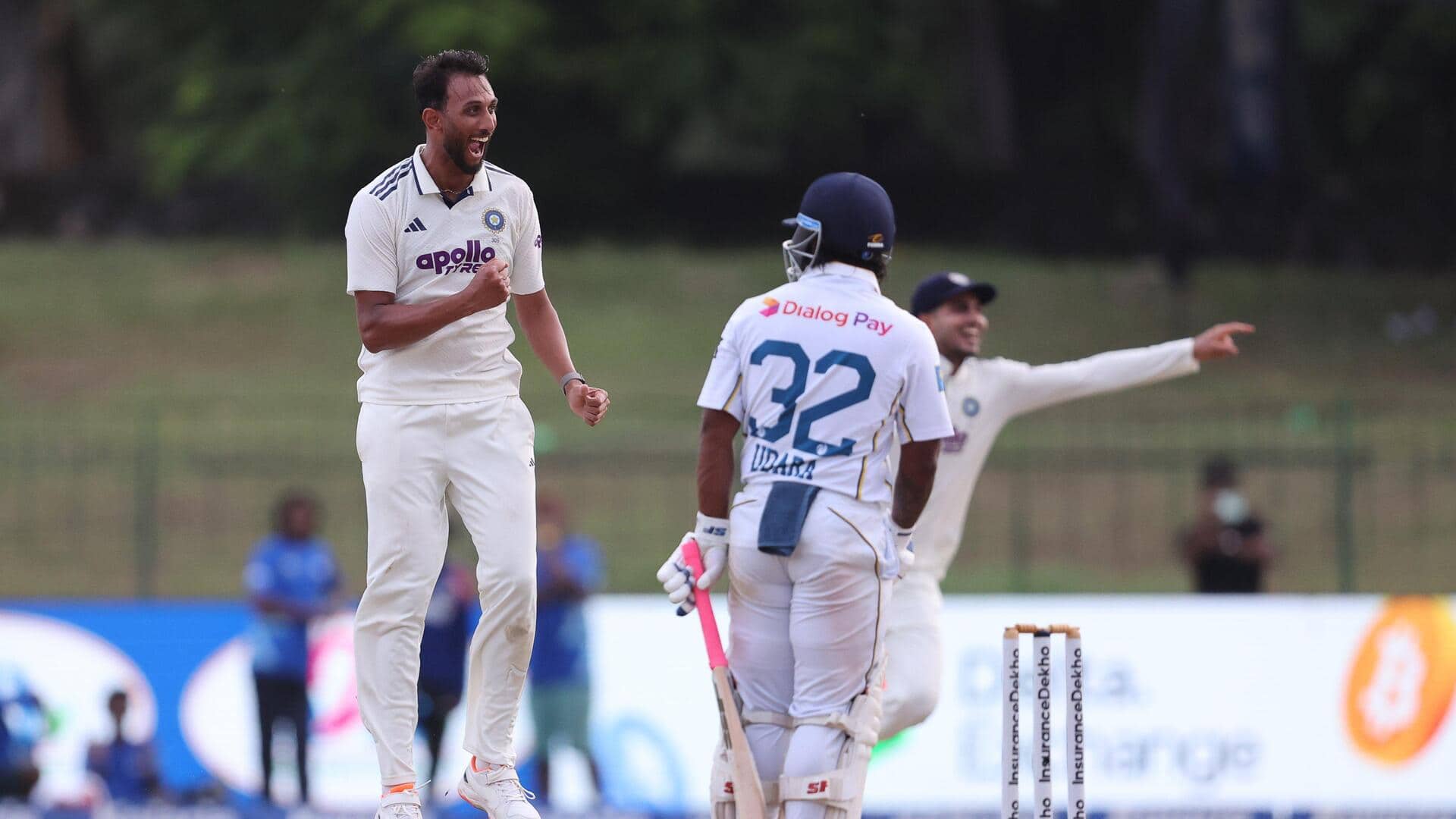
Why is the new ball available after 80 overs (Tests)?
What's the story
The new ball is one of the most important strategic tools in Test cricket, but it does not become compulsory after 80 overs. Instead, the fielding captain receives the option to take it once the existing ball has been used for at least 80 overs. The rule creates a tactical contest between preserving an ageing ball and unleashing a fresh one against the batters.
Rule
What does the 80-over rule say?
Under the ICC's Test playing conditions, a new ball is used at the beginning of every innings.
Once the old ball has been used for 80 complete overs, the fielding captain can request another new ball.
The umpires then notify the other umpire, batters and scorers when the replacement is made.
Therefore, reaching 80 overs creates an option rather than an automatic change.
Rule
Why was the rule introduced?
A cricket ball changes considerably during a long innings. Its surface becomes worn, its seam loses some of its sharpness and its behaviour can differ significantly from that of a new ball.
Allowing the fielding side to replace it after 80 overs prevents an innings from continuing indefinitely with an excessively worn ball.
At the same time, retaining the old ball remains a legitimate tactical choice.
Skipper
Why might a captain reject the new ball?
The oldest ball is not necessarily the least dangerous one.
As the surface deteriorates, bowlers can sometimes exploit reverse swing, while spinners may benefit from the ball's altered condition.
If the existing ball is moving unpredictably or producing reverse swing, a captain may prefer to continue with it rather than start again with a harder, newer ball.
New ball
Why is the new ball attractive?
A fresh red ball can provide fast bowlers with greater assistance, particularly through seam movement and conventional swing when conditions allow.
It can also offer a harder surface and better carry to the wicketkeeper.
Consequently, captains often consider the state of the pitch, weather, opposition batting line-up and their own bowling resources before deciding whether to take the new ball.
Conclusion
The real tactical battle
The 80-over mark therefore represents much more than a numerical milestone.
It gives the bowling captain a fresh strategic decision. Take the new ball and attack with pace, seam and swing, or continue exploiting an ageing ball that may be offering reverse movement?
The choice can influence the final stages of an innings and sometimes becomes one of the most important decisions of a Test match.