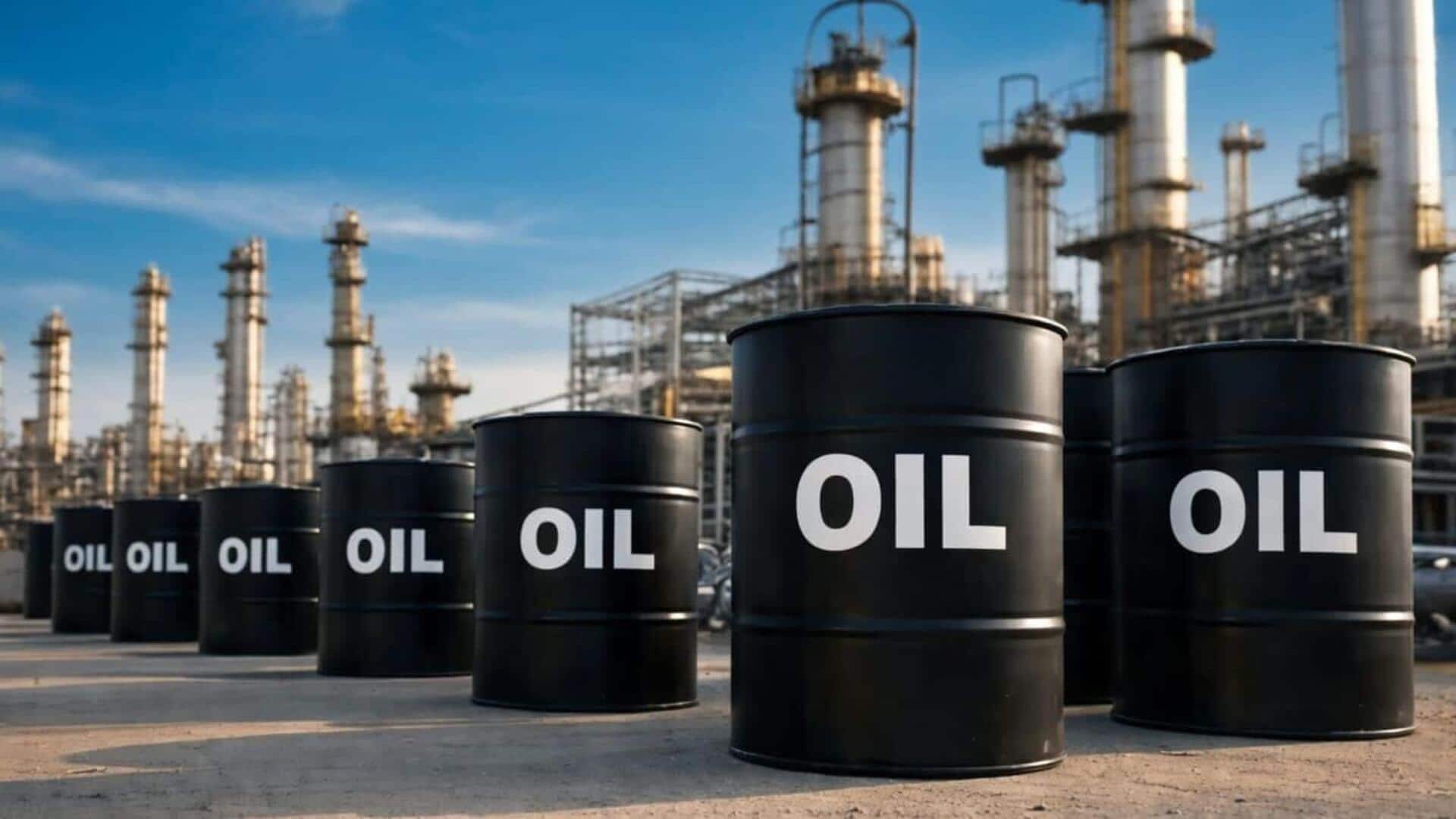
America's emergency oil reserve hits 43-year low
What's the story
The United States Strategic Petroleum Reserve (SPR) has dipped below 300 million barrels, hitting its lowest level since January 1983. The latest data from the Department of Energy shows a decline of 6.1 million barrels to 298.7 million barrels last week. The SPR was established in 1975 and has an authorized storage capacity of up to 714 million barrels.
Reserve concerns
Decline amid global inventory pressures
The decline in the SPR comes amid global inventory pressures due to the ongoing US-Iran conflict.
President Donald Trump had ordered a release of 172 million barrels in March after Iran disrupted oil exports through the Strait of Hormuz. This led to historic crude oil supply disruptions.
David Goldwyn, a former State Department special envoy for international energy affairs under President Barack Obama, said that there is still enough oil left in the SPR for another release if required.
Infrastructure issues
Aging infrastructure threatens operational capability
The operational capability of the SPR is under threat due to aging infrastructure.
A report from the Government Accountability Office (GAO) in May found that over a quarter of its inventory was not available for drawdown because of construction and cavern outages.
This means at least 103 million barrels in the SPR are currently unusable, according to a July analysis by Rapidan Energy.
Geopolitical impact
Impact of frequent drawdowns on wells and equipment degradation
In recent years, US presidents have frequently ordered large-scale releases from the SPR.
President Joe Biden released 180 million barrels in early 2022 to mitigate energy market volatility after Russia invaded Ukraine.
The GAO described this release as an "unplanned stress test" for the SPR.
Goldwyn noted that frequent drawdowns accelerate degradation of wells and equipment, requiring ongoing maintenance to ensure operational readiness.