Australia, Japan snub Hormuz coalition; Trump eyes China's support
What's the story
United States President Donald Trump is struggling to form a coalition to protect ships in the Strait of Hormuz. He has now turned to NATO allies and China for help. "It's only appropriate that people who are the beneficiaries of the Strait will help to make sure that nothing bad happens there," Trump told the Financial Times on Sunday. Meanwhile, Australia and Japan have refused to send ships to the Persian Gulf.
Coalition plea
Very bad consequences for NATO
Earlier, Trump stated that his administration was in talks with seven countries about reopening the Strait of Hormuz, but did not disclose their names.
He has even warned NATO of "very bad" consequences if they don't help.
He said Europe and China rely heavily on Gulf oil, unlike the US.
He called for China's involvement, saying, "I think China should help too because China gets 90% of its oil from the Straits [sic]."
Rejection
Australia and Japan refuse to send ships
Japanese Prime Minister Sanae Takaichi told the Diet they were still considering what could be done within legal frameworks.
Australian cabinet member Catherine King said, "We won't be sending a ship to the Strait of Hormuz."
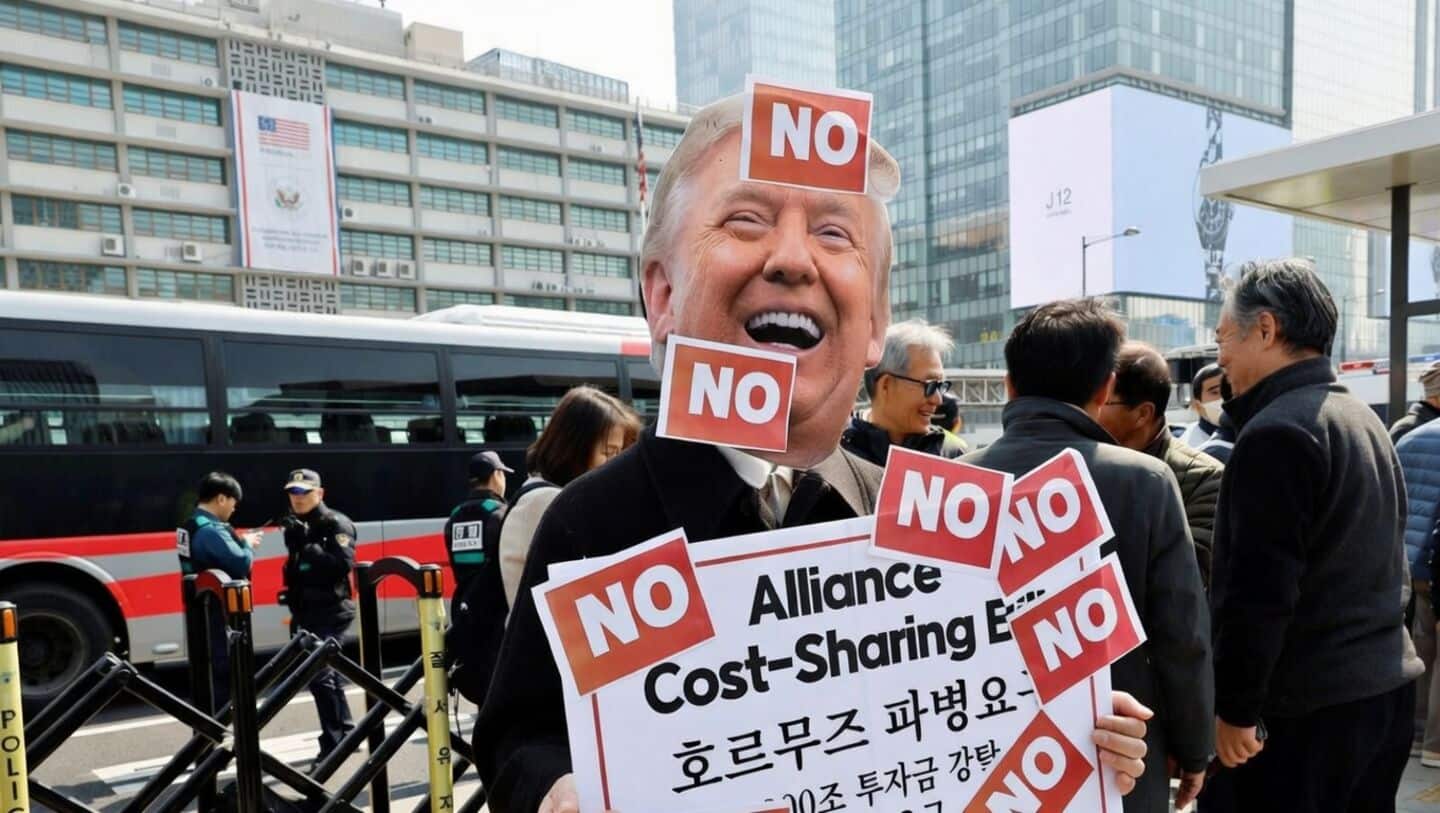
South Korea is reviewing its position on possible troop deployment, with parliamentary approval needed.
EU response
Germany also declines participation
The European Union is considering strengthening a small naval mission in the Middle East. This mission was set up in 2024 to protect ships from attacks by Houthis, but is unlikely to be expanded in scope to include reopening the Strait of Hormuz.
Germany has also declined participation with Foreign Minister Johann Wadephul quoted as saying by ARD, "Will we soon be an active part of this conflict? No."