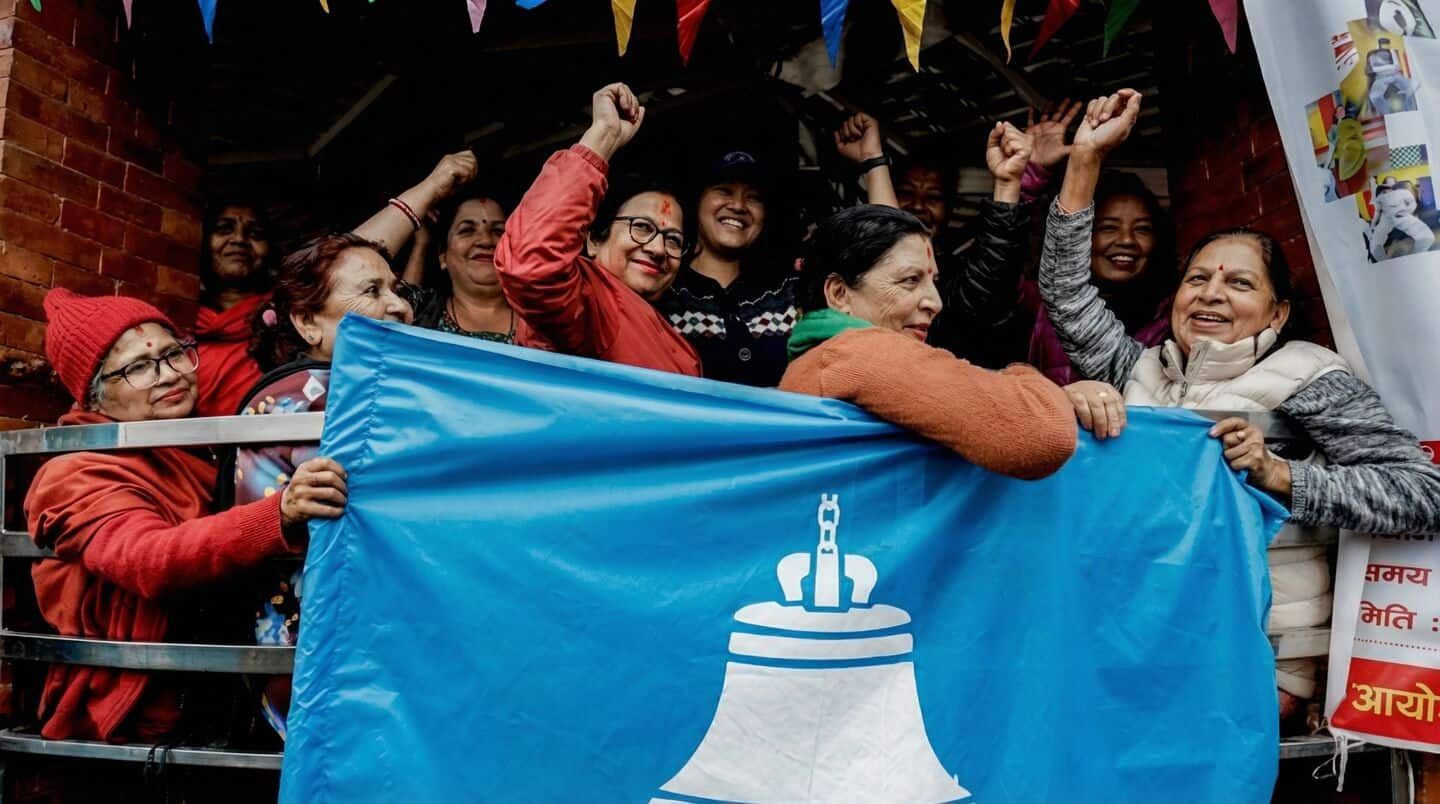
Balen Shah's RSP secures 25 seats, leads in 93
What's the story
The Rastriya Swatantra Party (RSP), led by rapper-turned-politician Balendra Shah, is headed for a landslide victory in Nepal's parliamentary elections. The party has already won 25 seats and is leading in 93 others. This marks a major shift from the traditional political landscape of Nepal, which has been dominated by veteran politicians like former Prime Minister KP Sharma Oli.
Vote lead
RSP leads proportional representation vote count
The RSP is leading the proportional representation vote count with 57.2% of the votes counted so far.
Shah, who was recently the Mayor of Kathmandu, has secured over 15,000 votes from Jhapa-5, a constituency traditionally held by Oli.
The election results are a direct result of last year's Gen Z protests against Nepal's political elite, which led to Oli's resignation as Prime Minister.
Protest impact
Gen Z protests against political elite
The Gen Z protests had raised questions about the credibility of the government and the Election Commission. The protests were fueled by issues like corruption, unemployment, and restrictions on social media.
Despite clashes with police that left at least 19 dead, thousands continued to demand Oli's resignation.
In September 2025, former chief justice Sushila Karki was sworn in as interim prime minister after days of unrest.
Election process
Nepal's mixed electoral system
Nepal's elections use a mixed electoral system of first-past-the-post (FPTP) and proportional representation.
Voters cast two ballots: one for an individual candidate and another for a political party.
Out of 275 seats in the lower house, 165 are elected through FPTP, while the remaining 110 are allocated based on proportional representation.
Commission's efforts
Election Commission thanks citizens for participation
The Election Commission of Nepal thanked citizens for their participation in the election process.
Joint Secretary Narayan Prasad Bhattarai said Gen Z's support was positive for both candidates and voters.
Around 60% of Nepal's 19 million eligible voters had cast their votes on Thursday for elections to the House of Representatives, with over 3,400 candidates from 65 parties having contested the elections.