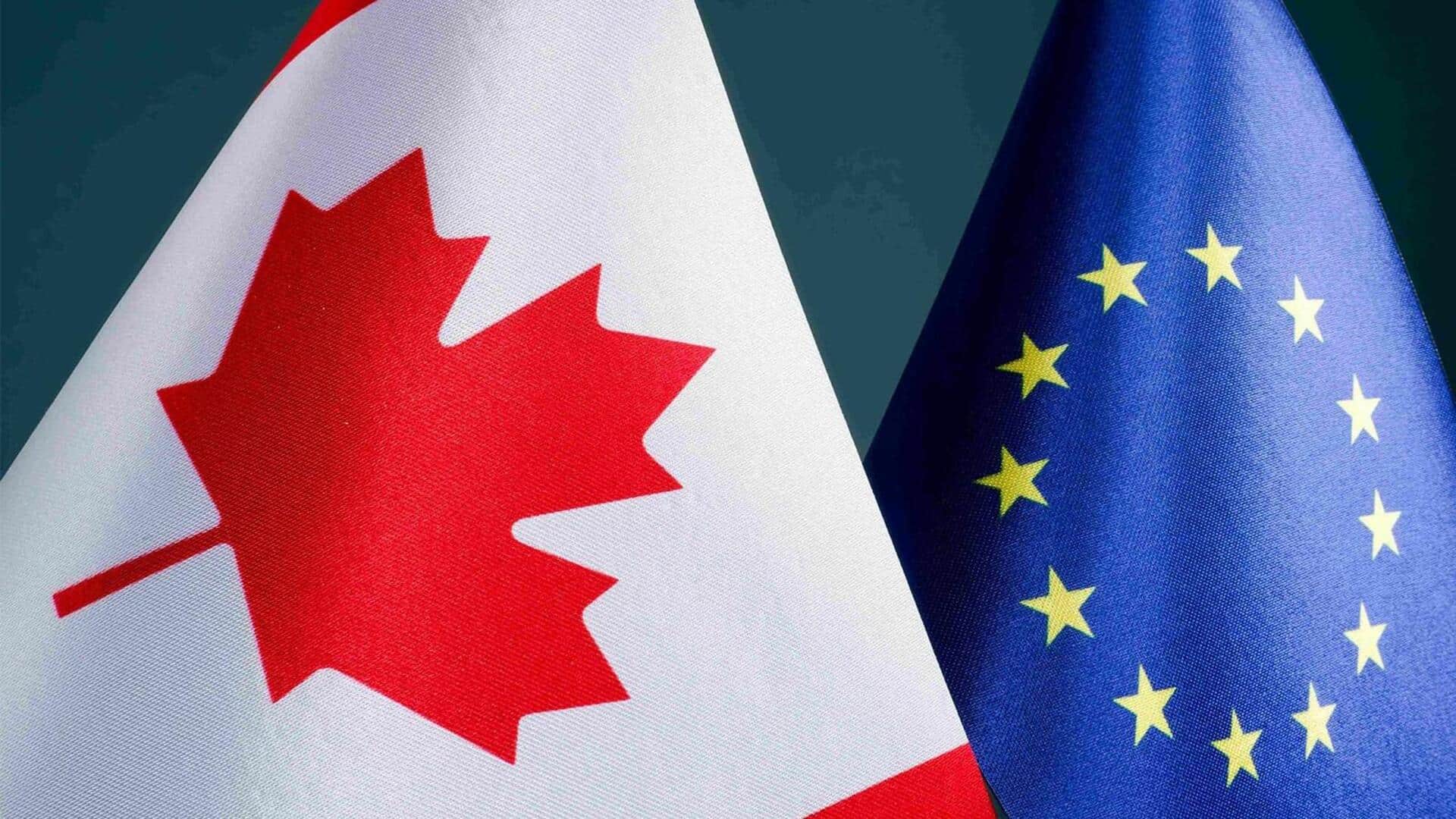
Canada might become an 'associate member' of EU
What's the story
Canadian Prime Minister Mark Carney is said to be considering the possibility of making Canada an "associate member" of the European Union (EU). The Wall Street Journal reported this, citing unnamed officials from both Canada and the EU. The move comes as part of Canada's strategy to strengthen ties with other trading partners amid deteriorating relations with the US.
Strategic pivot
Canada seeks to strengthen ties amid trade war
The ongoing trade war with the US has intensified Canada's focus on strengthening ties with other countries.
Relations between Ottawa and Washington have soured since President Donald Trump returned to office last year, due to trade-related disagreements, among other issues.
The dispute has resulted in tariffs affecting tens of billions of dollars in cross-border trade.
Membership discussions
EU's potential flexibility on membership rules
Despite its historical rigidity on membership rules, the EU is said to be open to the idea of granting Canada a yet-to-be-created status of associate membership.
The proposal comes as part of broader discussions between Canada and the EU on facilitating free movement for goods, services, and workers involved in strategic supply chains such as energy, AI, defense, and critical minerals.
Proposed initiatives
Infrastructure projects and visa-free movement discussions
The discussions between Canada and the EU also include infrastructure projects such as laying underwater cables, building data centers, cloud storage facilities, new satellite networks, and infrastructure for shipping Canadian energy to the EU.
Carney has also discussed with several EU leaders allowing Canadians to live and work in the EU without visas.
Potential hurdles
Challenges ahead in Canada-EU ties
However, any efforts to strengthen Canada-EU ties could face challenges.
This is especially true given the difficulties faced in implementing a more modest trade deal that has been met with fierce opposition within Europe.
More than a decade after it was struck and nine years since its provisional entry into force, several EU countries are yet to ratify the deal.