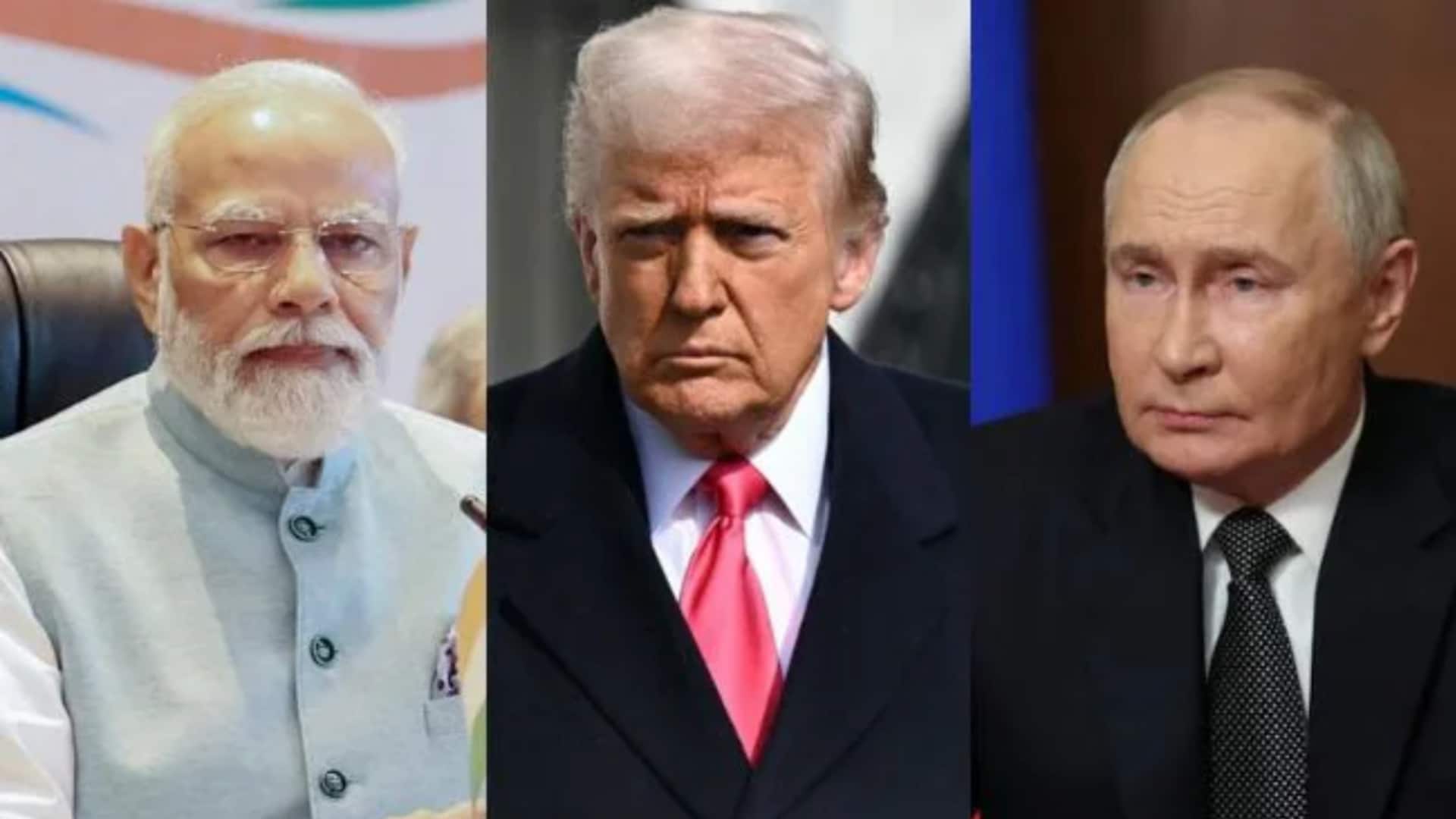
Trump needs 60 days to assess Russia sanctions impact: Rubio
What's the story
United States Secretary of State Marco Rubio has said that President Donald Trump needs 60 days to assess the impact of sanctions on Russia and tariffs on other countries. Speaking to reporters before he visits Uzbekistan and India, Rubio acknowledged that it is "hard" for New Delhi to quickly shift from Russian energy sources. The sanctions and tariffs under the Lindsey O Graham Sanctioning Russia and Iran Act affect several countries, including India.
Waiver details
Waivers included in bill: Rubio
President Trump recently waived sanctions and tariffs under the Lindsey O Graham Sanctioning Russia and Iran Act, citing national interest.
The law allows Trump to impose sanctions on Moscow and tariffs on imports from major Russian oil or natural gas consumers, including India and China.
Rubio explained that the waivers were included in the bill to give countries time to study their implications amid global energy supply pressures.
Energy dynamics
India has diversified its energy portfolio
India has diversified its energy portfolio but still relies heavily on Russian energy due to its affordability.
After Russia invaded Ukraine in February 2022, Indian refiners started importing discounted Russian crude as traditional buyers moved away from Moscow.
This made Russia India's largest crude supplier, accounting for around 40-50% of total imports at times.
Diplomatic stance
India reiterated commitment to energy security
After the US Congress passed the Sanctioning Russia and Iran Act, India reiterated its commitment to energy security.
The Ministry of External Affairs said India would continue to diversify its energy sources based on evolving market dynamics.
It also highlighted that high-level discussions had taken place with US interlocutors about the potential implications for bilateral relations and international energy markets.