Chinese supervisor fled during tunnel rescue: Nepal flood survivor
What's the story
A worker who survived the recent flash floods in Nepal has accused a Chinese supervisor of abandoning workers when they sought his permission to leave the Trishuli-3A Hydropower Station. The project is being constructed by China's Power China Corporation. The survivor, Raj Chhetri, alleged that he and other workers were inside Tunnel No. 3 when the floods struck.
Rescue challenges
Rescue operations hampered by damaged infrastructure and adverse weather
He asked the Chinese supervisor for permission to leave after hearing a loud noise and sensing danger but claimed the supervisor told him he would "go and see" before fleeing himself
Chhetri said a powerful surge of water, mud, and debris swept through Tunnel No. 3, carrying away workers, vehicles, and belongings.
He managed to escape toward the tunnel's mouth but claimed two others are still missing.
Information void
Chhetri and other survivors spent days in the forest
Chhetri said around 265 people were working in Tunnel No. 3 when the floods hit. He reported hearing cries for help from survivors and seeing bodies lying.
"The bodies of many hydropower workers are lying in the tunnel above. Many are still alive. We could hear cries of 'Save, save'," Chhetri said.
After escaping, he and other survivors spent days in the forest with no communication as mobile networks were down in the area.
Preemptive failure
Chinese government knew about the flood and landslide: Chhetri
Chhetri also criticized the Chinese government for not giving a flood warning in advance. He said, "What the Chinese government did was wrong. They knew about the flood and landslide."
He argued that if they had received prior information, many lives could have been saved.
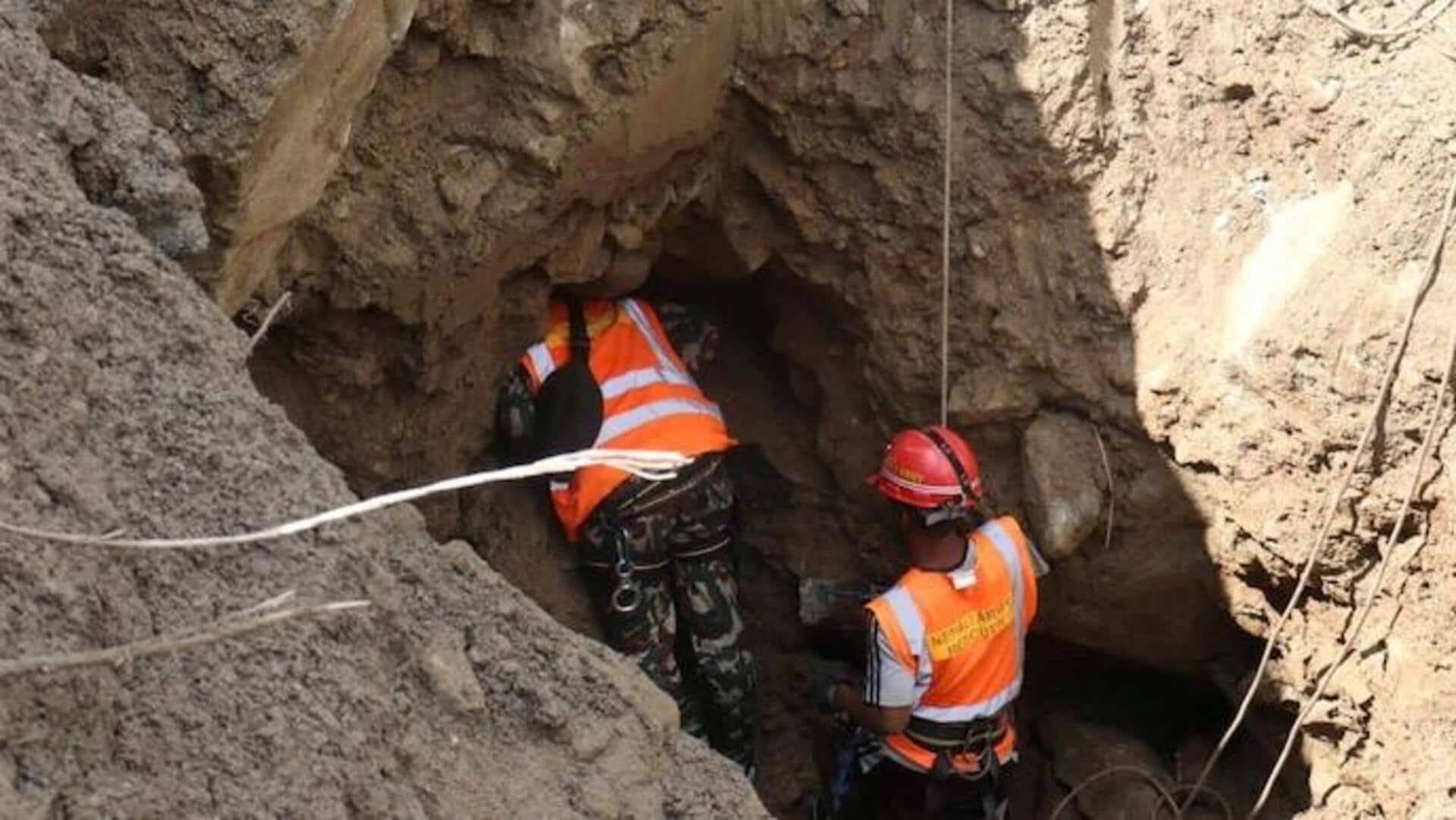
Rescue operations at Trishuli-3A have been hampered by damaged infrastructure and adverse weather.
The teams are using heavy machinery and specialized techniques to access tunnels buried under mud and debris.
Disaster impact
Over 1,000 dead in Nepal and Tibet
The flash floods occurred on August 26 after a glacier collapsed, sending torrents of water, mud, and debris along the Nepal-Tibet border.
The disaster severely damaged settlements, roads, bridges, and other key infrastructure.
In Nepal alone, 1,127 people have died and over 4,000 remain missing as per police reports.
In Tibet (China), authorities have reported 16 deaths and 546 missing persons due to the same disaster.