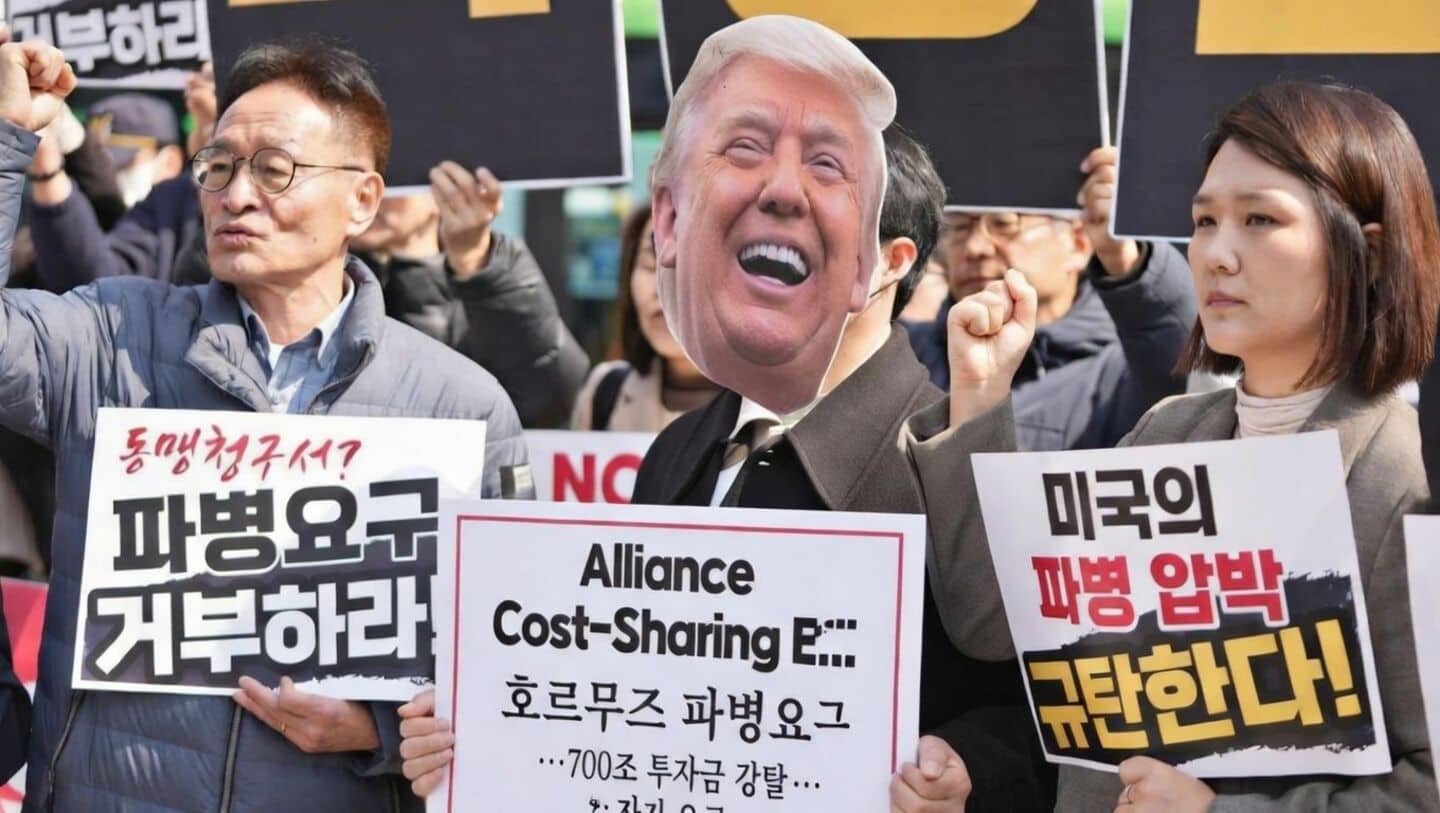
'We don't need anybody': Trump on opening Strait of Hormuz
What's the story
United States President Donald Trump has said that the country doesn't require assistance from other nations to reopen the Strait of Hormuz. "We don't need anybody. We're the strongest nation in the world," Trump said. The Strait is a crucial waterway for global oil trade and has been threatened by Iran's blockade attempts. Despite his assertion, Trump called on allies to help secure the strait as oil prices continue to rise due to ongoing tensions in the region.
Coalition formation
Countries on way to help secure strait, says Trump
Before a meeting of the Kennedy Center board on Monday afternoon, Trump said, "Numerous countries have told me they're on the way" to help secure the strait.
However, he didn't specify which nations were part of this coalition.
Spanish and German leaders have ruled out participation, while British Prime Minister Keir Starmer said he "did not see a role for NATO in the matter."
Economic impact
Brent crude prices rise amid Iran threats
The global benchmark Brent Crude Futures saw prices rise to $105.9 per barrel before settling at $100.43 by Monday afternoon.
This comes amid Iran's threats against oil infrastructure in the Middle East and its blockade attempts on the Strait of Hormuz, through which about 20% of the world's oil supply passes.
Trump hinted French President Emmanuel Macron could be a supporter, rating his enthusiasm as an eight out of 10.
Strategic positioning
Trump calls for Middle Eastern oil consumers to step up
Trump has argued that countries dependent on Middle Eastern oil should help protect it, unlike the US, which relies on domestic production.
He even suggested a case for the US to stay away from the Strait altogether.
In an interview with the Financial Times, Trump reiterated his view that the beneficiaries of the strait should ensure its safety.
He warned that a negative response could be detrimental to NATO's future.
Uncertain response
No country has committed to sending naval vessels
Despite Trump's demands, no country has publicly committed to sending naval vessels through the strait.
Japan's Prime Minister Sanae Takaichi said no decisions had been made about dispatching escort ships.
German Foreign Minister Johann Wadephul also ruled out NATO's involvement in this matter.
After a meeting with other EU foreign ministers, Kaja Kallas acknowledged the bloc's desire to strengthen its naval force but showed no appetite for changing operational mandates.