EU warns Greenland tariffs hand strategic advantage to China, Russia
What's the story
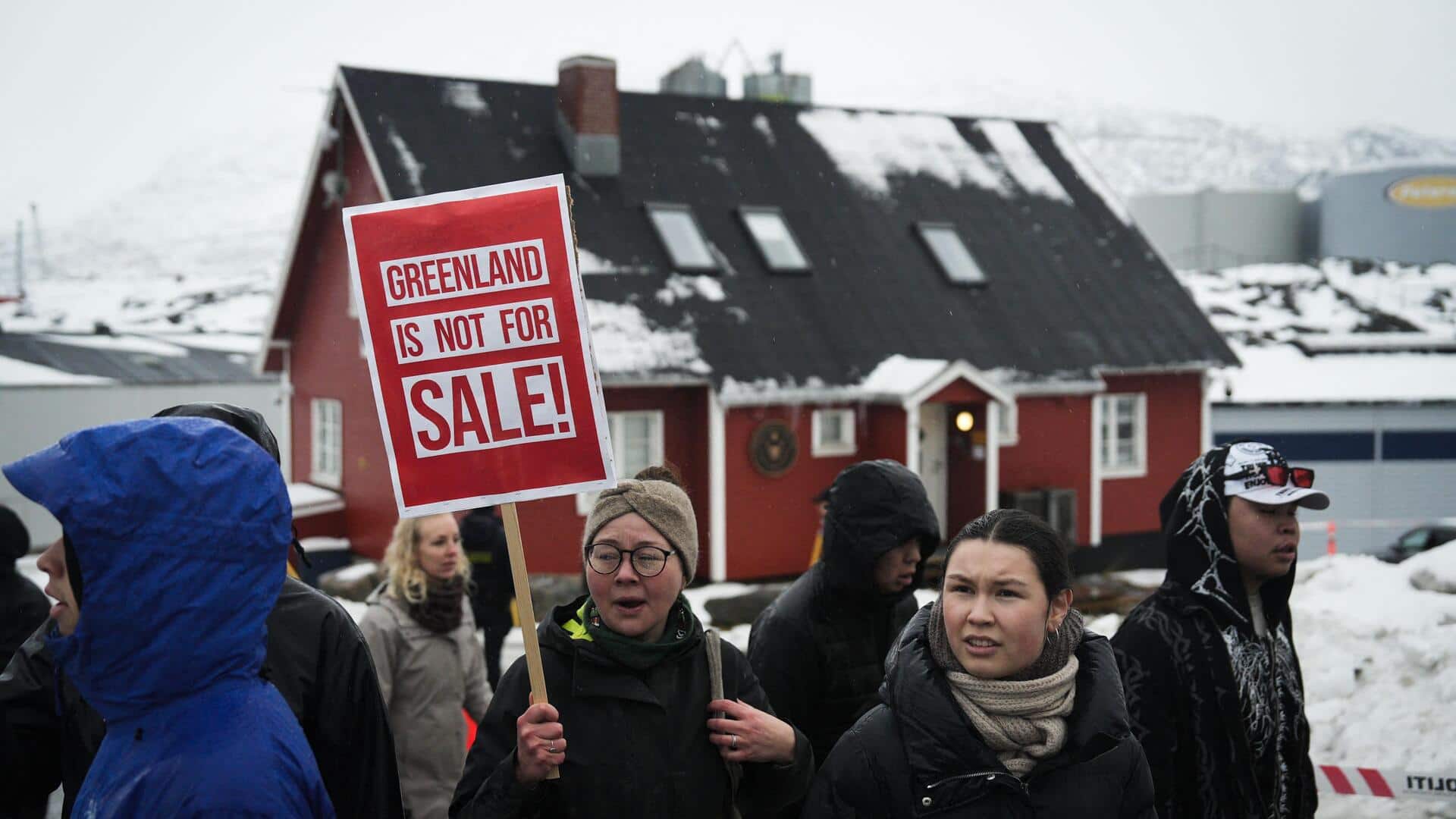
European Union leaders have expressed their discontent with United States President Donald Trump's proposed tariffs on goods from seven European countries. The tariffs, which will come into effect from February 1 and are set to increase in June, are linked to "national security" concerns regarding Greenland. The affected nations include the United Kingdom, Denmark, France, Germany, Finland, the Netherlands, and Norway.
Economic concerns
EU leaders criticize Trump's tariffs, warn of economic impact
EU's foreign policy chief Kaja Kallas was among the first to respond. She said if Greenland's security was truly at stake, it should be discussed within NATO instead of imposing tariffs. "Tariffs risk making Europe and the United States poorer and undermine our shared prosperity," she warned. French President Emmanuel Macron also slammed Trump's move as "unacceptable," vowing a united European response if confirmed.
Retaliation fears
EU leaders warn of potential retaliation and economic fallout
Portuguese Prime Minister Antonio Costa and European Commission President Ursula von der Leyen also raised concerns over the potential economic and political fallout of the tariffs. They warned that such measures could undermine transatlantic relations and lead to a "dangerous downward spiral." European officials are worried that trade retaliation could further strain relations at a time when unity is critical to counter Russia's war in Ukraine.
Moscow's reaction
Russia responds to Trump's tariffs on European nations
Meanwhile, Russia has also reacted to the escalating dispute. Kirill Dmitriev, a Russian presidential envoy and head of the Russian Direct Investment Fund, issued a sharp warning to Europe. He claimed that the tariffs were "about 1% per soldier sent to Greenland," in a bid to mock European security posturing and exploit divisions within the Western alliance.