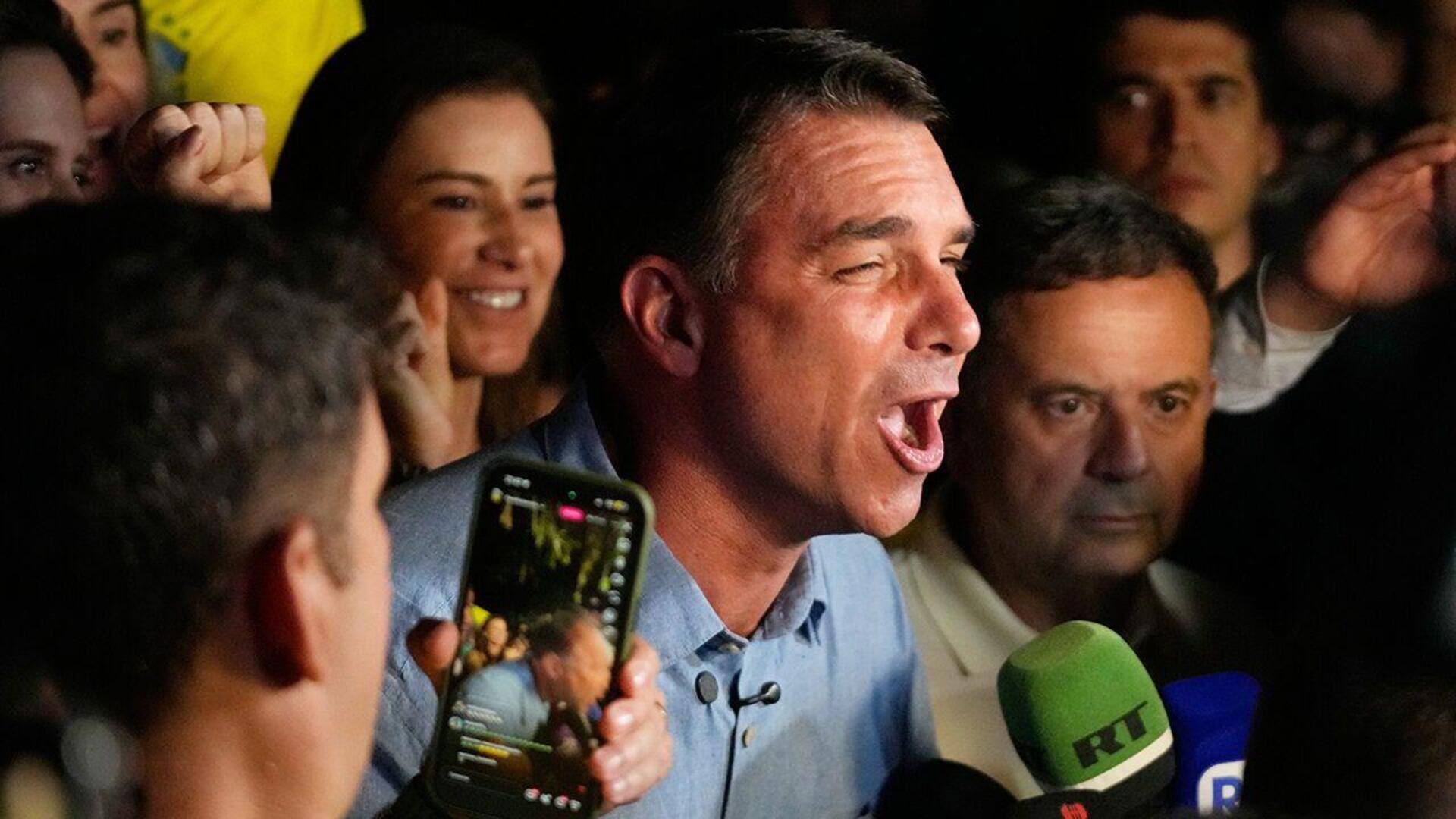
Brazil: Right-wing candidate Flavio Bolsonaro wins 1st round against Lula
What's the story
In a tightly contested first round of Brazil's presidential election, right-wing candidate Flavio Bolsonaro has emerged victorious. He secured 47% of the votes against left-wing incumbent President Lula da Silva, who garnered 45%. The result was unexpected as Lula was slightly ahead in the polls leading up to the election. The two will face off in a run-off on October 25, as neither candidate achieved an outright majority.
Political landscape
Bolsonaro's Liberal Party gains ground
Bolsonaro's Liberal Party (PL) has also emerged as a major force in the early election results.
The party elected the most governors, senators, and federal deputies, giving it significant influence in Congress.
This is a notable development considering most of Latin America has recently shifted toward right-wing leadership under US President Donald Trump's administration.
Campaign pledges
Lula warns voters of 'barbarism' if Bolsonaro wins
Bolsonaro has promised to "free the Brazilian people" if he wins. He also pledged amnesty to his father, former President Jair Bolsonaro, and supporters convicted for their roles in the January 8, 2023 riots.
On the other hand, Lula warned voters that their choice was between democracy and "barbarism." He emphasized that despite losing the first round, he remains confident of winning in the run-off.
Scandal fallout
Election impacted by corruption scandal
The election was marred by a corruption scandal involving jailed banker Daniel Vorcaro. Vorcaro was found to have been involved in one of Brazil's largest financial frauds.
Bolsonaro admitted to asking Vorcaro for funds for a biopic about his father.
Lula was also indirectly affected as police alleged Vorcaro contacted Supreme Court judge Alexandre de Moraes for assistance.
Campaign issues
Crime, insecurity, and economic challenges key issues in election
Crime and insecurity were major concerns for voters in this election. Bolsonaro promised to label Brazilian gangs as terrorists and build maximum-security prisons like those in El Salvador.
Lula, however, criticized this approach but launched reforms to tackle organized crime networks.
The economy was another key issue, with high personal debt levels and slowing growth rates affecting Brazil's economy significantly during this election cycle.