France shuts up to 500 schools amid violent student protests
What's the story
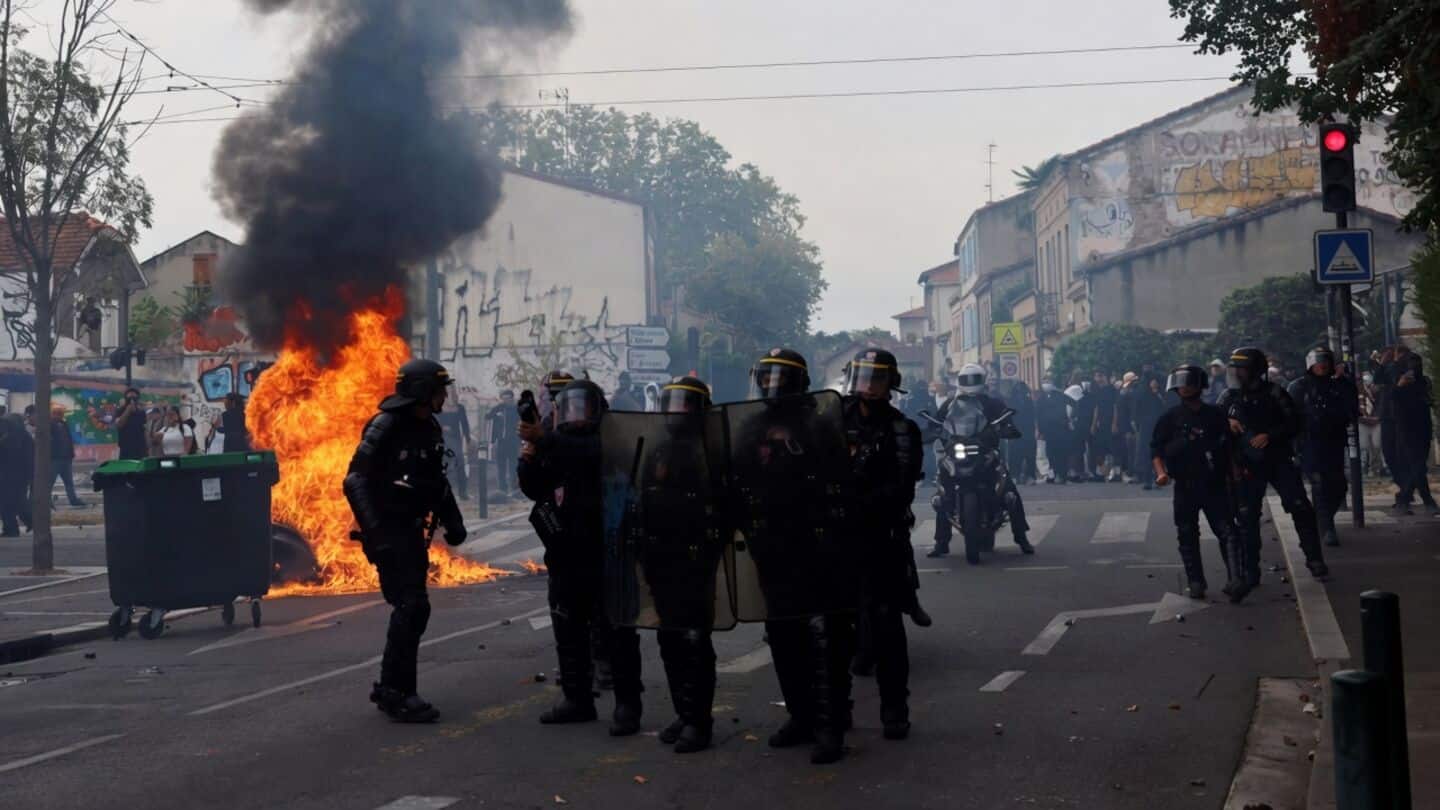
France has shut down up to 500 schools on Monday in the wake of violent student protests. The decision was announced by French Education Minister Edouard Geffray, who said lessons would be "totally or partly suspended" in some high schools as security conditions were not met. Since the protests began last week, 24 schools have been "burned or ransacked."
Protest spread
Protests against high teacher absence rates, overcrowded classrooms
The protests, which started at a Paris school on September 17, have now spread to other cities like Montpellier, Nantes, and Marseille.
Students are protesting against high teacher absence rates, overcrowded classrooms, and dilapidated facilities.
French Justice Minister Gerald Darmanin said 735 of France's 3,700 schools were affected by the protests in some way.
Government action
Education minister promises to address students' concerns
Geffray has promised a "partial, progressive return to lessons" and announced measures to address students' concerns.
These include ensuring classes continue, improving facilities, better organizing school days, and making the French university admissions platform more transparent.
He also plans to meet regional presidents on Tuesday to discuss overhauling dilapidated school buildings.
Security response
Protests turn violent; far-left activists infiltrate movement
The protests have turned violent, with clashes between students and security forces using tear gas and truncheons.
Geffray alleged far-left activists infiltrated the student movement, leading to extreme violence.
Over 5,000 people have been arrested since the protests began, with about 85% being minors.
Interior Minister Laurent Nunez said security forces are "not cracking down on young people" but rather "protecting" school and university students wishing to "peacefully voice their demands."
Controversy
Amnesty France slams 'disproportionate police violence'
Amnesty France criticized "disproportionate police violence" in handling the demonstrations.
The organization stressed that students should be allowed to express their grievances without fear of police action.
"Authorities must allow young people to exercise these rights without fear of being hit by tear gas grenades or batons, or being arbitrarily taken into police custody," said Amnesty France president Anne Savinel-Barras.
However, Geffray said 78 education staff members were injured in the protests, a situation he called unprecedented.