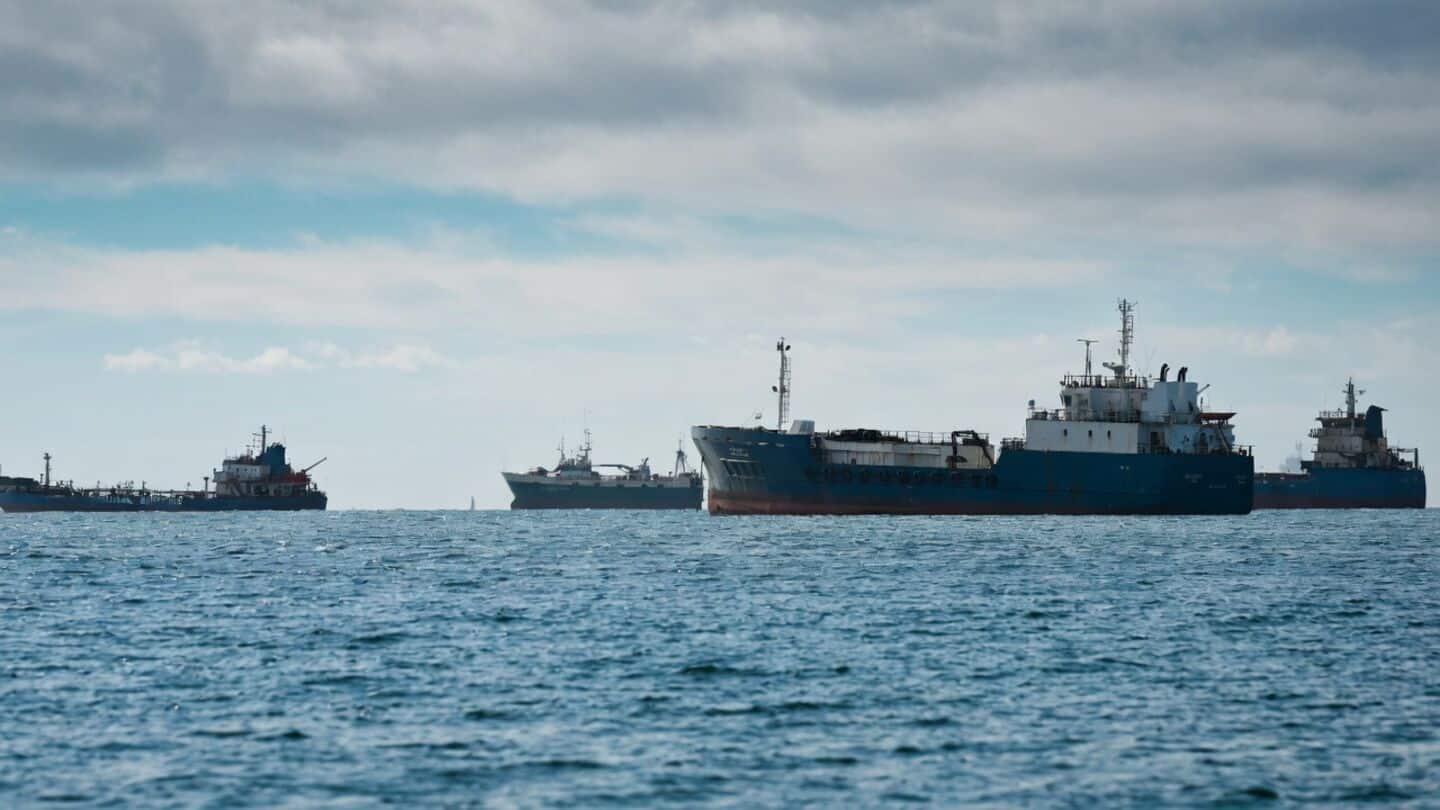
60 countries back EU's declaration opposing strait tolls
What's the story
Over 60 countries have joined the European Union's (EU) call against the imposition of fees on international shipping routes. The EU-backed declaration, which includes all member states and 33 other nations such as Australia, Japan, and Canada, seeks to ensure free navigation under international law. It also cautions against actions that may impede commercial shipping through key straits.
Pledge announcement
'International shipping routes should not be monetized'
European Union foreign policy chief Kaja Kallas announced the "No Fees, No Tolls" global pledge on social media platform X, saying countries must oppose attempts to turn international shipping routes into sources of revenue or political tools.
"International navigation must remain open to everyone, not to whoever can pay. Today, 60 countries pledged to oppose tolls or fees on international shipping routes by joining our 'No Fees, No Tolls' global pledge," Kallas wrote on X.
Legal framework
Declaration invokes United Nations Convention on the Law of Sea
The declaration invokes the United Nations Convention on the Law of the Sea (UNCLOS), which established a comprehensive international legal framework to govern activities related to the global oceans.
It opposes unlawful fees and discriminatory restrictions that impede navigation through international straits.
"We oppose any measures, including the imposition of unlawful fees, tolls, discriminatory restrictions, prior authorization requirements, or other conditions, that would hamper or impair lawful navigation, through straits used for international navigation," the declaration said.
Iranian claims
Iran demands fees for access to Strait of Hormuz
The declaration comes as Iran continues to assert its control over the strategically vital Strait of Hormuz, demanding payments for access to these waters.
Mohammadreza Naqdi, an adviser to the commander of Iran's Islamic Revolutionary Guard Corps (IRGC), said transit routes that Iran considers illegal would be shut down, referring to a southern passage running close to Oman's coast.
"The Strait of Hormuz is closed....This situation will continue until Iran's legitimate demands are met," he said.
Disrupted traffic
Diplomatic efforts continue amid tensions over reopening conditions
Shipping data from analytics firm Kpler showed a major dip in vessel crossings through the strait. Only seven commodity vessels crossed on October 6, the lowest since July 23.
Iran's security chief Mohsen Rezaei has called the US responses to its seven conditions for reopening the waterway "insufficient."
Their demands include an end to hostilities, the release of frozen assets, the lifting of restrictions on its oil exports and an end to the US naval blockade of its ports.