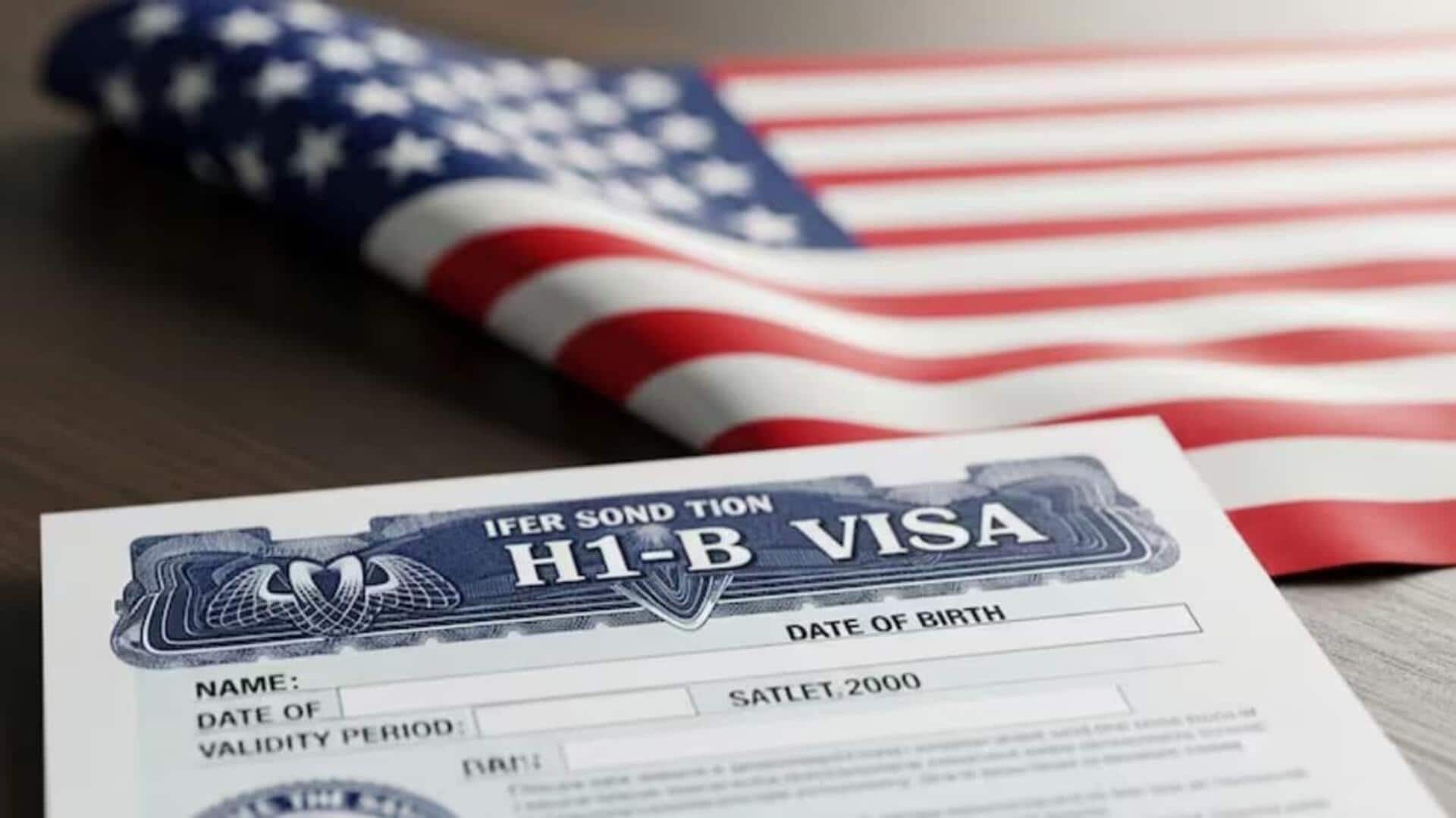
How US social media vetting rules affect Indian H-1B applicants
What's the story
The United States has introduced new social media vetting rules for H-1B and H-4 visa applicants, impacting many Indians. The policy, effective from December 15, involves scrutiny of applicants' social media accounts. The move is part of the Donald Trump administration's crackdown on illegal and legal immigration. It also allows rejection of applications if candidates are found involved in "censorship" of free speech.
Interview delays
US consulates reschedule interviews amid new vetting rules
The new social media vetting rules have also delayed interview slots at US consulates for H-1B visa applicants.
Interviews scheduled for mid to late December are now being pushed to March next year.
This is due to a reduced capacity in interviewing applicants each day because of the new guidelines.
Many existing appointments have been canceled and rescheduled for March, according to immigration attorneys.
Major impact
New rules affect majority of H-1B visa applicants
The new social media vetting rules are likely to have a major impact on Indians, who make up over 70% of all H-1B visa approvals, and nearly 90% of H-4 Employment Authorization Document (EAD) holders.
The US Embassy in India has issued an advisory regarding the rescheduling of appointments due to these changes.
Immigration attorneys have expressed concerns that this could leave many applicants stranded as they look to start new jobs or attend family events in the US.
Policy defense
US defends social media vetting policy
Despite the disruptions caused by the new rules, the US Department of State has defended its decision.
It argues that every visa adjudication is a national security decision and is necessary to ensure that entrants do not intend to harm Americans or national interests.
The department has also said that "a US visa is a privilege, not a right," justifying their strict vetting process for foreign workers seeking H-1B visas.