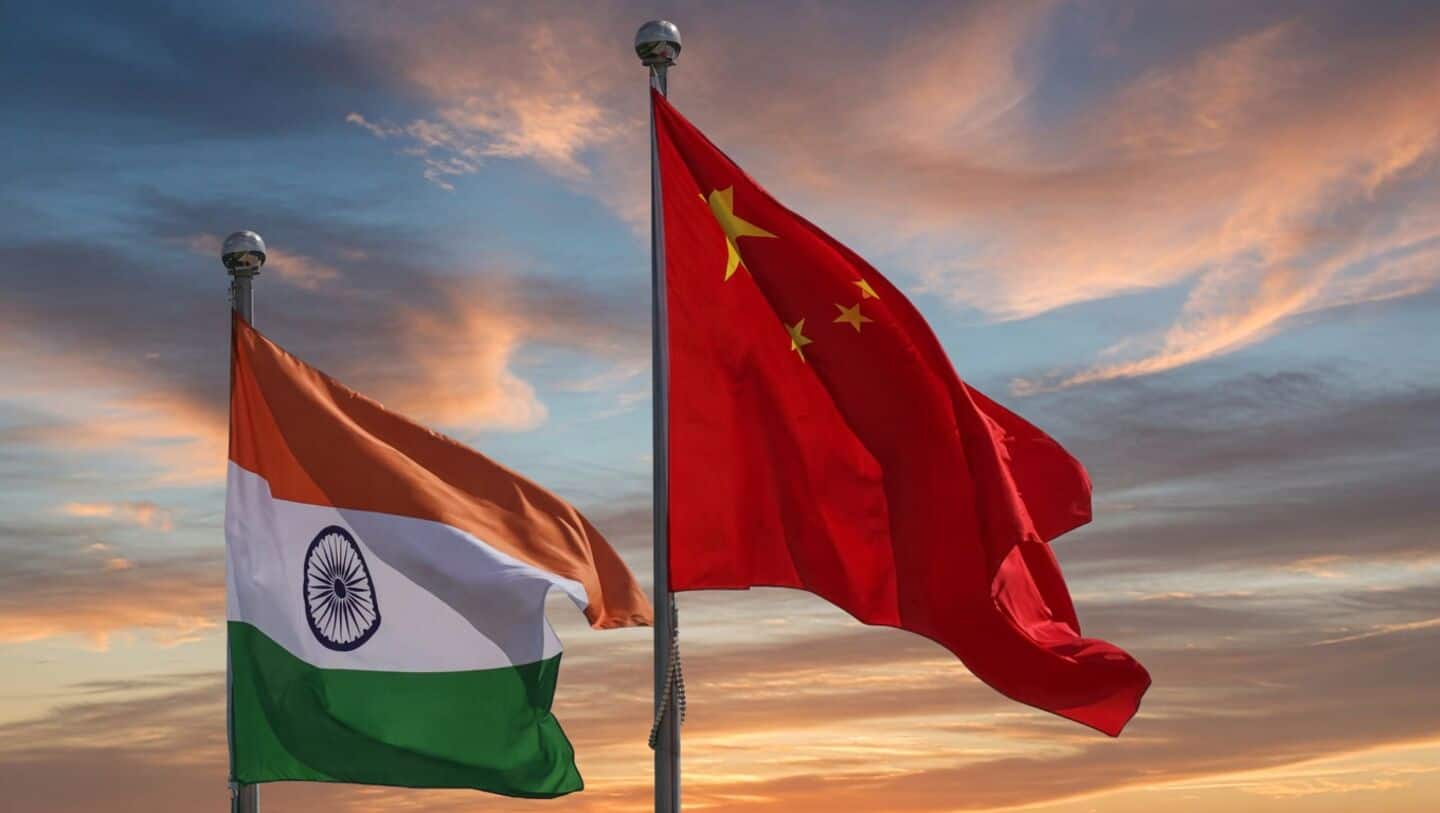
India, China hold border talks in Beijing
What's the story
India and China have held another round of border talks in a bid to restore normalcy in their bilateral relations. The meeting was held under the Working Mechanism for Consultation and Coordination (WMCC) in Beijing on Wednesday. An Indian delegation, led by Joint Secretary (East Asia) Sujit Ghosh, reviewed the situation along the Line of Actual Control (LAC) with a Chinese team headed by Hou Yanqi, Director General of Boundary and Oceanic Affairs Department.
Discussion points
MEA on talks
The Ministry of External Affairs (MEA) described the talks as "constructive and forward looking."
It said the two sides "expressed satisfaction with the progress made in maintaining peace and tranquility in the border areas, which has enabled progress towards gradual normalization of bilateral relations."
"The two sides discussed issues pertaining to delimitation, border management, mechanism building and cross-border cooperation. The Indian side stressed on early meeting of the next Expert Level Mechanism on Trans-border Rivers," the MEA added.
Future meetings
WMCC meeting clears way for sr-level talks
The WMCC meeting also paved the way for upcoming Special Representative (SR)-level talks between India and China.
This mechanism was established in 2003 to resolve outstanding issues in bilateral relations and boundary disputes.
Since 2014, India's National Security Adviser Ajit Doval has been serving as SR, while China's Foreign Minister Wang Yi currently holds the position.
Ties normalization
Border tensions between India, China
India and China are working to normalize ties after they were strained by Chinese actions in 2020, when Chinese soldiers attacked Indian personnel in Galwan Valley, killing 20 soldiers, in June.
After the incident, India deployed additional military resources along the border.
After several rounds of talks, both countries agreed on disengagement at key points such as Pangong Tso and Galwan Valley in 2022 and Depsang and Demchok in October 2024.