'Hormuz will never return to pre-war conditions': Iran
What's the story
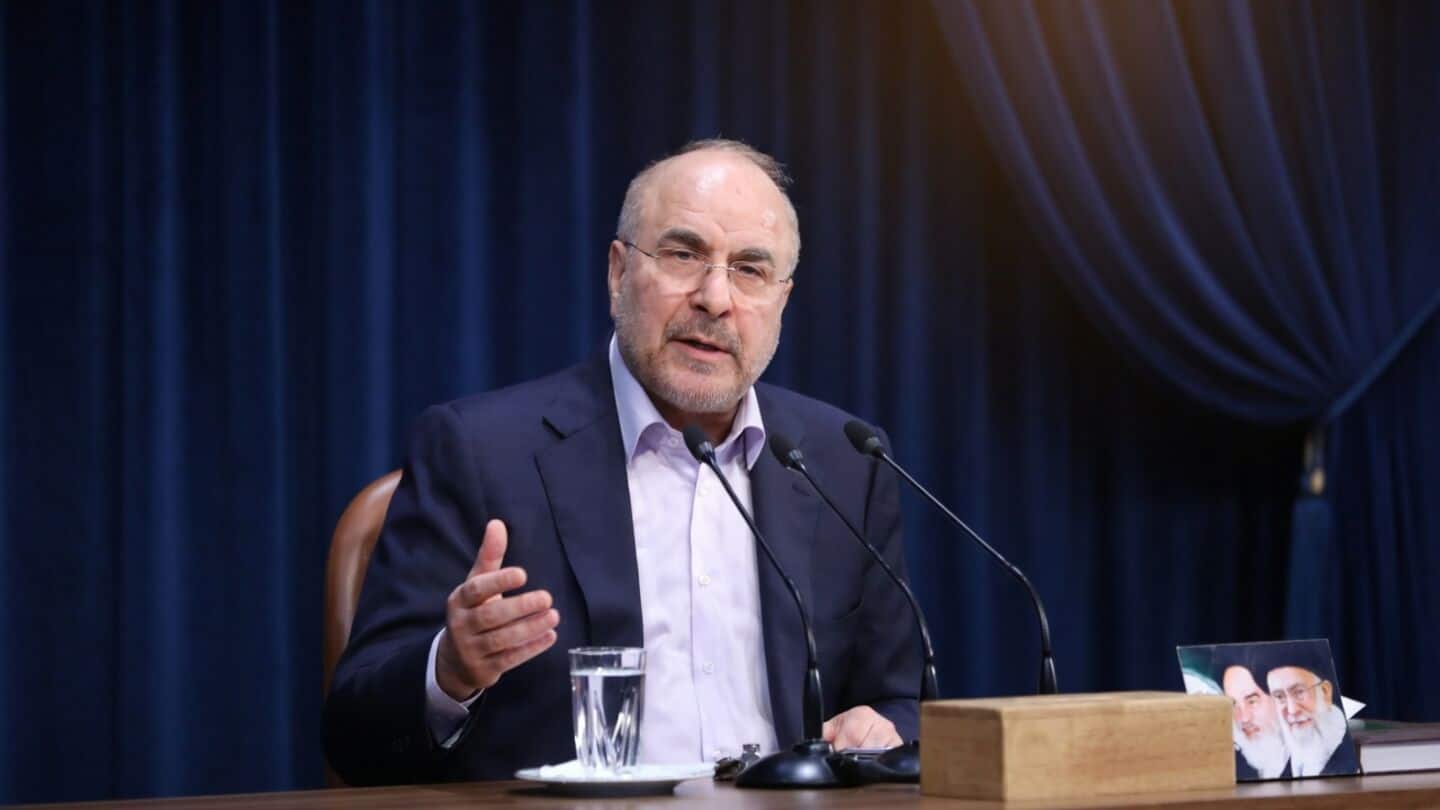
Iran's chief negotiator and parliamentary speaker, Mohammad Bagher Ghalibaf, has announced that the Strait of Hormuz will be under Tehran's administration. He said, "The Strait of Hormuz will never return to its pre-war conditions and will be administered by the Islamic Republic of Iran," according to AFP. The strategic waterway connects the Persian Gulf with the Gulf of Oman and Arabian Sea, serving as a vital chokepoint for global oil and gas shipments.
Diplomatic progress
Talks in Switzerland
The announcement came after talks between Iran and the United States in Switzerland.
The discussions focused on ending hostilities in West Asia and included progress on sanctions relief, frozen assets, Lebanon, and maritime security coordination.
As part of these efforts, both countries agreed to establish communication channels for ship movements through the Strait of Hormuz to prevent misunderstandings, conflicts, and security incidents.
Ongoing skepticism
Iran's distrust of US
Despite the diplomatic progress, Ghalibaf reiterated Iran's long-standing distrust of the United States.
He said, "We have never trusted the Americans; we don't trust them now, and it is only reasonable to remain distrustful in the future."
The talks also addressed developments in Lebanon and efforts to prevent further escalation in the region.
Asset release
$12 billion in frozen Iranian assets to be released
Ghalibaf also revealed that an agreement was reached to release $12 billion in frozen Iranian assets.
He said two separate amounts of $6 billion each were to be released under Clause 11.
The necessary steps were taken during a trip to Qatar, and the final signature was completed during the Switzerland trip.
Conflict avoidance
Iran's role in talks
Ghalibaf claimed that Iran's participation in the talks helped avoid additional violence.
He said, "Had we not gone to Switzerland, more blood would have been shed among Muslims and Shias in Lebanon at any moment."
The negotiations are part of a broader memorandum of understanding aimed at reducing hostilities and creating a roadmap toward a final agreement within 60 days.