Iran has destroyed US drones worth $1B: Report
What's the story
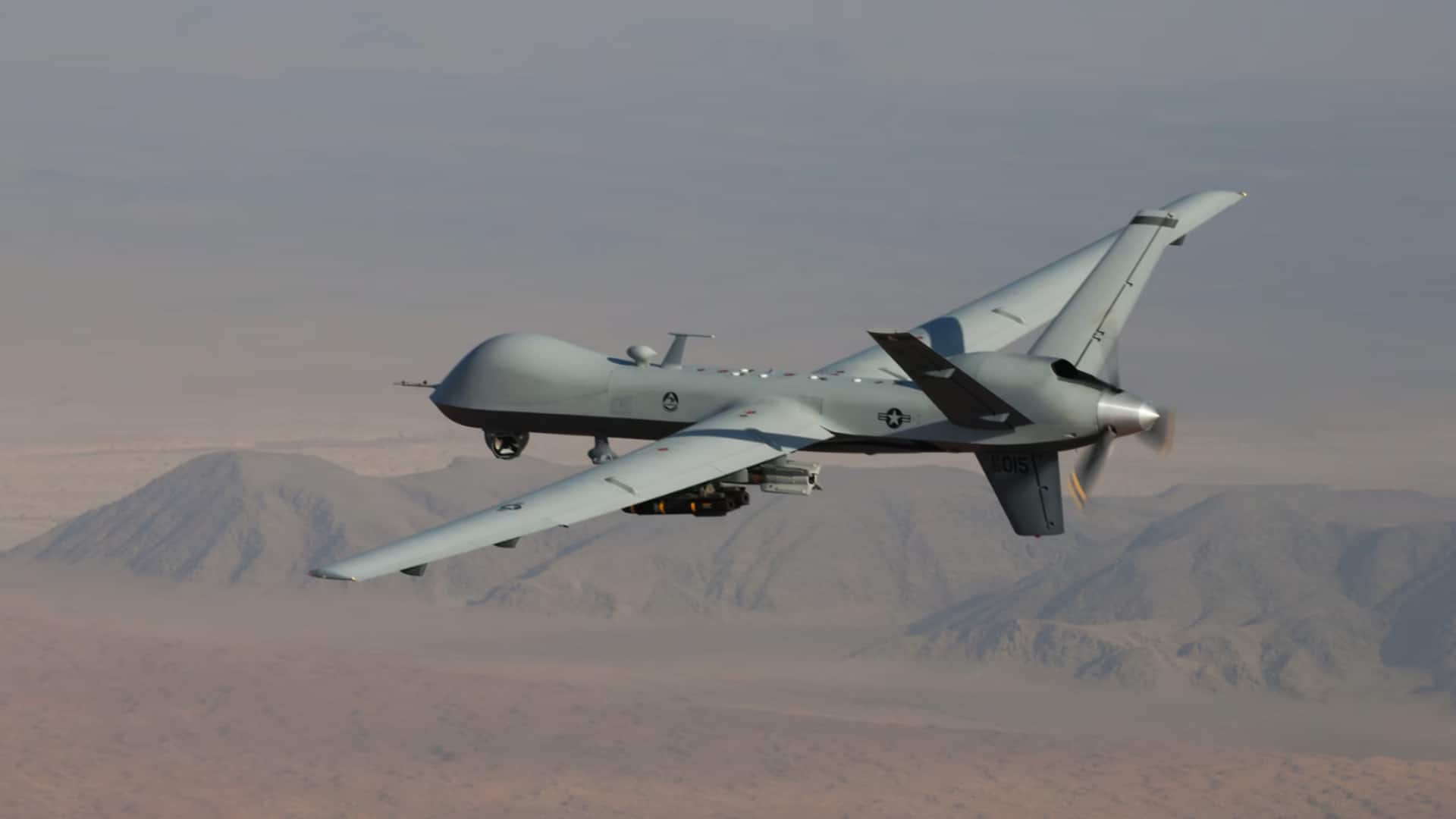
Iran has reportedly destroyed over two dozen MQ-9 Reaper drones operated by the United States since the conflict began. The losses, estimated to be nearly $1 billion, have significantly impacted Washington's fleet of these advanced unmanned combat aircraft systems. According to Bloomberg, at least 24 and possibly up to 30 MQ-9 Reapers have been lost during the conflict.
Loss details
Losses account for nearly 20% of the Pentagon's pre-war inventory
The losses include drones shot down mid-flight by Iranian air defense fire, destroyed on the ground in missile strikes, or damaged in operational accidents. These losses account for nearly 20% of the Pentagon's pre-war inventory of MQ-9 Reapers. The drones are no longer being manufactured for US forces, making replacements difficult.
Ongoing conflict
Ongoing conflict between US-Israel alliance and Iran
The losses come amid an ongoing conflict between the US-Israel alliance and Iran, which started with strikes on February 28. Although both sides entered a ceasefire on April 8, occasional attacks and military exchanges have continued. The MQ-9 Reaper, manufactured by General Atomics, has been extensively used by the US military during this conflict to avoid risking fighter pilots in hostile Iranian airspace.
Drone details
What is MQ-9 Reaper?
The MQ-9 Reaper is among the US military's most advanced remotely piloted aircraft systems. It was developed as a successor to the MQ-1 Predator and is larger, faster, and more heavily armed. The drone can carry AGM-114 Hellfire missiles and precision-guided bombs such as GBU-12 Paveway II and Joint Direct Attack Munitions (JDAMs). It has advanced sensors, including infrared cameras, daylight TV cameras, laser designators, and synthetic aperture radar systems.
Future implications
Military experts say losses could force Pentagon to reassess future
Military experts say these losses could force the Pentagon to reassess the future role of expensive unmanned combat aircraft in heavily contested airspaces. Despite major damage inflicted on Iran's air defense network, several regions remain dangerous for unmanned operations. "Prosecuting war from a distance still comes with a cost," Bloomberg Economics defense lead Becca Wasser said.