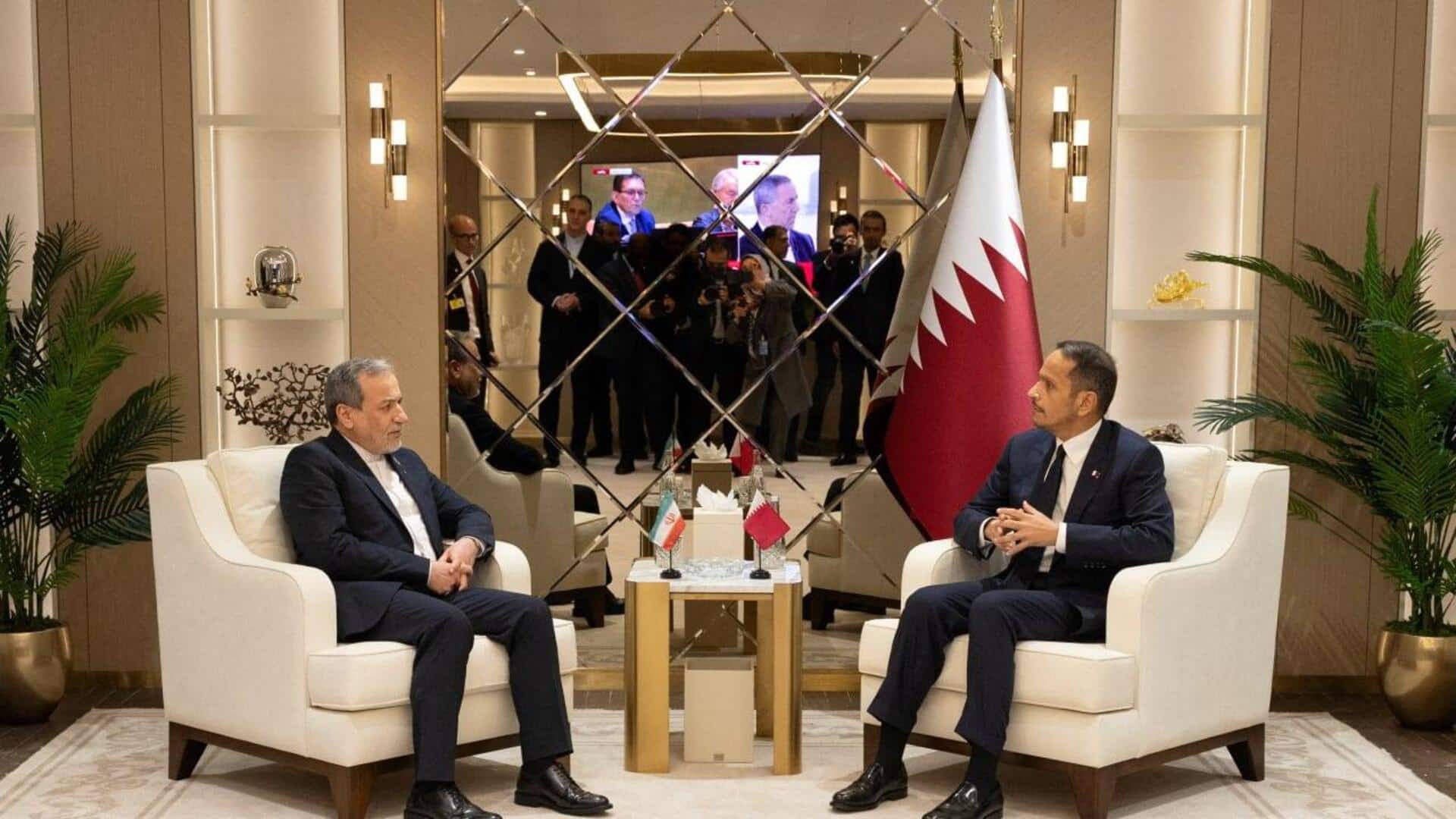
Iran proposes 7-day plan for ceasefire with US, reopening Hormuz
What's the story
Iran has put forward a seven-day plan to end hostilities with the United States, reopen the Strait of Hormuz, and start negotiations on its nuclear program. The proposal was made by Iranian Foreign Minister Abbas Araghchi during the United Nations General Assembly (UNGA) session in New York. He said that if certain conditions are met, "the Strait of Hormuz would reopen at the end of the seventh day and talks would restart."
Proposal details
Proposal based on Islamabad memorandum
The new proposal is based on the Islamabad Memorandum signed by US President Donald Trump and Iranian President Masoud Pezeshkian in June.
However, it includes key amendments to ensure negotiations proceed quickly without either side derailing them.
Under the proposal, hostilities would end within seven days of both sides accepting the agreement. This includes ending conflict in Lebanon.
US response
Proposal includes releasing $12 billion in frozen Iranian assets
The United States has been holding constructive talks with Iran through intermediaries, but is not rushing into a deal.
The proposal includes releasing $12 billion in frozen Iranian assets, waiving sanctions on Iranian oil, and lifting the blockade by the seventh day.
If these conditions are met, Iran would reopen the Strait of Hormuz and nuclear talks would commence.
Diplomatic meetings
Araghchi has met with US special envoy Steve Witkoff
Araghchi has met with US Special Envoy Steve Witkoff and Jared Kushner, Trump's son-in-law, who are leading negotiations on West Asia.
Iranian foreign ministry spokesperson Ismaeil Baghaei said more meetings between the two sides were possible in the coming days.
The proposal aims to prevent a repeat of past failures where ceasefires were broken, and talks stalled over regional security issues.