Iran war exposes Asim Munir's double game, Pakistan streets erupt
What's the story
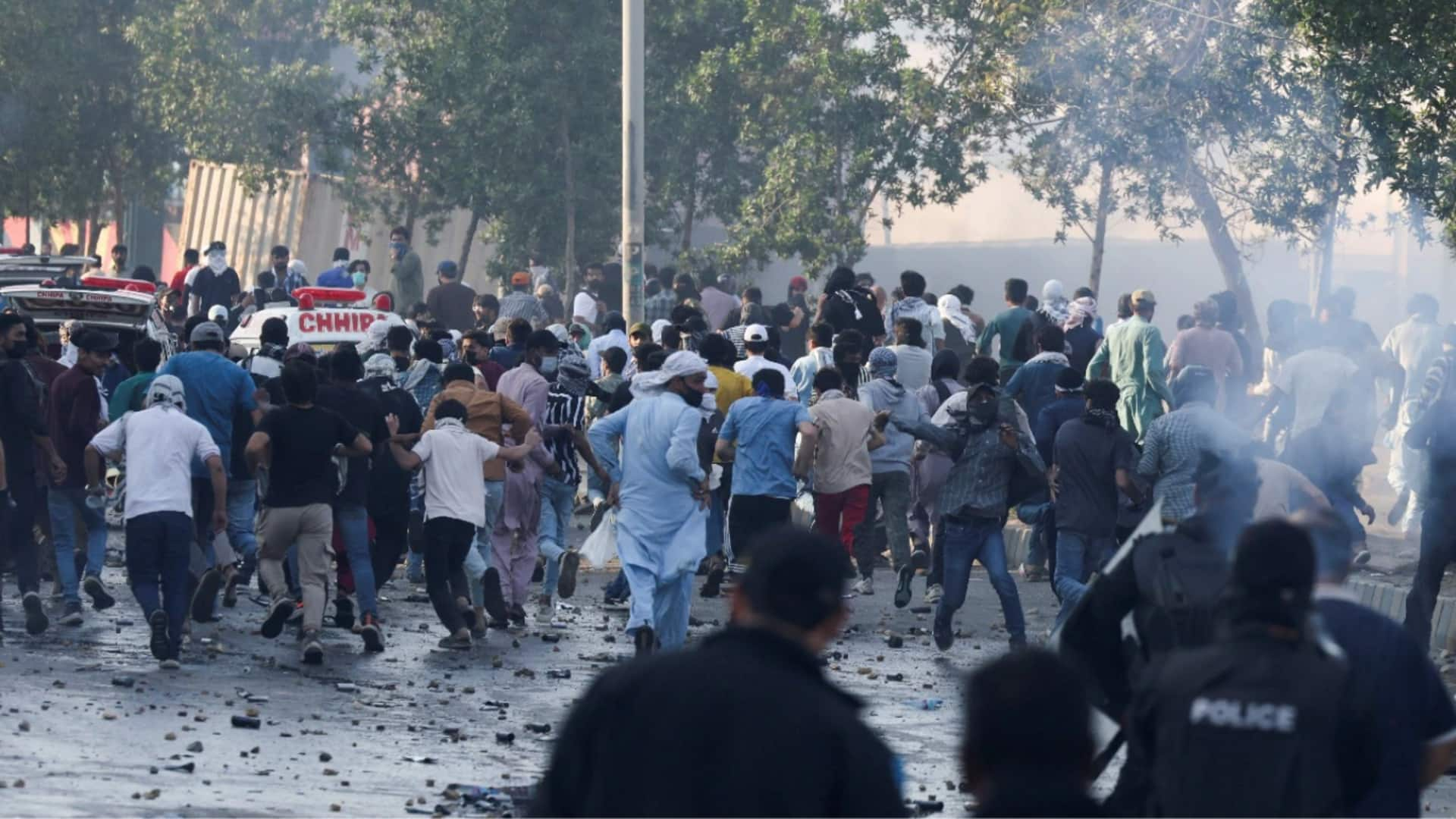
Pakistan has been rocked by violent protests and diplomatic embarrassment after the United States and Israel launched strikes on Iran, killing its Supreme Leader, Ayatollah Ali Khamenei. The unrest, which reportedly left at least 25 dead and over 120 injured, exposed the internal contradictions of Pakistan's policies under Field Marshal Asim Munir. Despite having little direct stake in the US-Israel operation against Iran, Pakistan has paid a domestic price for it.
Leadership dilemma
Munir's balancing act
Munir's leadership has been marked by a balancing act between courting Washington and appeasing hardline Islamist sentiment at home.
This dual messaging has often left Pakistan trapped between ideology and pragmatism, resulting in instability.
The recent unrest was not just a spontaneous reaction to events in the Middle East but also an outcome of years of political signaling that blurred state policy with ideological mobilization.
Domestic unrest
Diplomatic premises attacked, curfews imposed
The protests were especially fierce among the Shia population, who stormed diplomatic premises and government buildings.
The unrest spread to Gilgit-Baltistan and Islamabad, forcing authorities to deploy troops and impose curfews.
Critics were cited as arguing by Moneycontrol that this contradiction stems from a worldview that dominates Pakistan's security establishment, framing geopolitical issues through ideological narratives rather than pragmatic statecraft.
Diplomatic fallout
A cycle of crises
The violence has damaged diplomatic relations and exposed deep sectarian sensitivities within Pakistani society. It also forced security crackdowns across the country.
This pattern of amplifying crises abroad while facing unrest at home is not new for Pakistan's leaders.
Under Munir, this cycle continues as Islamabad struggles to separate ideology, military strategy, and domestic politics.