Israel accused of spraying cancer-linked glyphosate on Lebanese farms
What's the story
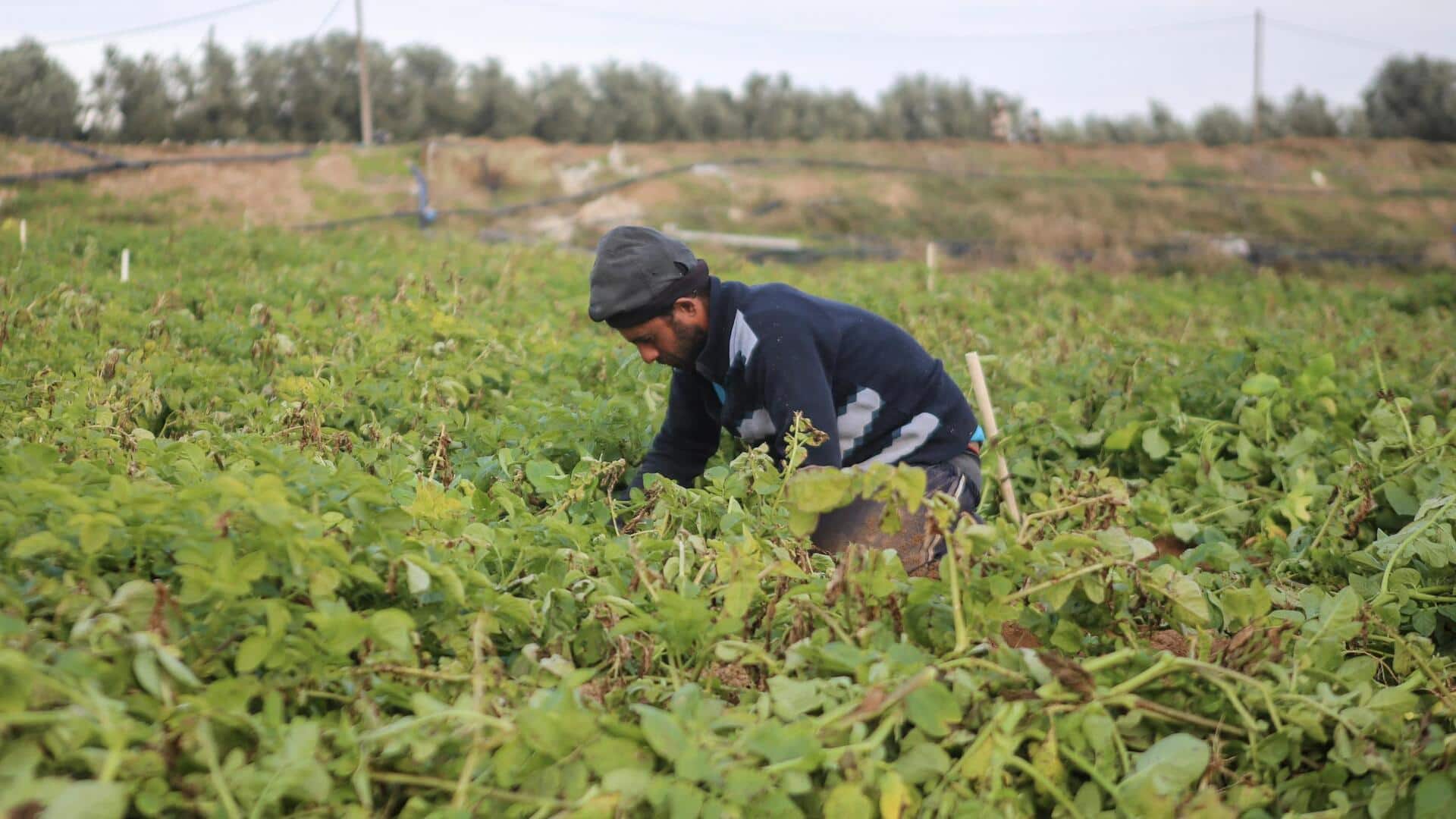
Lebanon has accused Israel of spraying a cancer-linked herbicide on many tracts of farmland in the south of the country. The Lebanese government has called this act a "health crime" that threatens food security and farmers' livelihoods. Lebanese President Joseph Aoun condemned the act as an "environmental and health crime" and a violation of Lebanese sovereignty, vowing "all necessary legal and diplomatic measures to confront this aggression."
Incident details
Herbicide spraying incident and UN peacekeepers' warning
The alleged herbicide spraying incident took place on Sunday morning. United Nations peacekeepers stated they were warned by the Israeli military to stay under cover during an aerial operation to drop what they said was a non-toxic chemical substance.
Videos showed light aircraft spraying extensively over agricultural areas in southern Lebanon.
Lebanese officials stated that laboratory analysis confirmed that the spray contained glyphosate, a potent herbicide classified as "probably carcinogenic to humans" by the World Health Organization in 2015.
Environmental concerns
Lebanese ministries warn of health risks
Lebanon's ministries of agriculture and environment said some samples showed glyphosate concentrations "20 and 30 times higher than normal [use]."
They warned that this could damage vegetation, soil fertility, and ecological balance.
The ministries also highlighted potential health risks to water, soil, and the food chain.
In recent days, videos have emerged showing Israeli planes spraying agricultural areas inside Syria three times in a week.
Twitter Post
Social media post claiming Israeli aircraft spraying 'unidentified substance'
So here we have an Israeli aircraft spraying unidentified chemical substances over agricultural lands in South Lebanon.
— Richard (@ricwe123) February 4, 2026
Now why would they do that?
🤔 pic.twitter.com/ccNzNiTMmB
Historical context
Israel's military campaign against Hezbollah last year
The southern Lebanese countryside still bears the scars of an intense Israeli military campaign against Hezbollah that ended just over a year ago.
The campaign killed around 4,000 people, injured 17,000 others, and displaced 1.2 million people.
Israel has been accused of using white phosphorus and incendiary bombs that burned farmland and polluted soils with heavy metals.
Ecological impact
Environmentalists warn of long-term impacts
Hisham Younes, president of Lebanese environmental group Green Southerners, warned that repeated attacks on southern Lebanon's ecosystem would have "cumulative, complex and deep impacts."
He said this spraying occurs over land already stressed and degraded by previous military actions.
Younes also noted that Israel had deliberately targeted agricultural land and beekeepers with these tactics.