Jaipur royal family's 17th-century 'supercomputer' is now up for grabs
What's the story
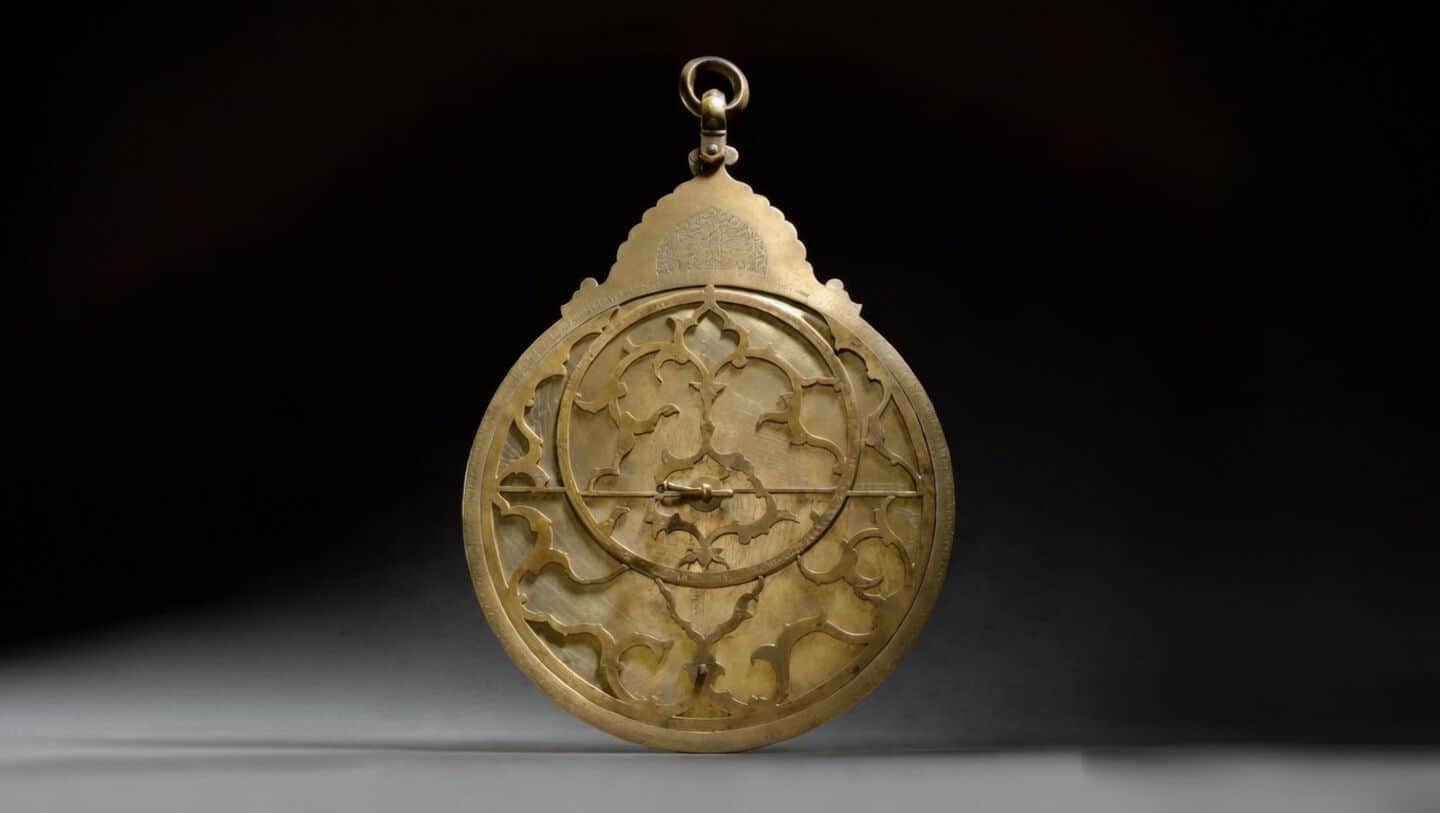
A rare 17th-century brass astrolabe, once part of the royal collection of Jaipur, is set to be auctioned at Sotheby's in London on April 29. The object is "perhaps the largest in existence" and has never been exhibited before, according to Benedict Carter, head of the Islamic and Indian Art department at Sotheby's. Astrolabes were used in ancient times for various astronomical calculations.
Function
What were astrolabes used for?
Astrolabes, metallic disks with interlocking components, were historically used for timekeeping, star mapping, and determining the direction of Mecca.
Dr. Federica Gigante from the Oxford Centre for History of Science, Medicine and Technology has compared them to modern-day smartphones because of their versatility.
"You can calculate the time of sunset, sunrise, the height of a building, the depth of a well, distance and even use them to predict the future," she said.
Craftsmanship
This astrolabe was made in Pakistan
This particular astrolabe was made in Lahore, Pakistan, in the early 17th century by two brothers, Qa'im Muhammad and Muhammad Muqim.
It was commissioned by Aqa Afzal, a nobleman who administered Lahore during this time.
The object's massive size and opulence reflect the patron's stature.
"It weighs 8.2kg, measures nearly 30cm in diameter and stands about 46cm tall-almost four times the size of a typical astrolabe from 17th Century India," Carter said.
Design
It features inscribed cities and precision-calibrated plates
The astrolabe features 94 cities inscribed within it, each marked with their respective longitudes and latitudes.
It also has five precision-calibrated plates and degree divisions "so fine they are subdivided down to a third of a degree."
This level of detail reflects the extraordinary craftsmanship of the Lahore School, which at the time was "at its most refined," Carter says.
The object also speaks to the broader scientific impulse of the Mughal court's interest in astronomy and astrology.
Auction
Astrolabe expected to fetch record price at auction
Sotheby's hopes the astrolabe's pristine condition and royal nature will attract keen interest from museums and collectors.
The piece is expected to fetch between £1.5 million and £2.5 million at auction, a record for an astrolabe if it meets the lower end of its estimate.
The current record is held by an Ottoman astrolabe made for Sultan Bayezid II, which was sold in 2014 for just under £1 million.