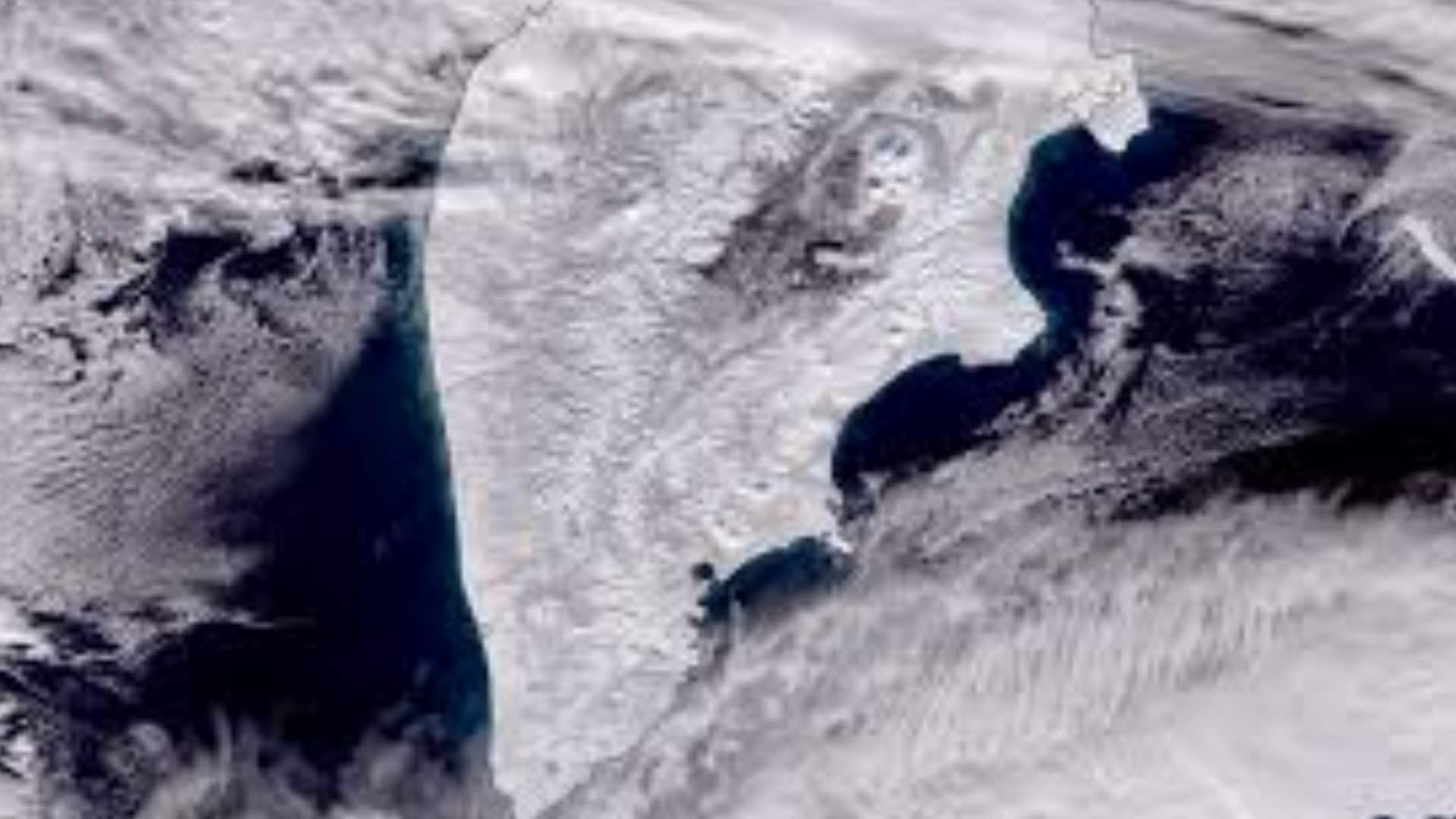
NASA satellite captures Kamchatka buried under record snowfall
What's the story
The Kamchatka Peninsula in Russia is currently facing an unprecedentedly severe winter, with nearly six meters of snow falling in just two months. The extreme weather has paralyzed life in the volcanically active region's capital, Petropavlovsk Kamchatsky, which is home to 160,000 residents. The situation has been captured by NASA's Aqua satellite using its MODIS instrument on January 17, showing a pristine white blanket covering one of Earth's most volcanically active areas.
Snowfall impact
Kamchatka experiences record snowfall, life comes to a standstill
The Kamchatka Hydrometeorology Center has recorded this as one of the snowiest periods since the 1970s. December alone saw 3.7 meters of snow, with another two meters falling in January's first two weeks. The heavy snowfall has resulted in snowdrifts so high that cars were buried and entrances to vital infrastructure blocked in Petropavlovsk Kamchatsky. According to The Guardian, two people were killed when a buildup of snow fell from a rooftop.
Atmospheric shift
Polar vortex weakening leads to extreme weather
Scientists attribute this extreme weather event to an unusually early sudden stratospheric warming episode that started in late November. This phenomenon has weakened the polar vortex, a large area of low pressure and cold air around Earth's poles. When the polar vortex weakens, it becomes "wavy," allowing frigid Arctic air to spill south into mid-latitudes.
Twitter Post
Time-lapse of snow in Kamchatka
MUST WATCH: Time-lapse of the insane snow that fell in Kamchatka, Russia.
— Volcaholic 🌋 (@volcaholic1) January 23, 2026
They're expecting more snow and hurricane force winds this weekend. pic.twitter.com/VVxqLvCTjI