Nepal's ties with India 'excellent', says foreign minister
What's the story
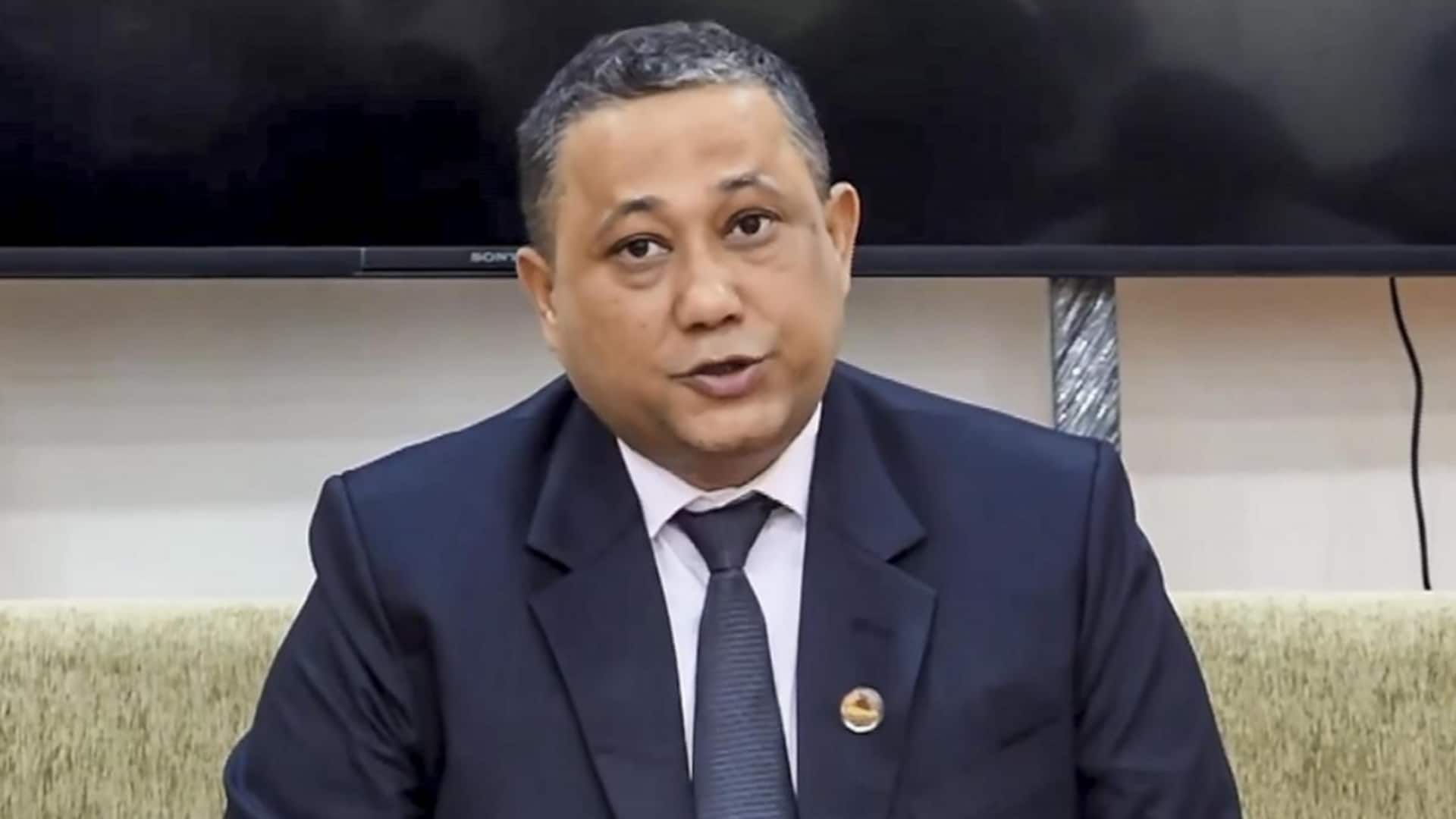
Nepal's Foreign Minister Shisir Khanal has called the country's ties with India "excellent" and "multidimensional." Speaking at an Asia Society event in New York, Khanal said that around two-thirds of Nepal's trade is with India. He also emphasized the strong cultural and social connections between the two countries. Despite political ties sometimes experiencing "ebb and flow," Khanal said Nepal's relationship with India is currently in one of its best phases.
Economic ties
Economic ties
India is Nepal's largest trading partner, accounting for nearly two-thirds of its total external merchandise trade.
In FY 2024-25, India received 81.1% of Nepal's total exports.
Indian companies are major investors in Nepal, and Nepali-manufactured goods enjoy duty-free access to the Indian market under a bilateral trade framework, subject to specified conditions.
The Raxaul-Birgunj corridor is a key transit route for Nepal's trade through India.
Cultural bonds
Cultural and social connections
The relationship between India and Nepal goes beyond trade. The phrase "Roti-Beti ka Rishta" symbolizes deep family and marriage ties across communities.
India's External Affairs Minister S Jaishankar described the relationship as being built on "vibrant people-to-people ties, cross-border connect and shared cultural and religious traditions."
Siddhartha Gautama (Lord Buddha), who was born in Lumbini, Nepal, traveled across India for his spiritual journey.
Security links
Military ties and free movement
Military ties are another important aspect of the India-Nepal relationship.
Nepali Gorkha soldiers serving in the Indian Army are a long-standing tradition, and the practice of awarding reciprocal honorary General ranks to the army chiefs of the two countries is among the notable links.
The 1950 Treaty of Peace and Friendship allows free movement across the 1,751-km open border shared with five Indian states without passports or visas.
Diplomatic developments
High-level engagements
The focus on India has intensified with high-level engagements after Nepal Prime Minister Balendra "Balen" Shah took office.
Rastriya Swatantra Party Chairman Rabi Lamichhane visited India in June at the invitation of Bharatiya Janata Party national president Nitin Nabin and met Prime Minister Narendra Modi.
PM Shah has accepted Modi's invitation to visit India, which is expected to be his first official bilateral foreign visit around November 2026.