US-Iran conflict escalates as Houthi rebels attack Saudi Arabia
What's the story
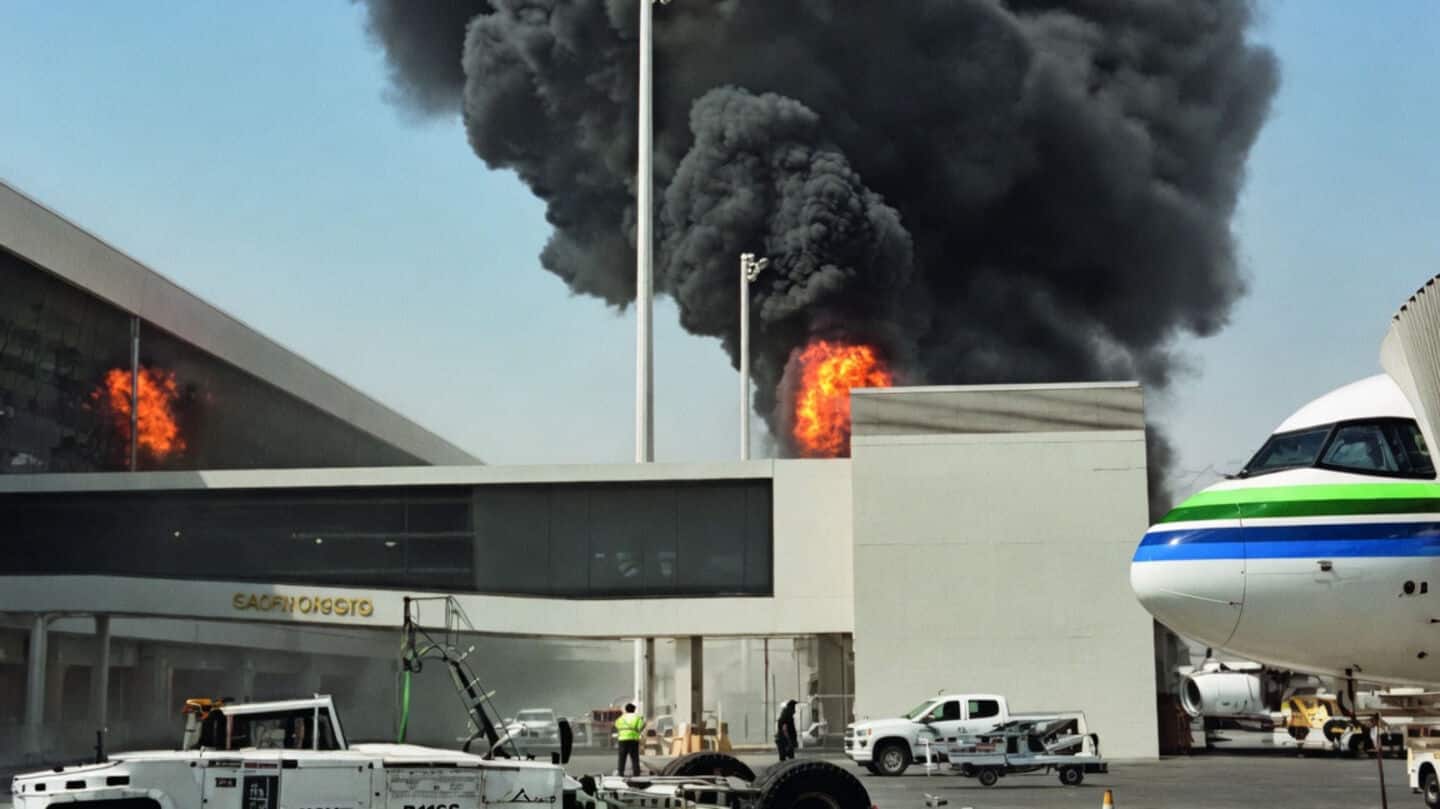
The conflict between the United States and Iran has intensified, with recent explosions at King Khalid International Airport in Riyadh, Saudi Arabia. The Yemen-based Houthi rebels have reportedly claimed responsibility for the attack. This comes as US President Donald Trump announced that Washington would not launch any attacks on Iran before the November 3 midterm elections.
Nuclear tensions
Iran's uranium enrichment continues to be a major sticking point
Iran's nuclear program continues to be a major sticking point in negotiations.
Mohammad Eslami, head of Iran's Atomic Energy Organisation, reiterated that Tehran will not stop uranium enrichment.
This comes after US demands for a "meaningful" reduction in Iran's enrichment capacity.
Iranian Foreign Minister Abbas Araqchi also said Tehran could respond within days to a US response to its proposal for reopening the Strait of Hormuz.
Economic sanctions
US intensifies economic pressure on Iran
The United States has stepped up its economic pressure on Iran by sanctioning 17 tankers and other entities allegedly aiding in oil transportation through a shadow network.
The sanctions are aimed at cutting revenue streams used to finance the war, missile development, cyberattacks, and activities of the Islamic Revolutionary Guard Corps.
Airport security
Air India cancels flights to Riyadh
In the wake of the attacks on King Khalid International Airport, Air India Express and Air India have canceled flights to and from Riyadh.
The cancelations were extended till October 14 for Air India Express and October 15 for Air India.
Despite these developments, Saudi Arabia is proceeding with major energy and investment conferences this month, assuring visitors of security measures in place.
Military deployment
Iran deploys combat units along borders
Amid fears of a renewed conflict with the US, Iran has reportedly deployed over 50 combat and support units along its borders.
The deployment is across several regions, including the northwest, southwest, eastern areas, and the Makran coast.
Iranian Army spokesperson Mohammad Akrami Nia said Tehran plans to increase missile range after the conflict with the US.