Russia launches second consecutive day of massive strikes on Ukraine
What's the story
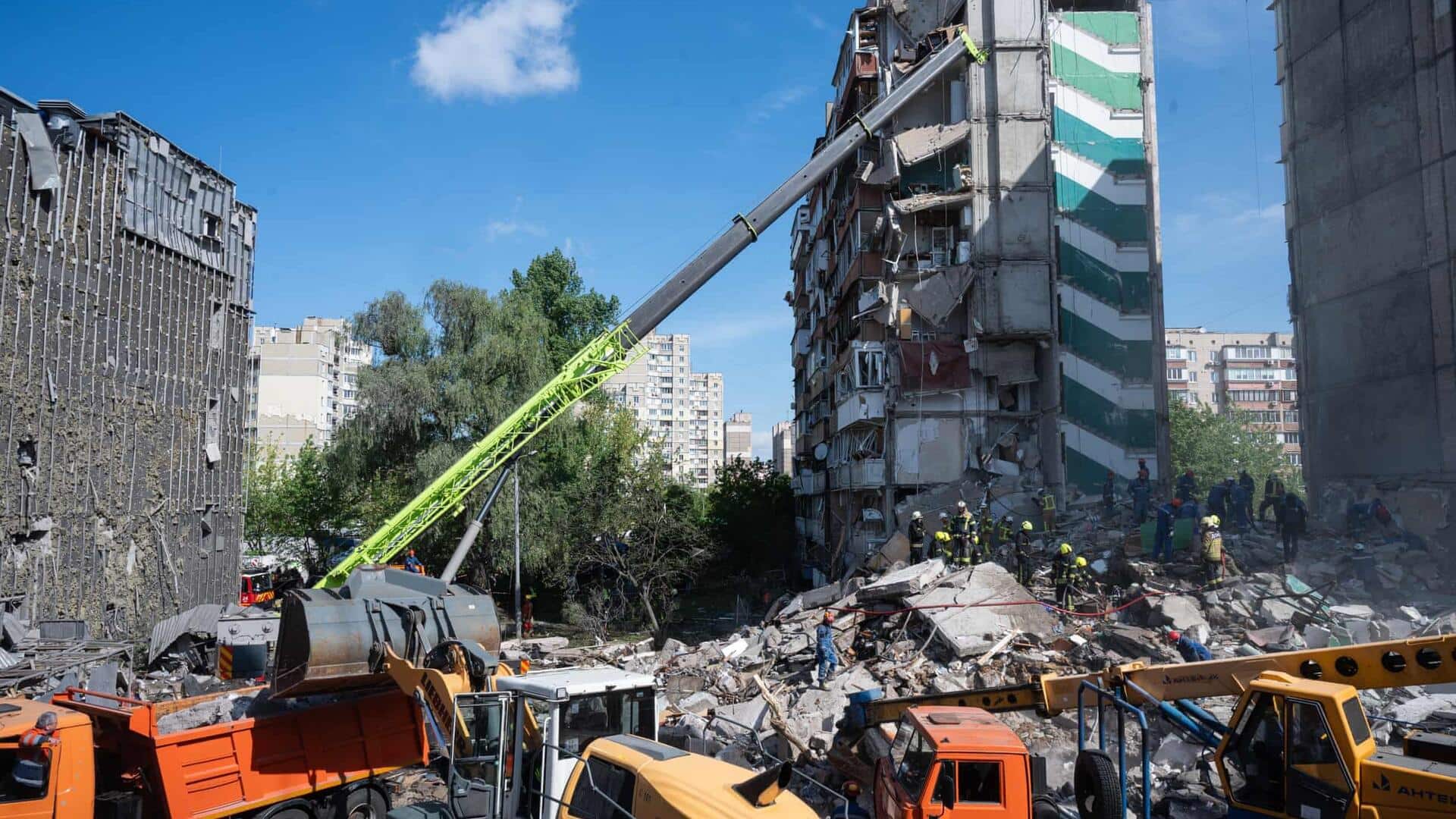
Ukraine is facing a second day of intense Russian missile and drone attacks. The capital city, Kyiv, has been the worst hit, with at least eight people killed and 44 injured. The assault started early Thursday morning with hundreds of drones and dozens of missiles launched by Moscow. Explosions were heard across Kyiv, disrupting water and power supplies in the eastern part of the city.
Retaliation planned
'There must be just response to strikes': Zelenskyy
Ukrainian President Volodymyr Zelenskyy confirmed that five people were killed in Kyiv due to the overnight attack. He has ordered Ukraine's armed forces to prepare for a military response.
"There must be a just response to all these strikes," he said in a statement on social media.
The recent attacks involved 56 missiles and nearly 700 drones, according to Ukraine's air force.
Infrastructure damage
Rescue operations underway after apartment block collapse
Kyiv's mayor, Vitali Klitschko, confirmed that a large apartment block had collapsed in the Darnytskyi district of the city.
"Eighteen apartments have been destroyed. A rescue and search operation is ongoing," he told local media.
Ukraine's interior minister, Ihor Klymenko, said that "more than 10 people were still believed to be missing" from this attack.
Casualties reported
Russia's double-tap strikes kill more Ukrainians
Wednesday's daytime raids killed at least 14 people and injured over 80.
These attacks appear to have included "double-tap" strikes aimed at first responders and targeted critical infrastructure across Ukraine, including the railway system.
The scale of these assaults has raised concerns that Russia is trying to overwhelm Ukraine's air defense systems with swarms of drones and missiles.
Diplomatic response
Hungary summons Russian ambassador over Ukraine strikes
The attacks have also prompted diplomatic responses, with Hungary summoning Russia's ambassador after strikes in western Ukraine near its border.
This marks a significant shift in Hungary's stance under Prime Minister Peter Magyar, who has taken a more critical view of Moscow compared to his predecessor, Viktor Orban.
The scale and intensity of these attacks suggest that Russia may be trying to spoil the "political atmosphere" during US President Donald Trump's visit to China.