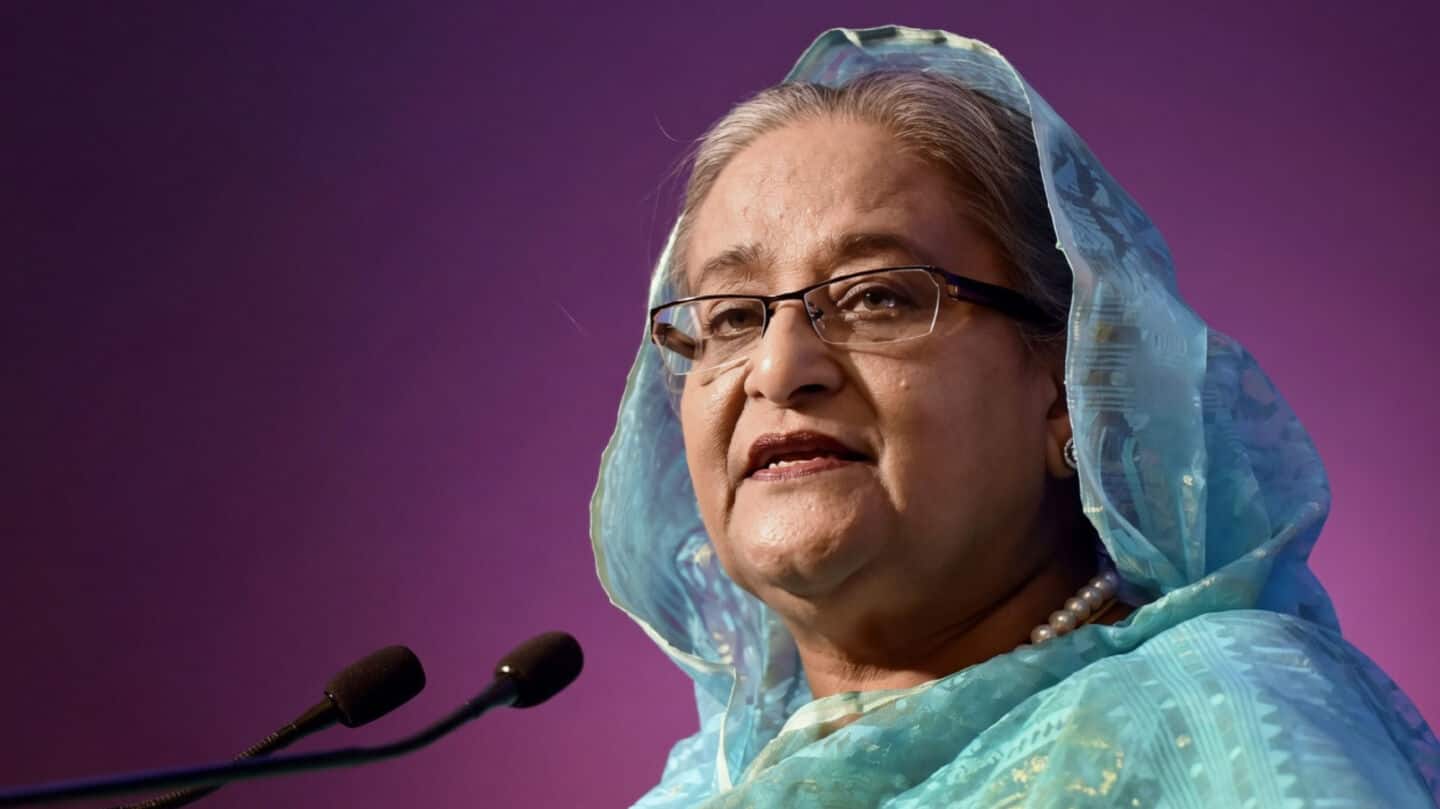
Sheikh Hasina says she'll return to Bangladesh in December
What's the story
Ousted Bangladeshi Prime Minister Sheikh Hasina has announced her intention to return to Bangladesh around December. In an interview with Reuters, she said she and senior party colleagues would surrender upon their return but provided no date or which court they would be surrendering to. The Awami League leader, who is currently in exile in India, faces a death sentence back home after being convicted by a war-crimes court for allegedly ordering a crackdown on a student-led uprising in 2024.
PM
'If death comes, I want it my own soil'
"They may arrest me on my return, they may even kill me," Hasina said in the nearly hour-long telephone interview.
"Still, I have to go," she said.
"My party leaders and workers are being subjected to tremendous repression. If death comes, I want it to come on my own soil, where my parents are buried and where their blood was shed."
Political implications
Hasina's return could deepen political divisions in Bangladesh
Hasina's return could deepen political divisions in Bangladesh as the government tries to restore stability after two years of turmoil.
It may also improve relations with India, which has provided her refuge but is under pressure from Dhaka to extradite her.
This is the first time she has set a timeline for her and other exiled Awami League leaders' return. Among them is former Home Minister Asaduzzaman Khan Kamal, who also faces a death sentence.
Party dynamics
Hasina says authorities keen on bringing her back
Hasina said authorities in Dhaka are keen on bringing her back and have been sending letters to India for her extradition.
Dhaka authorities "want to take me back, they are repeatedly sending letters to India seeking to have me sent back," she said.
"I will go myself," she asserted.
However, India's foreign ministry said in April it was considering Bangladesh's request for her extradition and that it wanted to "engage constructively with the new government and further strengthen bilateral ties."
Career overview
Hasina accused of eroding democratic institutions
Hasina was a dominant figure in Bangladesh for decades, coming into prominence after her father was assassinated in a military coup.
She is credited with improving the economy but has also been accused of suppressing dissent and eroding democratic institutions, allegations she denies.
The crackdown that led to her downfall reportedly killed up to 1,400 people, according to a United Nations report.
Party restructuring
Despite legal troubles, Hasina reorganizing Awami League
"When a government works for a long time, mistakes can happen — no government is above error," she said, adding she is working to reorganize the Awami League.
She has held online meetings covering 125 of Bangladesh's 300 parliamentary constituencies as part of these efforts.
"They may have convicted me, and I may not be able to contest elections," she said. "But why should they suspend the Awami League? If we have done badly, let the people decide."