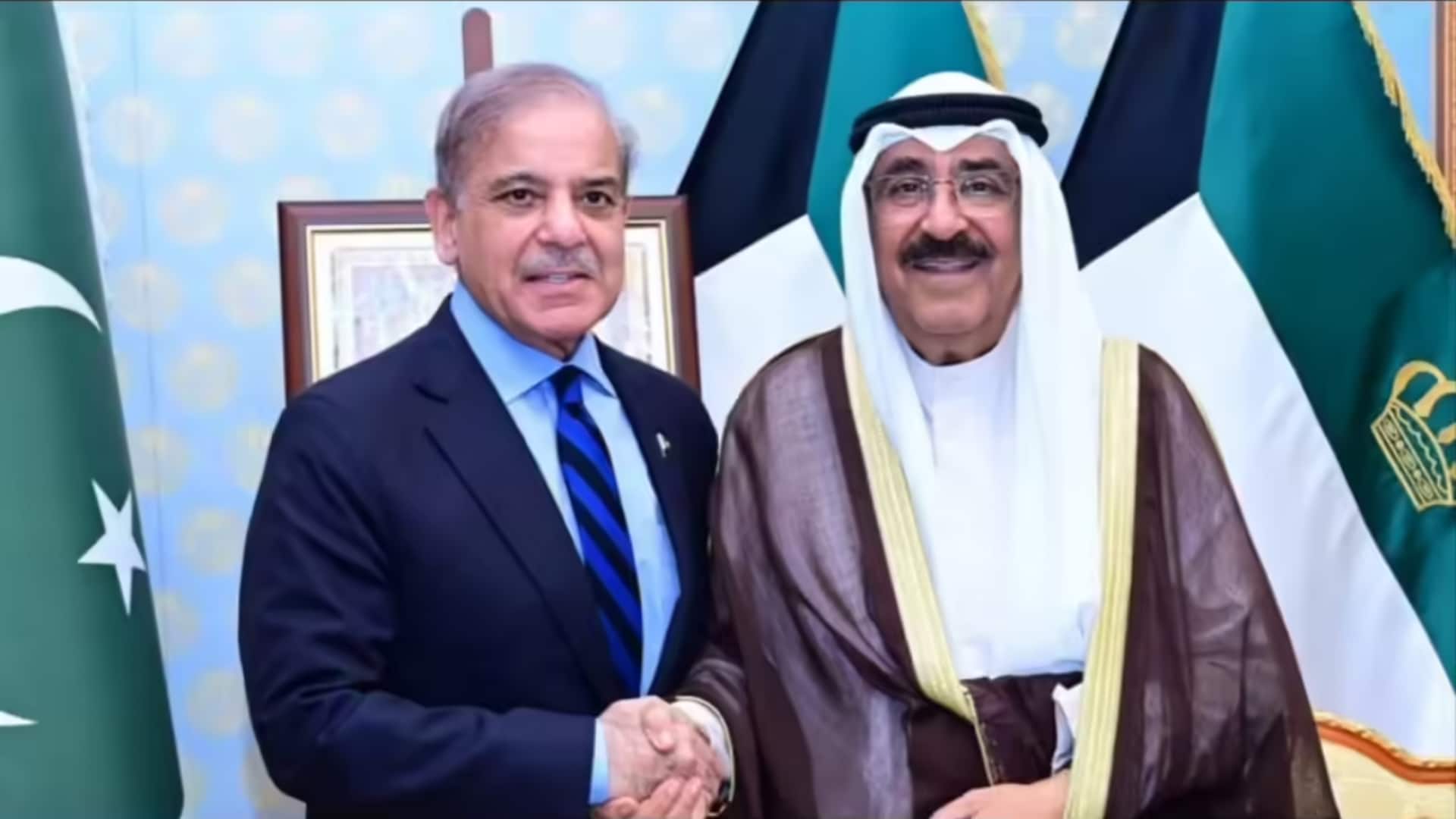
Kuwait ratifies 5-year defense pact with Pakistan
What's the story
Kuwait has ratified a five-year Defence Cooperation Agreement (DCA) with Pakistan, enhancing military ties through intelligence sharing and defense technology. The agreement was approved by an Amiri decree-law published in the official gazette Kuwait Al-Yaum. It formalizes a deal signed in June 2023 and comes less than a year after Saudi Arabia's Strategic Mutual Defence Agreement with Islamabad.
Agreement details
Key highlights of the DCA
The DCA establishes an institutional framework for cooperation between the Kuwaiti and Pakistan Armed Forces.
It covers joint military training, education, intelligence sharing, logistics, defense technology development, and exchanges of military expertise.
A Joint Military Committee will oversee the agreement, which has automatic renewal clauses unless either country opts to withdraw formally.
Strategic importance
Significance of the deal
The pact is significant as West Asian states are facing escalating regional volatility.
Instead of relying solely on Western allies, Gulf Cooperation Council (GCC) nations are diversifying their security strategies by building military links with regional powers like Pakistan.
For Islamabad, this deal could help secure financial bailouts and investments from oil-rich Gulf monarchies in exchange for military support.
Strategic monitoring
What does this mean for India?
For India, Kuwait's move is something to watch but not an immediate crisis.
India's strategic posture toward the Gulf relies on economic weight and civil-society ties, while Pakistan depends on supplying military manpower.
New Delhi will continue urging Gulf partners to ensure that military cooperation with Pakistan doesn't affect Indian security interests.
Economic footprint
India's strategic interests in the Gulf
India has a $100 billion bilateral trade footprint in the region and strong partnerships with GCC states.
However, any deeper Pakistani involvement in Kuwaiti defense or intelligence could affect India's diaspora security.
Despite Islamabad's efforts to project itself as an indispensable regional security provider through these agreements, its strategic leverage over New Delhi remains limited as long as Gulf states maintain their economic commitments with India.