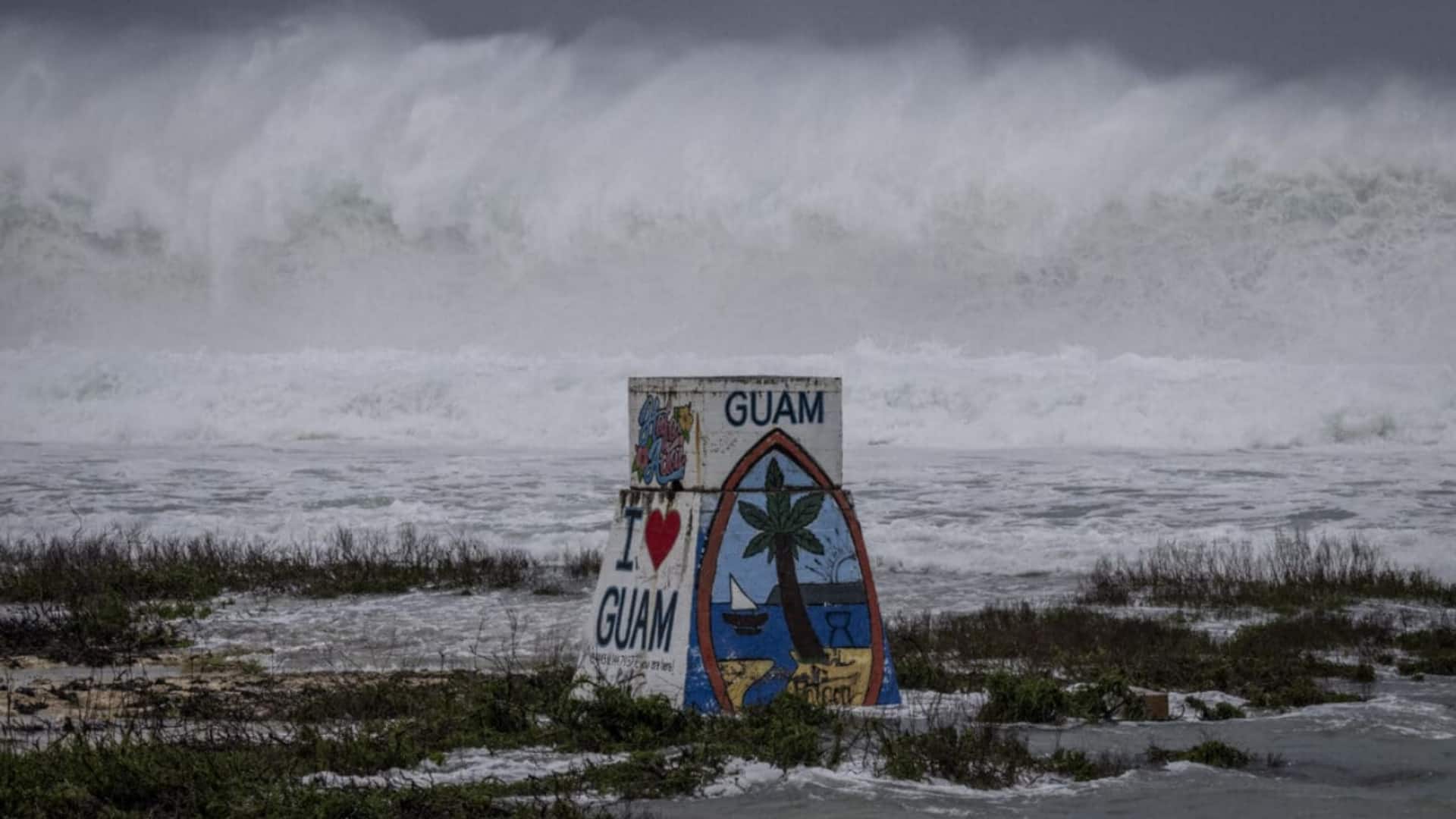
Super Typhoon Bavi hits Northern Mariana Islands, wreaks havoc
What's the story
The United States Pacific Islands are currently reeling under the impact of Super Typhoon Bavi, one of the strongest storms to hit the region this year. The storm, equivalent to a Category 5 hurricane, made landfall over Rota in the Northern Mariana Islands on Monday morning. With maximum sustained winds exceeding 290km/h, gusts reaching 346km/h, and sustained winds expected to exceed 242km/h on Rota, Bavi is wreaking havoc across the islands.
Storm preparations
Emergency shelters near capacity as residents seek refuge
The National Weather Service has issued typhoon warnings for Guam, Rota, Tinian, and Saipan.
The National Weather Service warned of "widespread destructive winds in excess of 242km/h," and forecasters called it an "extremely dangerous and life-threatening situation."
In preparation for the storm's impact, Guam Governor Lou Leon Guerrero declared a heightened state of emergency readiness on Sunday.
Emergency shelters are nearing capacity as residents seek refuge from potential flash flooding and structural damage.
Military readiness
Storm threatens key US military bases in the Pacific
Super Typhoon Bavi is expected to severely affect key US military bases in the Pacific.
Andersen Air Force Base and Naval Base Guam are both located in the path of the storm.
The Air Force base hosts bombers such as B-1s, B-2s, and B-52s, which are crucial for projecting power across the Pacific region.
Meanwhile, US Naval Base Guam is home to five attack submarines.
Ongoing recovery
Region still recovering from earlier storm Sinlaku's devastation
The region is still recovering from the devastation of Super Typhoon Sinlaku, which hit in April as a Category 4 storm. Saipan and Tinian are still without electricity after the earlier storm caused widespread flooding and damage.
The slow movement of Sinlaku exacerbated its impact, keeping destructive winds over the islands for hours.
In contrast, Bavi is expected to leave the Marianas by Monday afternoon at a speed of 16-20km/h westward.