Trump to appeal ruling which halted White House ballroom construction
What's the story
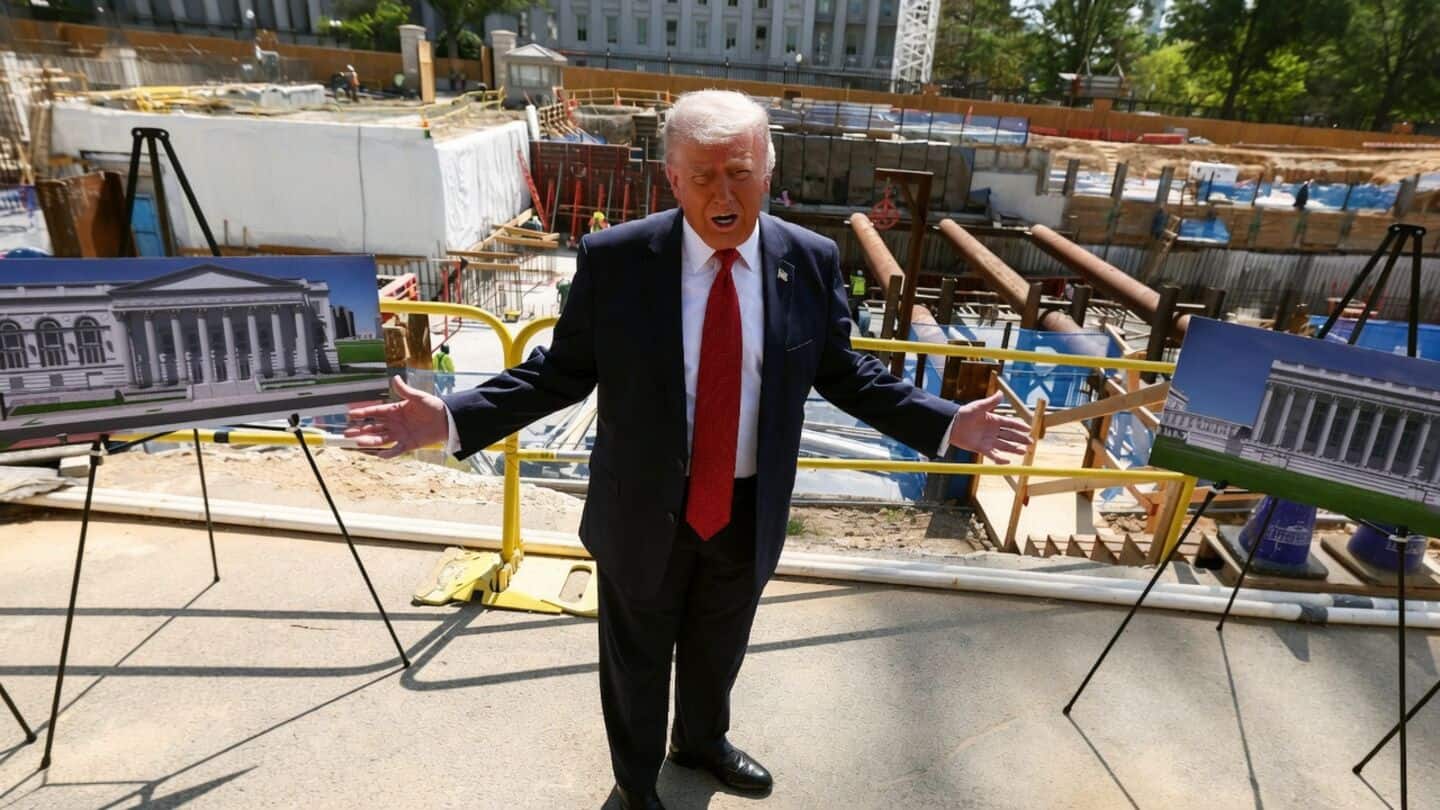
US President Donald Trump has announced his intention to appeal a federal appeals court ruling that halted the construction of a new ballroom at the White House. The court ruled that Trump did not have the legal authority to build this massive 90,000-square-foot space without congressional approval. The decision was a major setback for Trump, who has been heavily focused on his construction projects in Washington, including the planned ballroom.
Appeal announcement
Trump's response to the court's decision
In light of the ruling, Trump announced on social media that he would be appealing to the Supreme Court.
He described the order as "horrendous, politically motivated, and unlawful."
The appeals court sided with a historic preservation group that sued to stop construction of the ballroom on the site where Trump abruptly demolished the old East Wing of the White House last year.
Jurisprudence
Court's reasoning behind the ruling
The three-judge panel of the US Court of Appeals for the District of Columbia Circuit, in a 2-1 decision, said that "each President is a temporary tenant, not the owner, of the White House and its Executive Residence."
The court also noted that "the President has no - and claims no - constitutionally assigned authority over that property."
This ruling was in favor of a preliminary injunction won by the National Trust for Historic Preservation.
Project details
Trump's defense of the ballroom project
Despite the legal hurdles, Trump has defended the ballroom project as necessary for hosting grand parties and state visits. He also claimed it was "vital for National Security."
The proposed structure would include an above-ground ballroom and a below-ground security complex.
Republicans have tried to use taxpayer money for Secret Service security upgrades related to this project, a plan previously rejected by a budget watchdog in May.
Preservation stance
National Trust for Historic Preservation's stance
The National Trust for Historic Preservation welcomed the ruling, emphasizing that no above-ground construction can take place "unless and until" Congress takes action.
Brent Leggs, President and CEO of the National Trust, said, "The White House, a global landmark that symbolizes American identity and the ideals of democracy, belongs to the American people."
This ruling could have significant implications for Trump's future plans for the White House ballroom project.