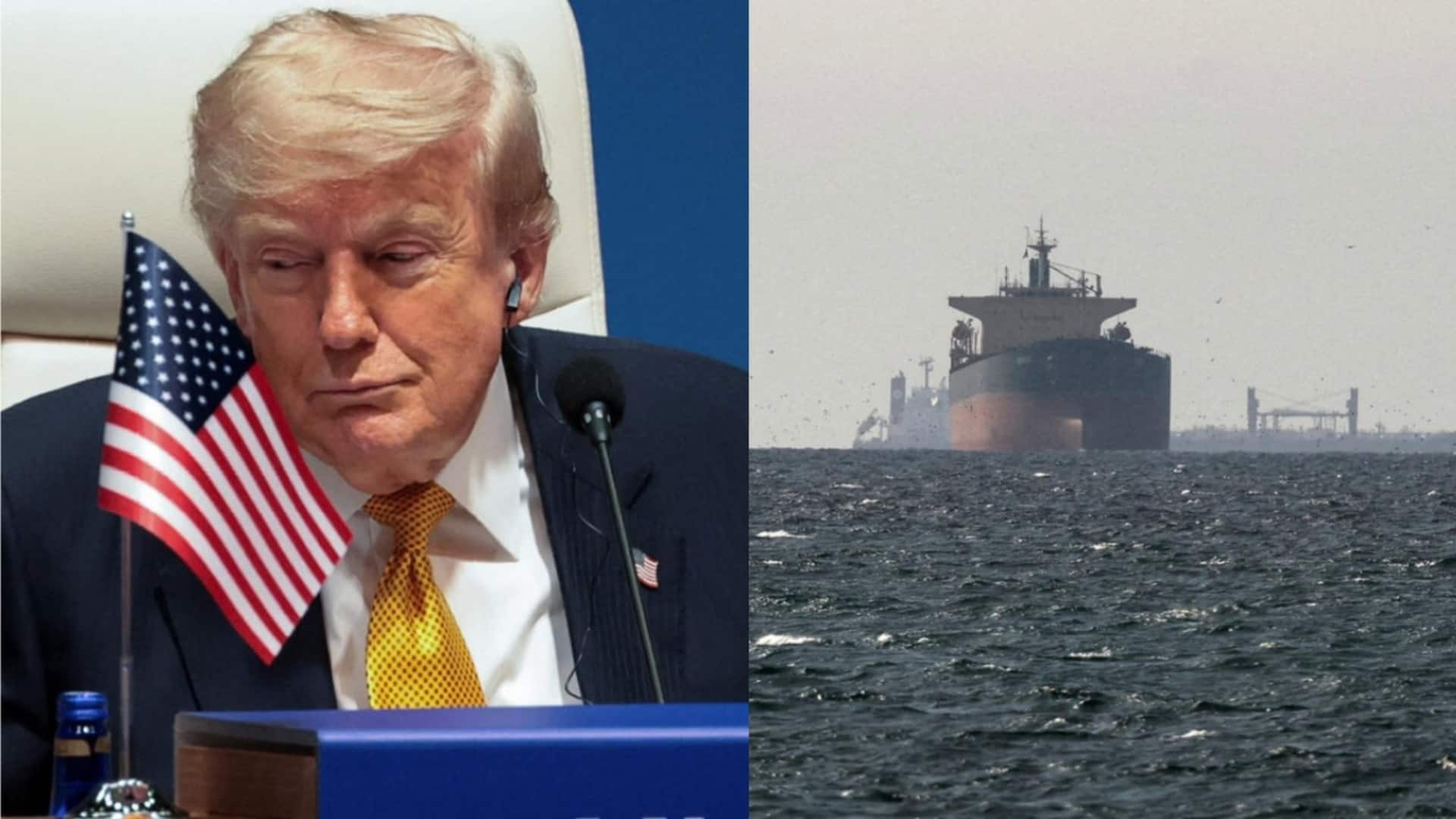
Trump announces 20% fee on cargo passing through Hormuz
What's the story
United States President Donald Trump has announced that the country will start charging a 20% fee on all cargo passing through the Strait of Hormuz. In a post on his social media platform, Truth Social, Trump said that the United States would be known as "THE GUARDIAN OF THE HORMUZ STRAIT." He stressed that this decision was taken as a "matter of FAIRNESS," and to cover costs necessary for providing safety and security in this volatile region.
Blockade details
Trump reinstates blockade for Iranian vessels
Trump also announced the reinstatement of a blockade that would only affect Iranian vessels and those doing business with Tehran.
He said, "The Hormuz Strait is OPEN, and will remain OPEN, with or without Iran."
The strait will remain open for all other countries while the blockade is in place.
Security role
US to take control of Hormuz Strait, says Trump
In an interview with Fox News, Trump had earlier said that the United States would "take control" of the Strait of Hormuz and act as its "guardian."
He stressed that the US would be responsible for protecting this crucial shipping lane and argued that countries benefiting from its security should help pay for these costs "necessary to do the job of providing safety and security."
Twitter Post
Reshare of Trump's Truth Social post
The Hormuz Strait is OPEN, and will remain OPEN, with or without Iran. We are reinstating the THE IRANIAN BLOCKADE, so named because it is only stopping Iran’s ships or customers from entering or leaving. All other countries will have fair and open use of the Strait. The U.S.A.… pic.twitter.com/m81hb9Nl3p
— Commentary Donald J. Trump Truth Social Posts On X (@TrumpTruthOnX) July 13, 2026
Strategic importance
Importance of Strait of Hormuz
The Strait of Hormuz is a key global maritime chokepoint that connects the Persian Gulf to the Gulf of Oman.
It carries nearly one-fifth of the world's oil and liquefied natural gas exports.
Any disruption in this narrow waterway could have major implications for global energy supplies and international trade.