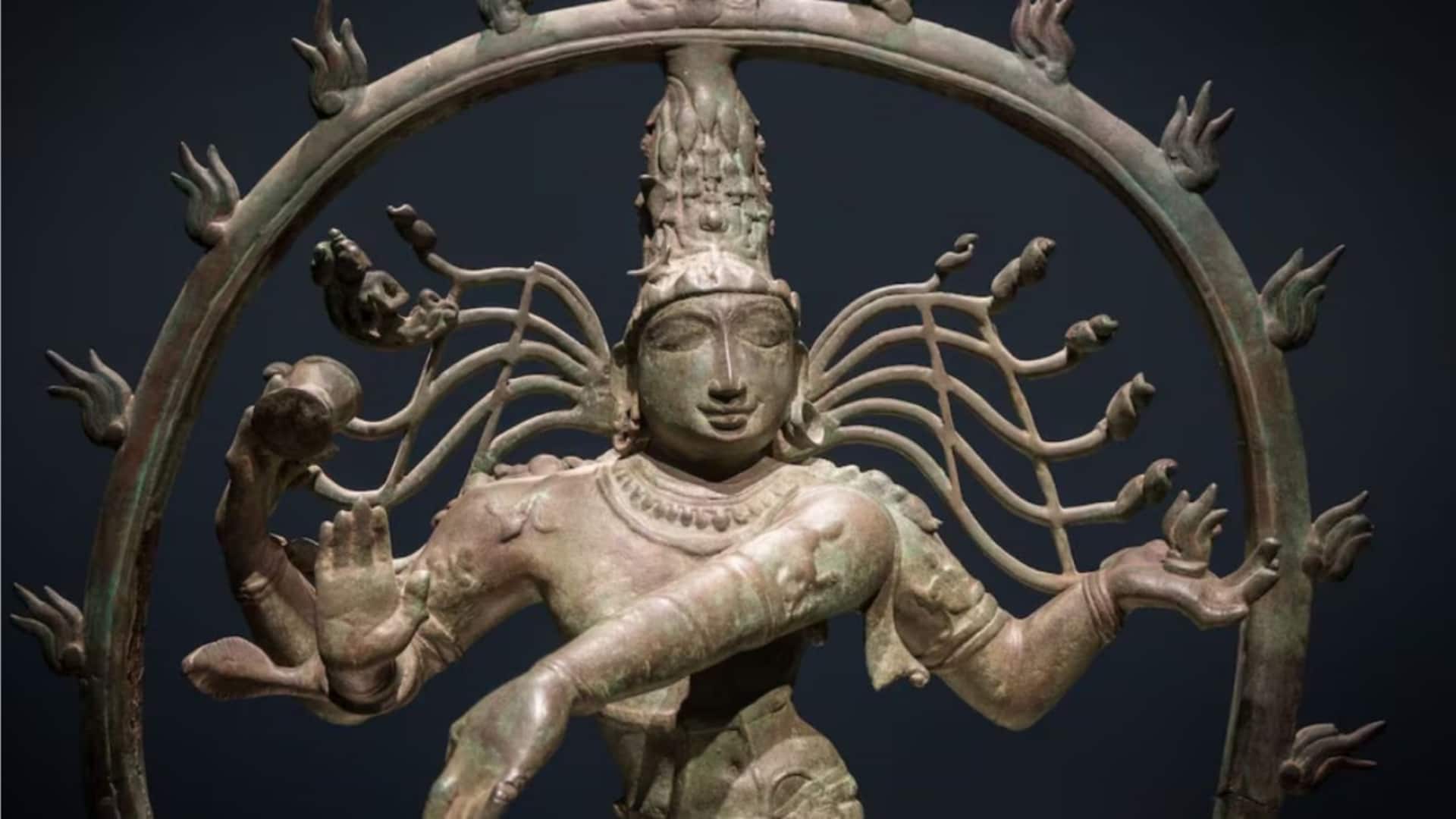
US returns stolen Chola, Vijayanagar bronze idols to Indian temples
What's the story
The Smithsonian's National Museum of Asian Art in Washington, DC, will return three ancient bronze sculptures to India, according to PTI. The decision comes after "rigorous provenance research," which confirmed that the sculptures were illegally removed from temple settings in India. The Indian government has agreed to place one sculpture on long-term loan, allowing the museum to publicly share its full story and highlight its commitment to provenance research.
Cultural significance
The sculptures were originally sacred objects used in temple processions
The sculptures include "Shiva Nataraja" from the Chola period (circa 990), "Somaskanda" from the Chola period (12th century), and "Saint Sundarar with Paravai" from the Vijayanagar period (16th century). These works of art were originally sacred objects used in temple processions. The museum is working closely with the Embassy of India to finalize arrangements for their return.
Provenance research
The museum's provenance research
As part of a systematic review of its South Asian collections, the National Museum of Asian Art conducted a detailed investigation into the provenance of the three sculptures. The museum's dedicated provenance team and curators scrutinized each work's transaction history. In 2023, with help from the Photo Archives of the French Institute of Pondicherry, researchers confirmed that these bronzes were photographed in Tamil Nadu temples between 1956 and 1959.
Ethical practice
Chase Robinson on the museum's commitment to ethical practices
Chase Robinson, the museum's director, emphasized their commitment to responsible stewardship of cultural heritage and transparency in their collection. He said they conduct a robust program of research to trace not just how objects came to the museum but also their history across time. The return of these sculptures is a testament to ethical museum practice and appreciation for India's cooperation in continuing exhibition opportunities for visitors.
Sculpture's history
'Shiva Nataraja' was photographed in Tamil Nadu in 1957
The "Shiva Nataraja" once belonged to Sri Bhava Aushadesvara Temple in Tirutturaippundi Taluk, Tamil Nadu, where it was photographed in 1957. The National Museum of Asian Art acquired this sculpture from Doris Wiener Gallery in New York in 2002. A provenance researcher discovered that the gallery had provided falsified documentation for its sale to the museum.
Additional findings
'Somaskanda' and 'Saint Sundarar with Paravai'
The "Somaskanda" and "Saint Sundarar with Paravai" were gifted to the National Museum of Asian Art in 1987 as part of a collection of 1,000 objects. Research led by museum teams confirmed that the "Somaskanda" was photographed at Visvanatha Temple in Alattur village, Mannarkudi taluk, Tamil Nadu, in 1959. The "Saint Sundarar with Paravai" was photographed at the Shiva Temple in Veerasolapuram village, Kallakurichi Taluk, Tamil Nadu, in 1956.