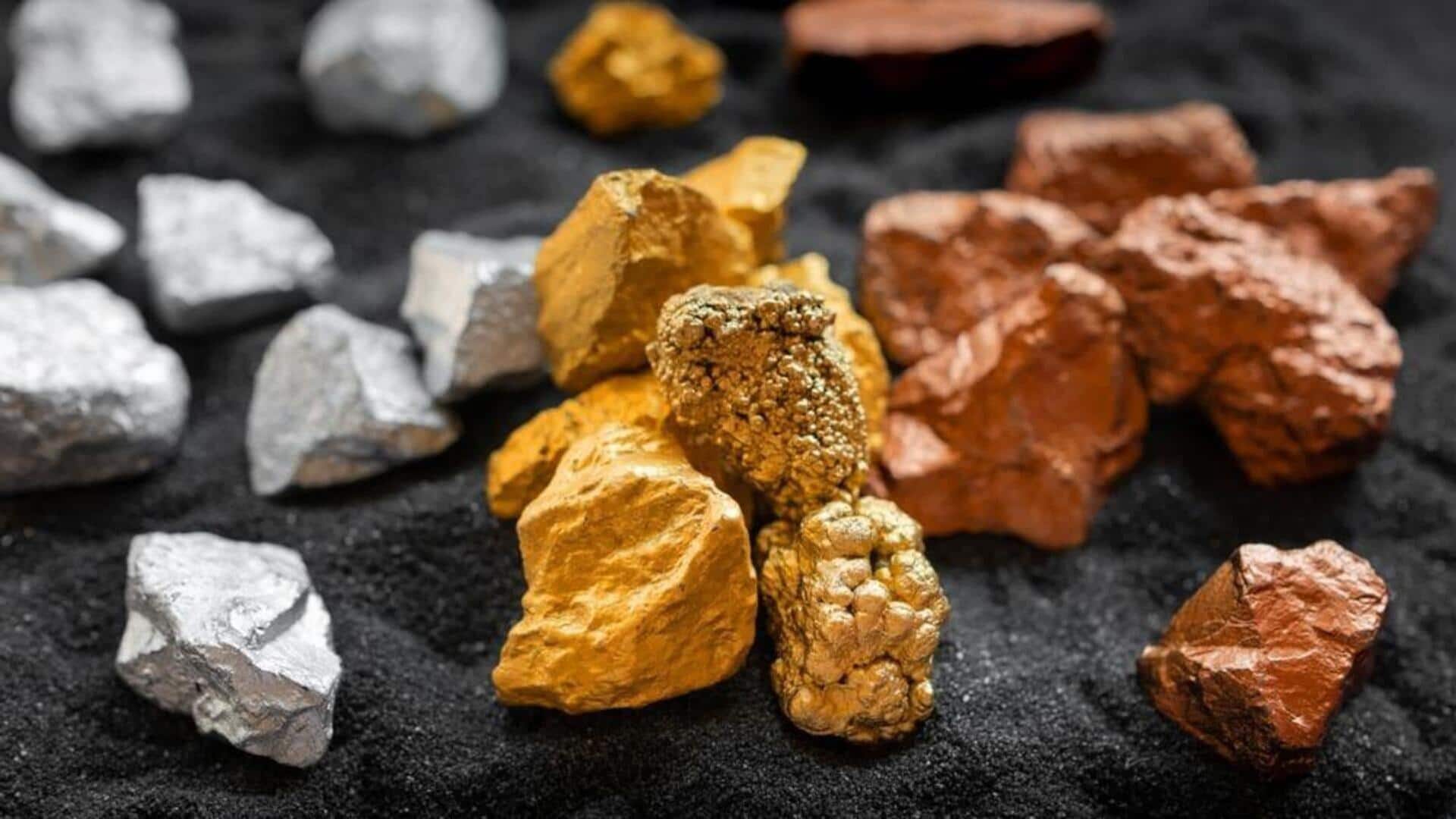
After Australia, India to buy rare earths from Uzbekistan
What's the story
India has signed a long-term uranium supply deal with Uzbekistan as part of its global hunt for critical minerals and rare earths. The agreement comes just weeks after India and Australia signed a landmark commercial nuclear fuel export pact in July. The move is part of India's strategy to ramp up its nuclear power capacity from 8.1GW to 20GW by 2030 and further to 100GW by 2047.
Diplomatic breakthrough
Modi, Mirziyoyev upgrade bilateral ties to Comprehensive Strategic Partnership
During high-level talks in Tashkent on August 29-30, Prime Minister Narendra Modi and President Shavkat Mirziyoyev upgraded bilateral ties to a Comprehensive Strategic Partnership.
The summit, which marked 15 years of strategic cooperation between the two countries, resulted in 11 agreements covering defense, digital public infrastructure, trade, and culture.
The most significant outcome for global energy markets was a long-term framework for Uzbek uranium exports to India.
Resource integration
Uzbekistan is 1 of the world's largest producers of uranium
Uzbekistan is one of the world's largest producers of recoverable uranium, with some of the biggest reserves.
The country's state-owned enterprise, Navoiyuran, has aggressively modernized its extraction infrastructure.
Under the new agreement, Tashkent will provide a multi-year supply of yellowcake (uranium ore concentrate) to fuel India's expanding fleet of civilian nuclear reactors under International Atomic Energy Agency (IAEA) safeguards.
Mineral exploration
India, Uzbekistan also signed MoU on joint exploration of minerals
Along with the uranium supply agreement, India and Uzbekistan also signed a Memorandum of Understanding (MoU) for joint geological exploration, survey techniques, and extraction of critical minerals and rare earth elements.
The two countries have set an ambitious target to increase annual bilateral trade from $1 billion to $5 billion by 2030.
NPCI International Payments Ltd (NIPL) also signed an agreement with Uzbekistan's National Interbank Processing Centre (NIPC) for UPI integration across Uzbek merchant QR systems.
Nuclear growth
India's nuclear power push and quest for yellowcake
India's push for foreign yellowcake stems from a gap between its ambitious nuclear expansion plans and domestic limitations. Nuclear power is India's most dependable way to provide zero-carbon baseload electricity, complementing intermittent renewable sources like solar and wind.
Domestic challenges
Why does India need imported uranium?
India's domestic uranium reserves, mainly in Jaduguda (Jharkhand) and Tummalapalle (Andhra Pradesh), face operational hurdles such as low ore grade and regulatory bottlenecks.
These challenges have delayed domestic mine expansions and resulted in localized fuel shortages, forcing several un-safeguarded and safeguarded domestic reactors to operate below peak capacity.
Securing steady imports from resource-rich partners ensures that India's operational and upcoming reactors maintain high capacity factors above 85 to 90%.