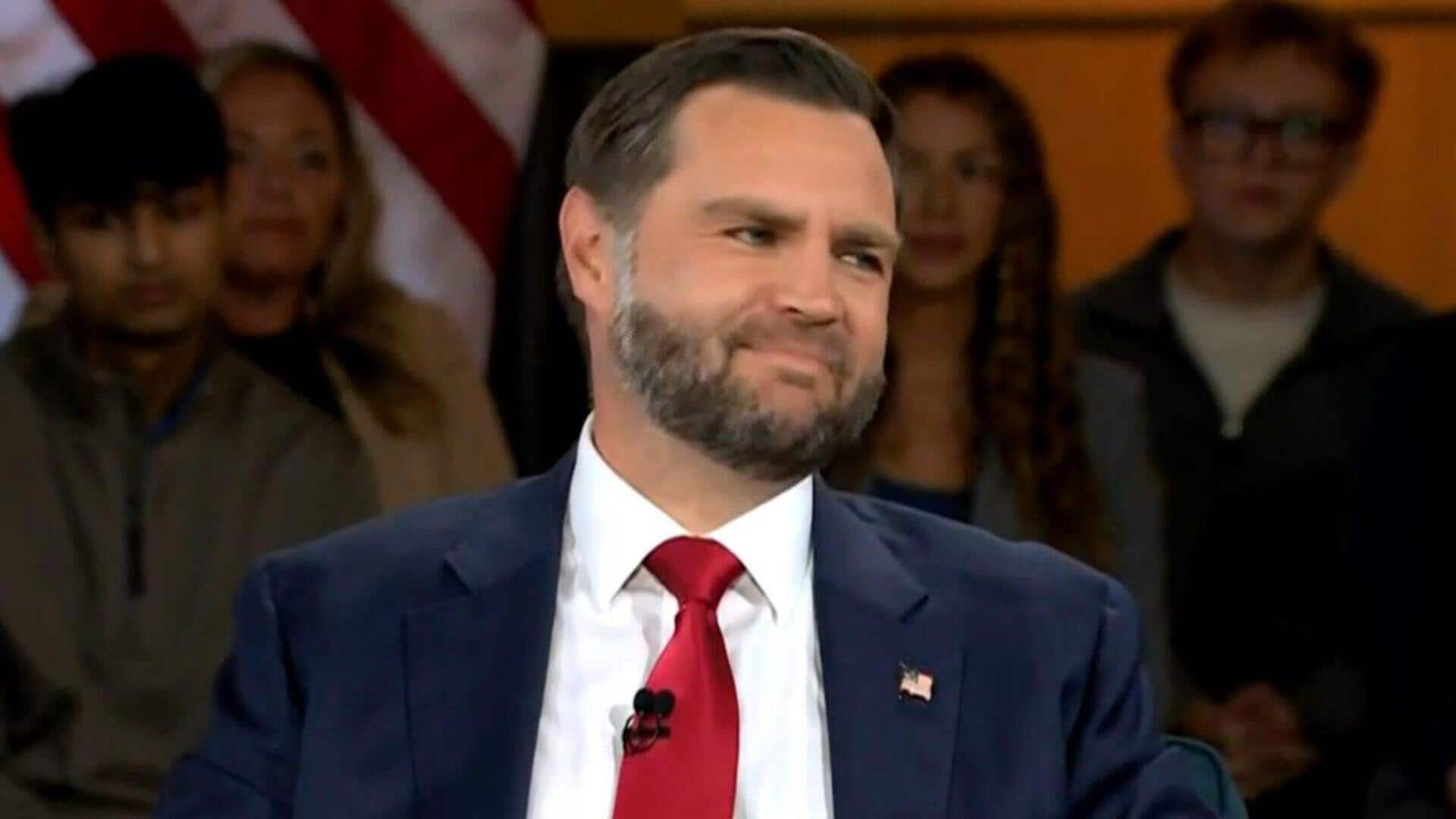
'Foreign indentured servants': JD Vance clarifies comment
What's the story
United States Vice President JD Vance has clarified his controversial remarks on H-1B visa workers, which he had earlier referred to as "foreign indentured servants." The clarification came after the Donald Trump-led administration suspended several companies, including Indian IT giants, from the Permanent Labor Certification Program (PERM). This program is a crucial step for foreign workers on H-1B and other visas to become legal permanent residents in the US.
Controversial statement
Vance's previous comments and India's response
Vance had previously urged US companies to hire more American workers instead of importing "indentured servants."
He had also named companies like Microsoft, Cognizant, Infosys, TCS, Wipro, HCL, and Capgemini in his suspension announcement.
In response to Vance's comments, India condemned the use of such terminology as "unwarranted and deeply offensive."
The Ministry of External Affairs emphasized that Indian professionals are highly educated and skilled contributors to the US economy.
Clarification issued
VP's defense of his stance
Defending his stance, Vance said his criticisms were not aimed at H-1B visa holders but at companies exploiting the program.
He admitted some of his rhetoric was "imperfect" and emphasized the need for a balanced immigration system.
"I think that we can have respect and welcome for the people who want to contribute to the United States of America... but I think we need to strike that balance in the right way," he said.
Backlash received
India responds to H-1B visa suspensions
Vance's comments had drawn criticism from India, with New Delhi calling them "unwarranted and deeply offensive."
The Ministry of External Affairs also assured that the US measures won't impact existing H-1B visas or their holders.
It emphasized that talent mobility benefits both economies and said suspensions don't further shared ambitions.