'We'll be leaving very soon': Trump to end Iran war
What's the story
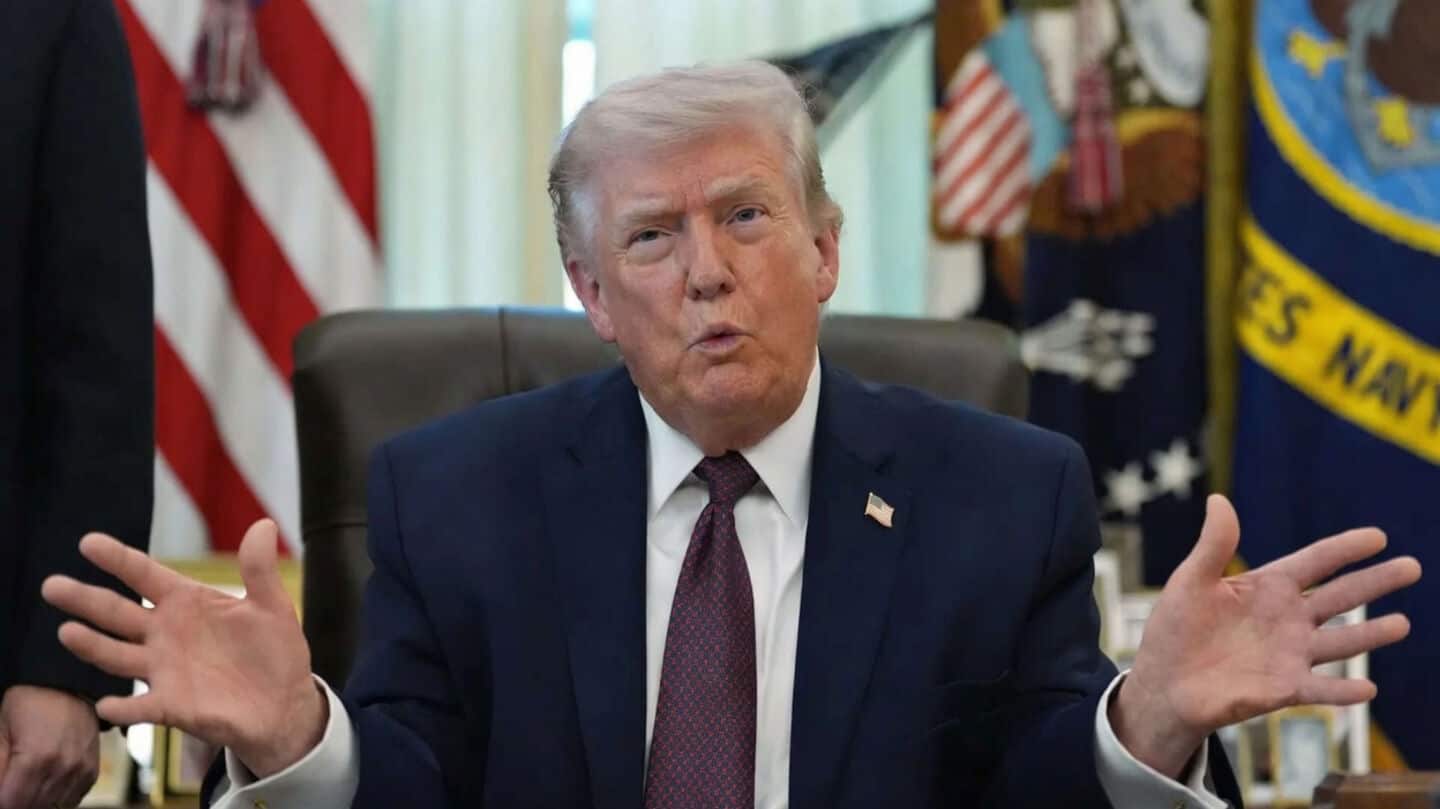
United States President Donald Trump has said that the US could leave the ongoing conflict with Iran within two to three weeks. "We'll be leaving very soon," he told reporters in the Oval Office, adding that a deal with Tehran isn't needed to end the war. "I would say that within two weeks, maybe two weeks, maybe three," he added. "Iran doesn't have to make a deal, no," he said. "No, they don't have to make a deal with me."
Nuclear concerns
US goal to prevent Iran from developing nuclear weapon: Trump
Trump also stressed that the US's goal is to make sure Iran doesn't have the capability to quickly create a nuclear weapon.
He said, "Then we'll leave," indicating that once this objective is achieved, the US presence will end.
The conflict has been going on for over a month and has affected global energy markets.
Diplomatic tensions
Trump slams US allies for not helping
Trump also slammed US allies for not doing enough to help reopen the Strait of Hormuz, a major oil passageway that has been mostly shut since the conflict started.
He said, "You'll have to start learning how to fight for yourself, the USA won't be there to help you anymore, just like you weren't there for us."
Regional impact
Israel says joint offensive is systematically crushing Iran
Meanwhile, Israeli Prime Minister Benjamin Netanyahu has said that the joint US-Israel offensive is weakening Iran.
He called the campaign "systematically crushing" the Iranian regime and said Israel is forming new alliances in the region.
Netanyahu added that despite Iran's military spending, it has little to show for it.
He stressed that while Iran is weaker and Israel stronger, the war isn't over yet.
Economic impact
War has affected global fuel prices
Despite the ongoing conflict, White House spokesman Kush Desai said America's long-term economic trajectory remains solid.
He said once "Operation Epic Fury's" objectives are achieved, Americans can expect job and economic growth.
The war has disrupted energy flows and affected global fuel prices.
West Texas Intermediate futures fell 1.5% to settle near $101 a barrel amid speculation of a possible end to the conflict without a formal agreement.
Meanwhile, Brent has surged by around 60% since the war began.