Why Washington briefly became world's most polluted city
What's the story
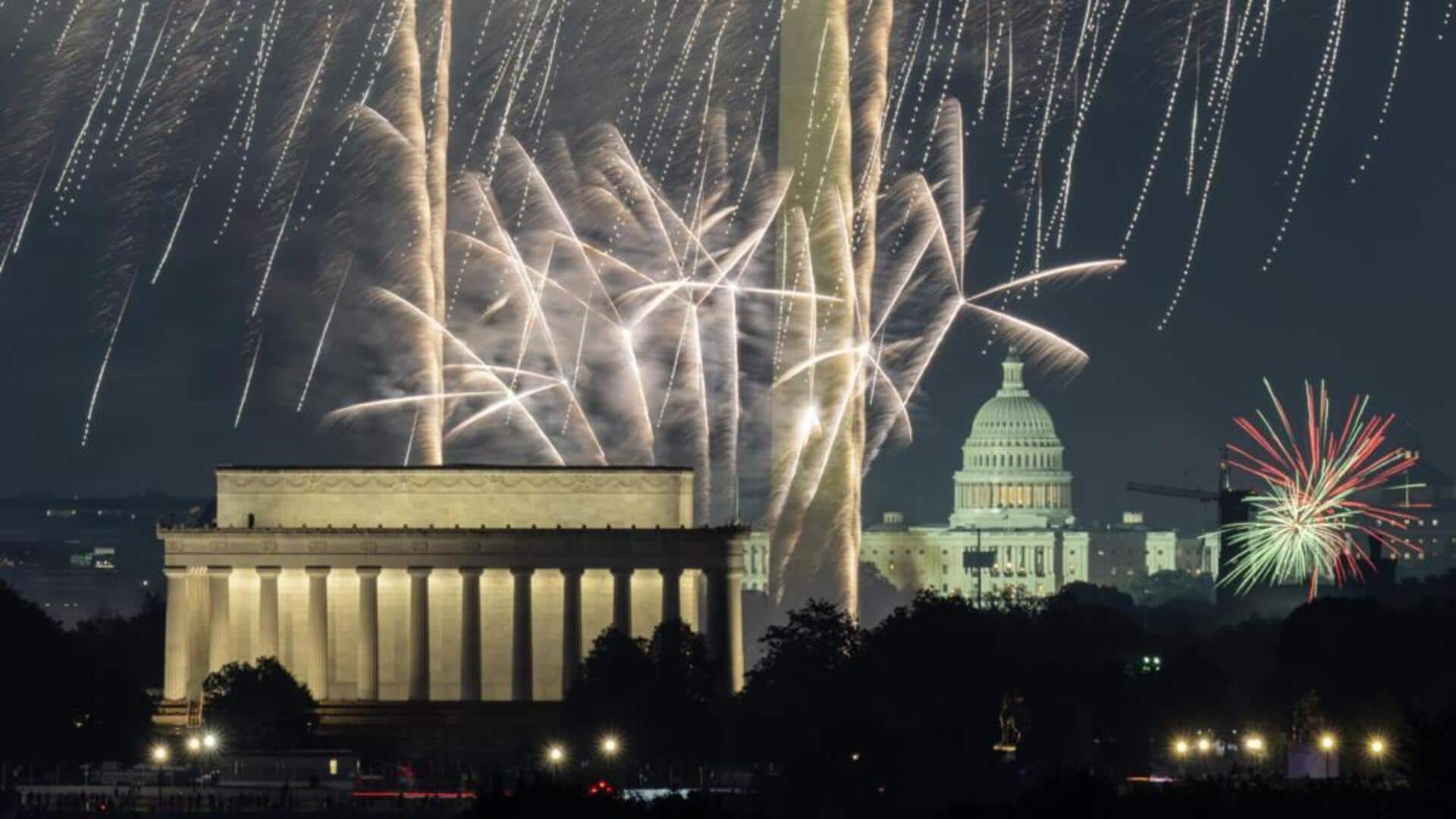
Washington, D.C. briefly topped the list of the world's most polluted major cities on July 5, according to IQAir data. The spike in pollution came after massive Fourth of July fireworks displays, part of the Freedom 250 celebrations organized by the Donald Trump administration. The event saw around 850,000 fireworks launched in a 40-minute show by Pyrotecnico, aiming to break a world record. The event also featured a laser and light show for the first time.
Pollution spike
PM2.5 levels spiked during main event
The fireworks display was initially delayed by over an hour due to storm threats.
Pollution levels began to rise during local fireworks displays and spiked sharply after the main event started.
Fine particle pollution (PM2.5) reached hazardous levels during the show, with smoke spreading across the city.
One monitoring station recorded PM2.5 levels above 200 micrograms per cubic meter, far exceeding the US Environmental Protection Agency's limit of 35 micrograms per cubic meter for a 24-hour period.
Health impact
Code purple air quality alerts
The high PM2.5 levels led to Code Purple air quality alerts across large parts of Washington, D.C., and nearby Virginia and Maryland. Code Purple indicates very unhealthy air conditions.
IQAir data showed that Washington was the world's most polluted major city from around 3:00am to 5:00am on July 5. It later dropped in rankings, with cities like Jakarta, Kinshasa, and Addis Ababa becoming more polluted.
Weather relief
Rain improved air quality
"The general public may experience health issues," the city's air quality alert said, adding that those with asthma or other lung diseases "may experience more serious health issues."
Warnings about the potential health impacts were issued days before the fireworks, with internal National Park Service documents reportedly warning that pollution could reach "very unhealthy" levels.
Russell Dickerson, an atmospheric scientist at the University of Maryland, said without the rain, "the situation would have been even worse."