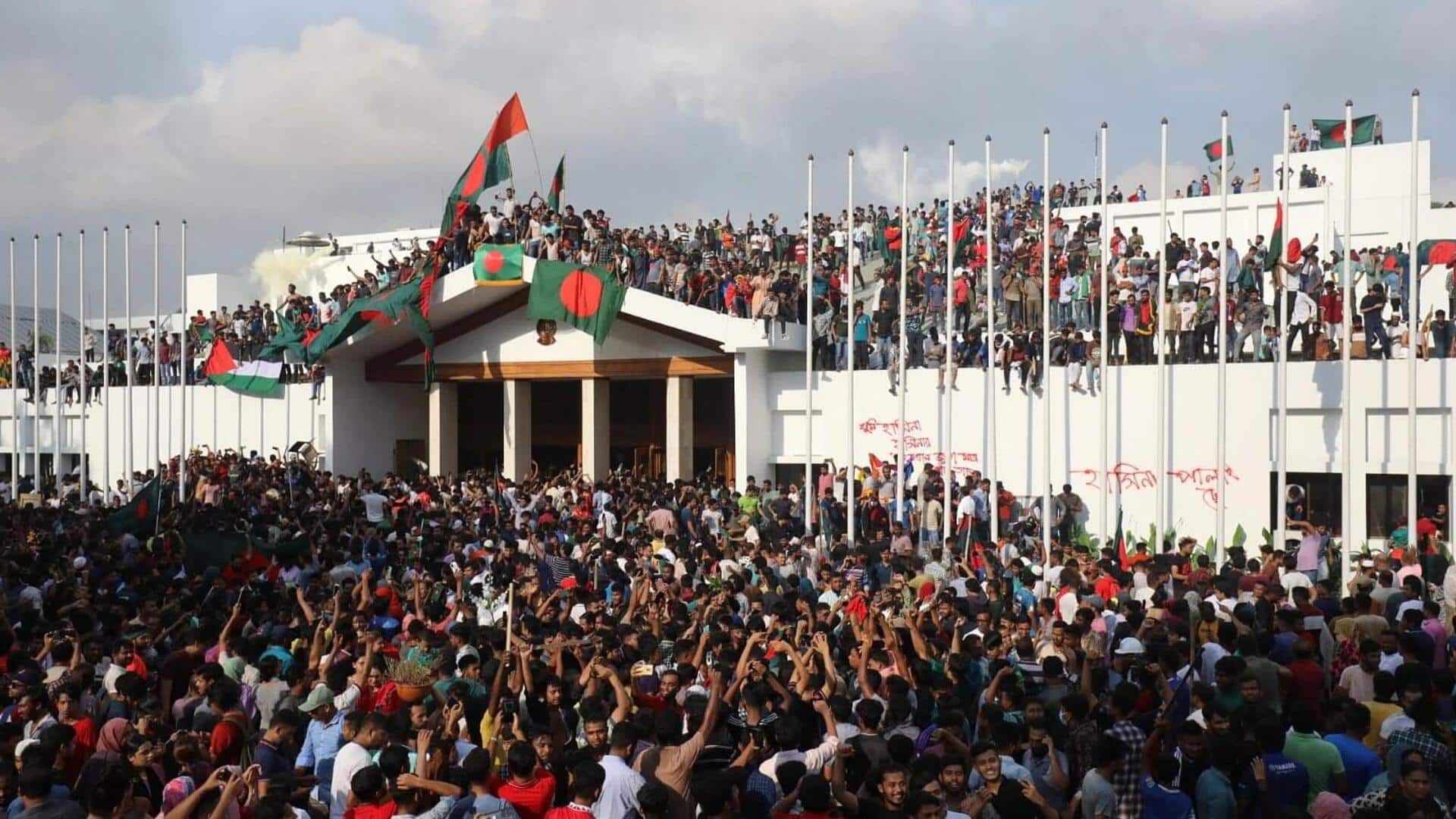
Yunus regime promulgates ordinance granting immunity to 2024 uprising participants
What's the story
The interim government of Muhammad Yunus in Bangladesh has introduced an ordinance that shields participants of the 2024 July-August uprising from legal action. The law, known as the "July Uprising (Protection and Liability Determination) Ordinance, 2026," was notified by the Law Ministry on Sunday night. It specifies that all civil and criminal cases filed against the participants for incidents that occurred during the movement will be dropped. Such cases cannot be filed in the future.
Legal implications
Ordinance could protect alleged perpetrators of violence
According to Daily Star, the ordinance designates the students and public who participated in the uprising as "revolutionaries."
It could prevent the prosecution of those accused of killing police officers, Hindus, and political opponents during the protests.
It is speculated that these individuals may include Islamists and radicals who have received leniency from Yunus's regime.
The indemnity provided by this ordinance may not be supported by Bangladesh's current Constitution but could withstand legal challenges due to a pliant legal system.
Protest escalation
Protests against Hasina's regime escalated into violence
The protests against Sheikh Hasina's regime started as a quota agitation but soon turned violent with political and Islamist infiltration.
Police stations were set on fire, and officers were lynched. A police list from October 2024 recorded 44 officers killed during these protests.
The unrest led to widespread lawlessness in Bangladesh after Hasina's government fell on August 5, 2024, with over 200 attacks on minorities in the first three days.
Investigation process
Human Rights Commission to investigate allegations of murder
The ordinance states that allegations of murder during the uprising will be probed by the Human Rights Commission, not law enforcement agencies.
Such allegations can't be filed in court directly but must go through this commission, which decides if actions were part of "political resistance" or "criminal misuse."
If deemed political resistance, government compensation may be recommended, but no legal case can be filed.
Justice demand
NHRC will determine the nature of the act
Conversely, if the investigation reveals that the killing was committed for personal gain or was a "criminal misuse" of the chaotic circumstances, the commission will file a report with the appropriate court.
The court will treat this finding as a police report and begin judicial proceedings.
A specific condition has been set regarding investigations: if the victim is a member of the police or any other force, no current or former officer of that force can be assigned.